
Devolatilization
USEON's screw-type continuous reaction devolatilization technology removes solvents and impurities from polymer materials. It applies to a solvent content from 5% to 85% and is used for POE, PMMA, COC and α-olefins.
- POE
- PMMA
- COC
- α-olefins
- Solvent content range
- 5–85%
- Residual solvent on POE systems
- 50–200ppm
Controlled stepwise devolatilization
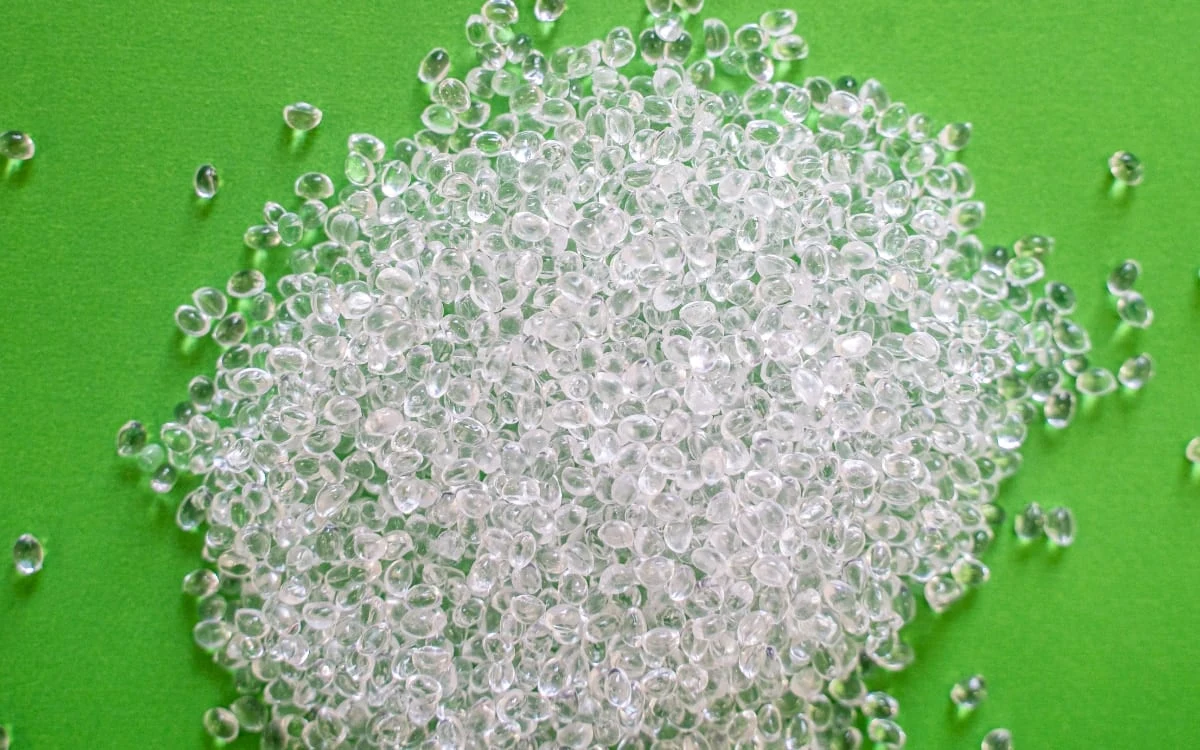
The solvent leaves in steps along one barrel.
Professional practice
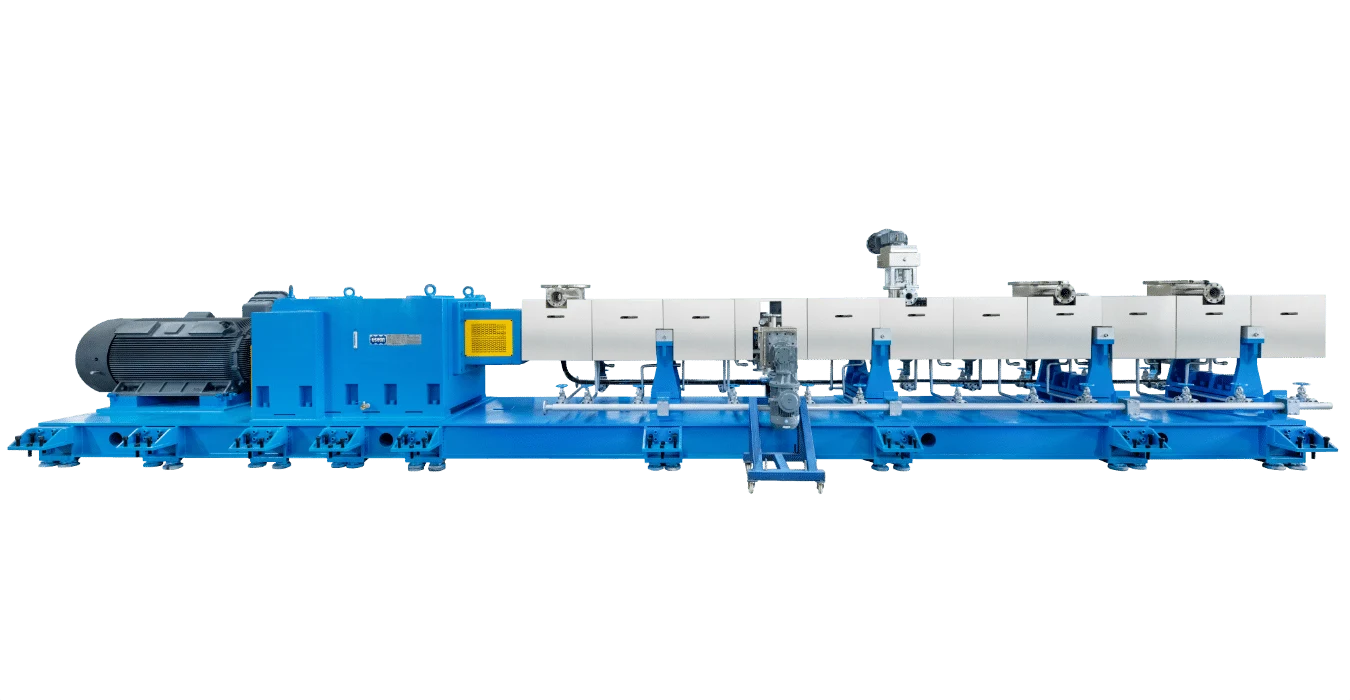
USEON has extensive experience in screw-type continuous reaction devolatilization technology, particularly for devolatilizing POE systems with high solvent ratios.
With its proprietary “controlled stepwise devolatilization process” technology, USEON can efficiently remove 50%–75% of solvent content directly within the twin-screw extruder, reducing residual solvent levels to 50–200 ppm. This precise process control enhances devolatilization efficiency and production output, meeting stringent purity standards.
Main devolatilization modes
Flash devolatilization
By heating, the solvent vaporizes instantly, and the flash effect removes it quickly and efficiently. Especially suitable for the removal of low-boiling, highly volatile solvents.
Surface renewal
In the continuous desolvation process, the surface of the material is continuously refreshed to accelerate the evaporation of the solvent. Particularly suitable for materials with high solvent content.
Foaming
Process parameters are controlled to micro-foam the material, so solvent and impurities separate during foaming. Especially suitable for the special stripping needs of certain polymer materials.
Technical advantages
Polymer continuous reaction
Continuous polymerization reactions are supported in the devolatilization process. This reduces the redundancy of traditional multi-step reactions and makes production more stable and continuous.
Online compounding
Raw materials and additives are mixed during processing, meeting various formulation requirements and saving additional mixing steps.
High-efficiency devolatilization
Impurities and solvents with various boiling points are removed, from high boiling point impurities to low boiling point solvents, for lower residual solvent levels.
Layout of a devolatilization line
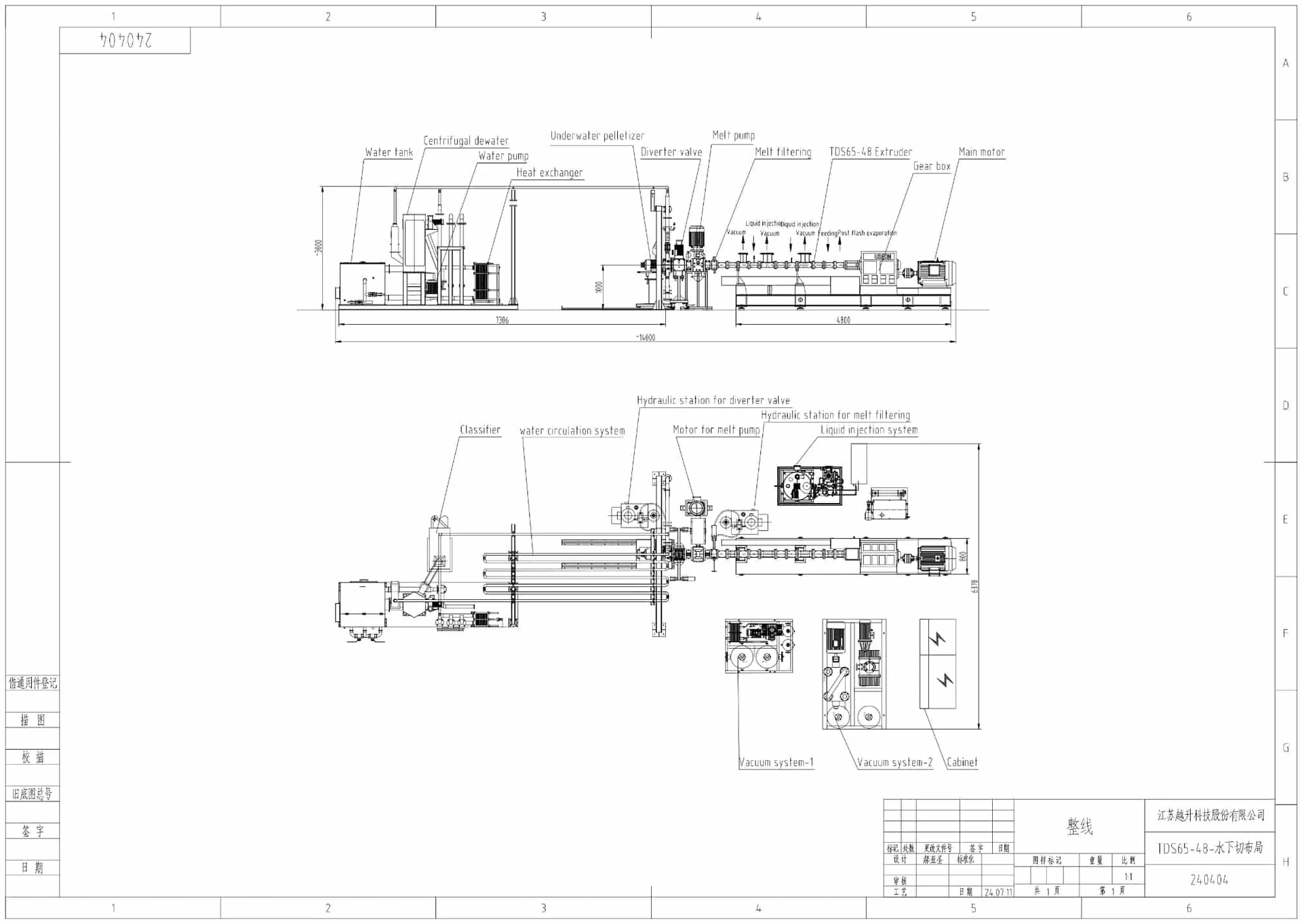
One case line, from the extruder to classified pellets.
Equipment in the line
USEON's SAT series twin screw extruder can fully meet your needs in devolatilization applications.
- Twin screw extruder with main motor and gear box
- Feeding and first flash evaporation
- Liquid injection system
- Two vacuum systems
- Melt filtering, melt pump and diverter valve
- Underwater pelletizer
- Water tank, pump and heat exchanger
- Centrifugal dewatering and classifier
Factory trial · petrochemical project
24 hours continuous, on a feed with more than 80% solvent
Material with more than 80% solvent: demanding for gas-liquid separation, mass transfer, vacuum stability and material handling.
Residual solvent content controlled below 0.25%.
As conditions stabilized, residual solvent below 0.15%, less than 1,500 ppm.
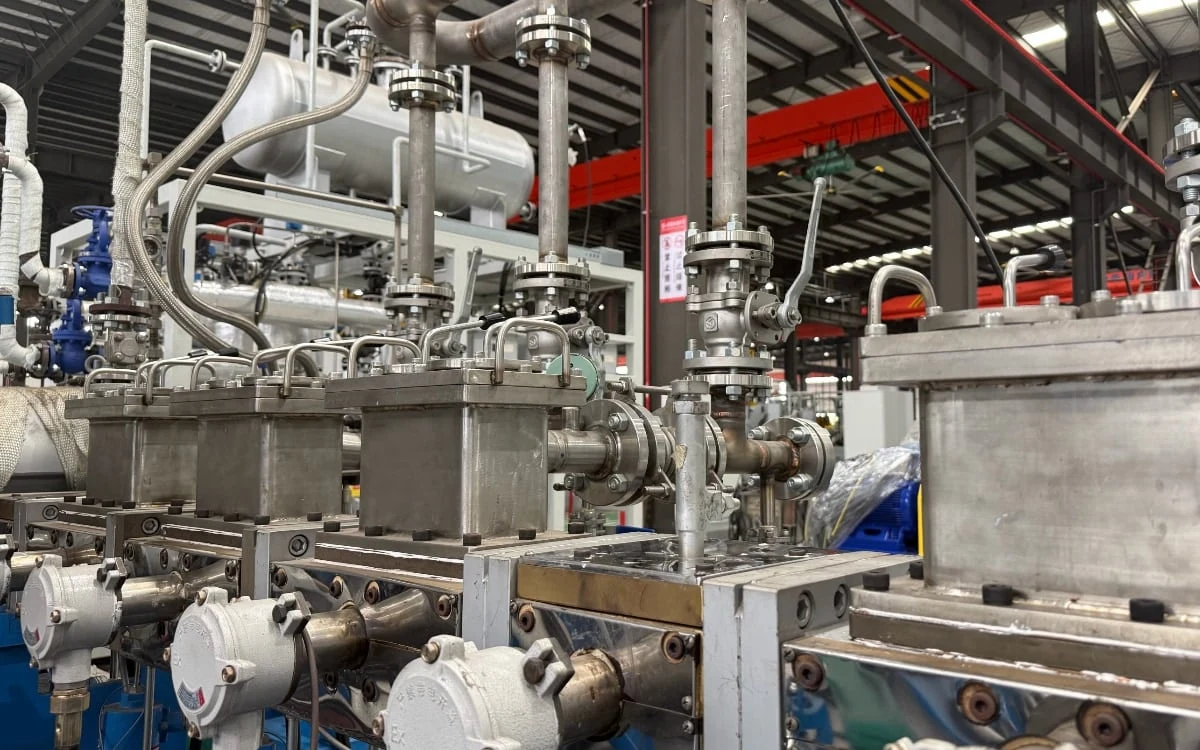
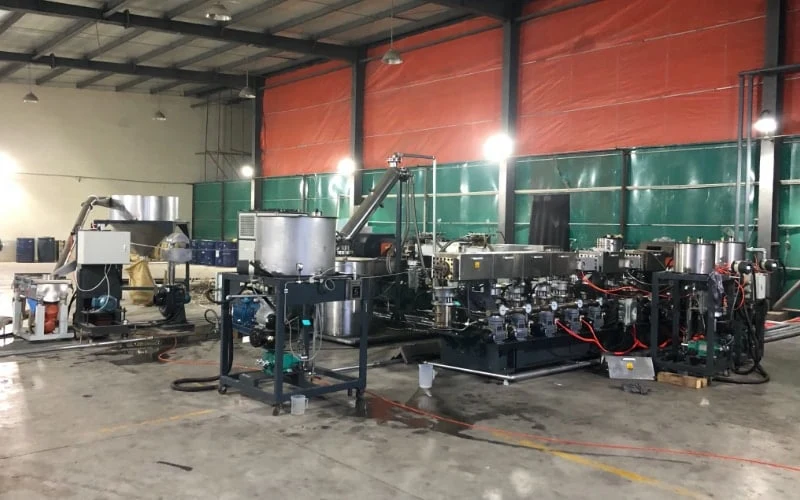 SAT-95
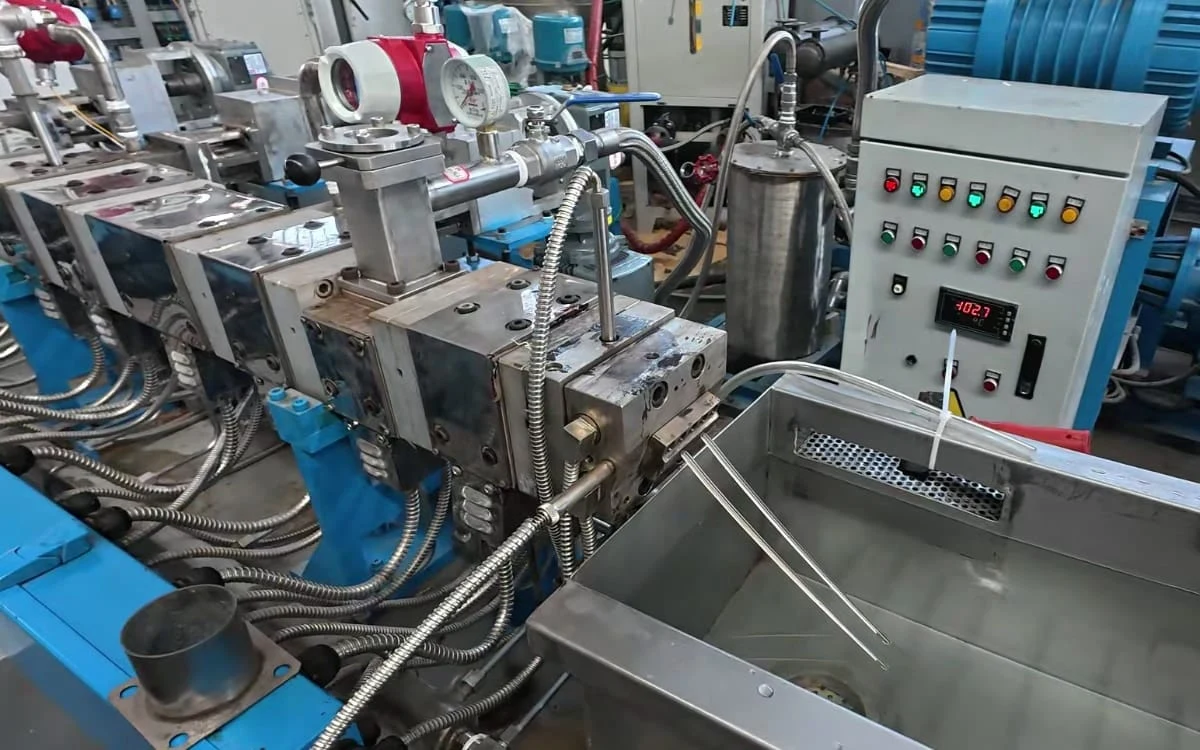 Lab line
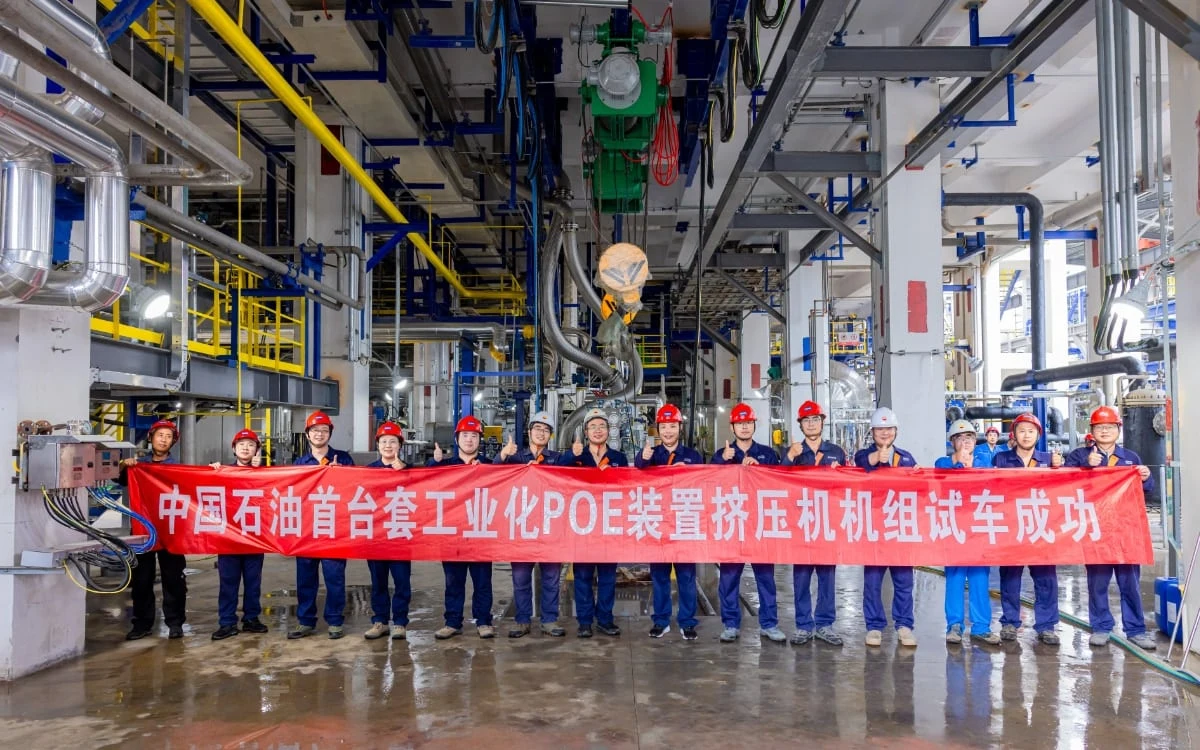 News
Tell us the polymer, the solvent and how much of it is in the feed. We size the extruder and the vacuum stages for the residual level you need.
- 01Polymer, solvent and solvent content in the feed
- 02Target residual level and throughput
- 03Process configuration, extruder size and quotation

Souder Chen
Head of Compounding Division
With USEON since 2008. Twin screw compounding, devolatilization and recycling lines.