
Twin Screw Extruder
USEON builds twin screw extruders from 22 mm laboratory units to 360 mm polyolefin finishing lines. Each series is supplied as a complete, ready-to-run extrusion line that fits the needs of your factory.
- Compounding
- Reactive extrusion
- Direct extrusion
- Recycling
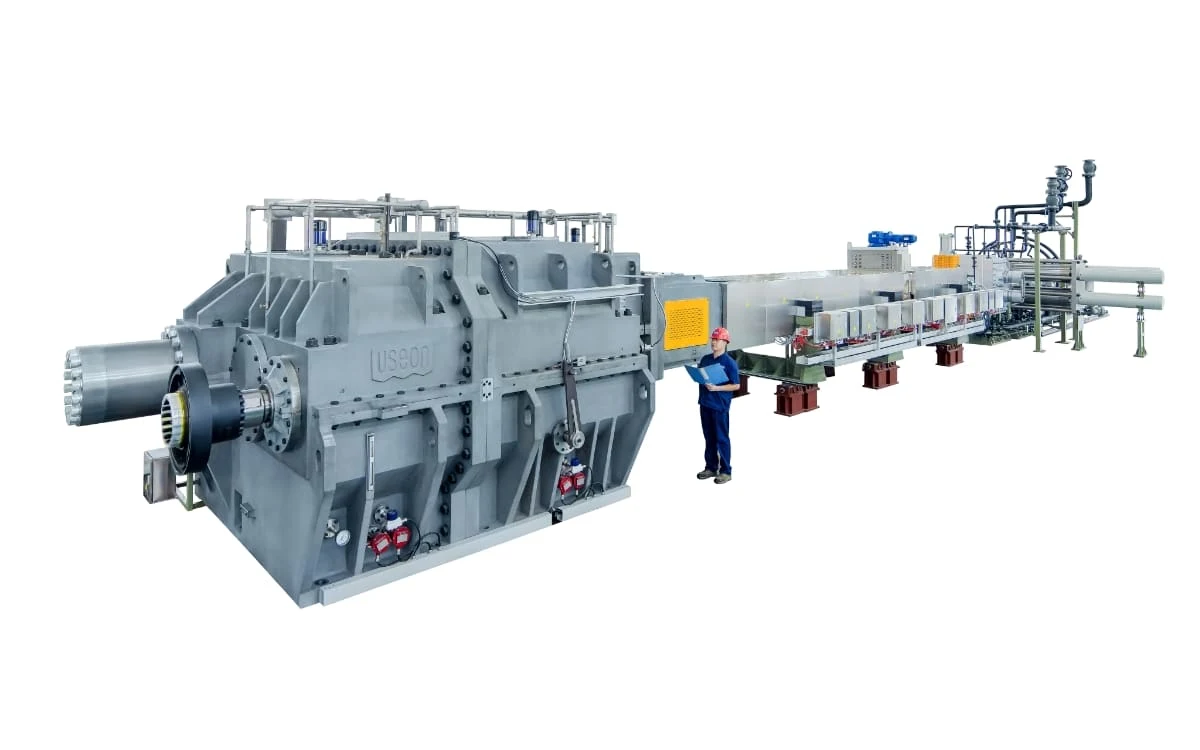
- Screw diameter, Lab-20 to the large SAT
- 22–360mm
- Specific torque of the U+ series, up to
- 18Nm/cm³
- Output of the large SAT, up to. Lab units start at 5 kg/h
- 60t/h
Find the series for your job
Five series and the large SAT sizes. Start from what the line has to do.
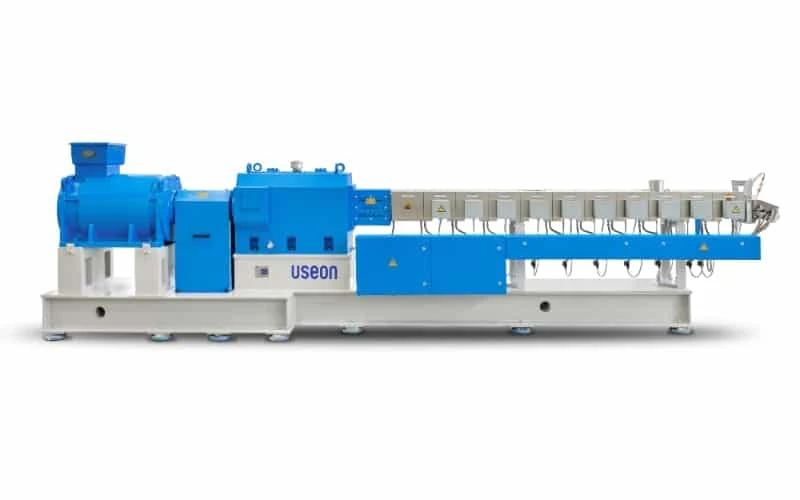
“I need a reliable machine for heavy loads.”
SAT SeriesCo-rotating
- Screw diameter
- 41–130 mm
- Specific torque
- 9–10.9 Nm/cm³
Best for: filler masterbatch, engineering plastics. Built for 24/7 operation.
SAT Series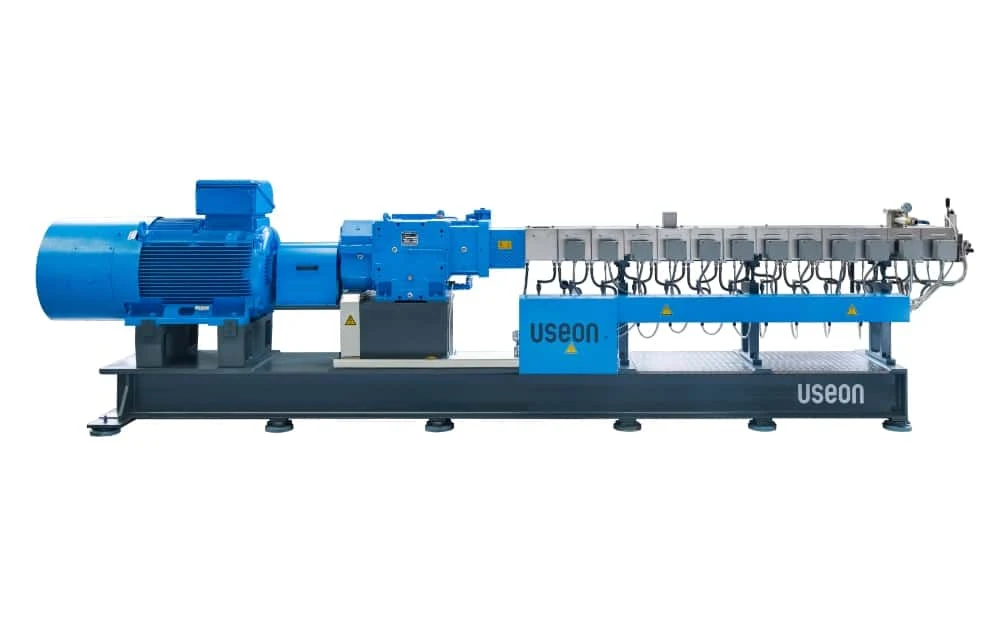
“I need maximum output and top performance.”
U+ SeriesCo-rotating
- Screw diameter
- 27–93 mm
- Specific torque
- up to 18 Nm/cm³
Best for: complex alloys, high-end masterbatch.
U+ Series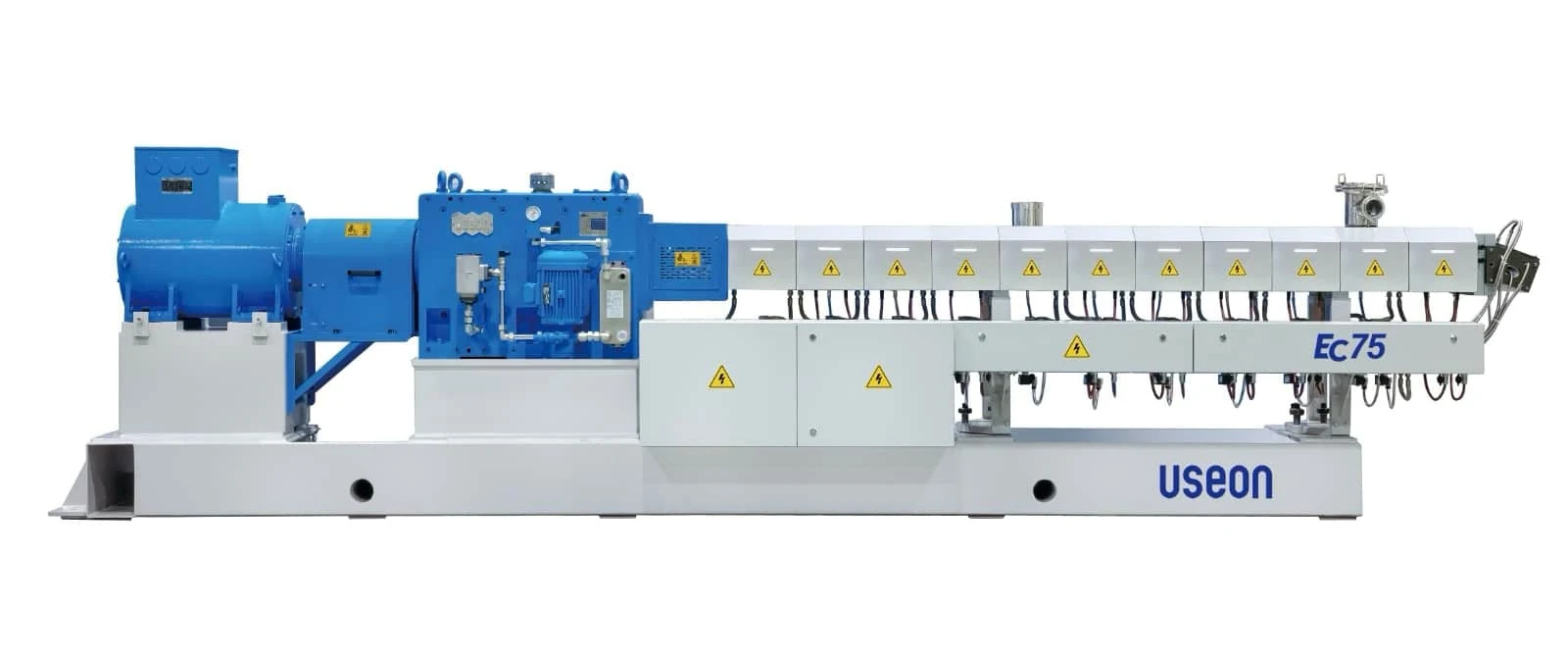
“I need a cost-effective standard machine.”
EC SeriesCo-rotating
- Screw diameter
- 26.5–71 mm
- Output
- 10–800 kg/h
Best for: color masterbatch, powder coating. For materials that do not require extreme power.
EC Series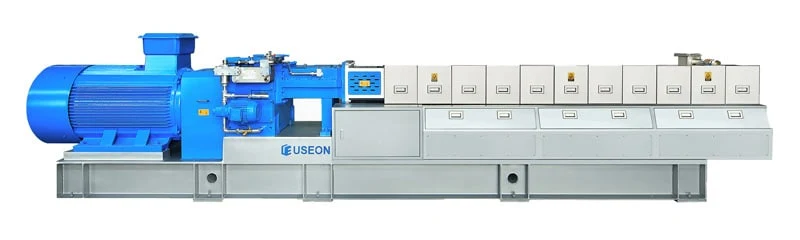
“I process heat-sensitive or loose-feed materials.”
TDY SeriesCounter-rotating
- Screw diameter
- 41–108 mm
- Specific torque
- 4.9–5.8 Nm/cm³
Best for: PVC, XLPE, and PET / film recycling.
TDY Series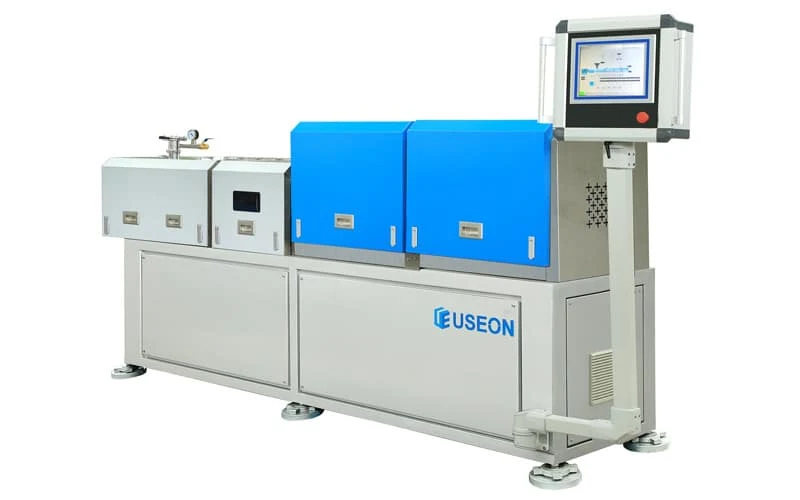
“I need to do R&D or small batch production.”
Lab SeriesCo-rotating
- Screw diameter
- 22–35.6 mm
- Output
- 5–60 kg/h
Best for: testing, sampling, education. Screw elements geometrically similar to the production platforms.
Lab Twin Screw“I need a huge petrochemical line for polyolefin (10–60 t/h).”
Large SATCo-rotating
- Screw diameter
- 130–360 mm
- Output
- up to 60 t/h
Best for: polyolefin finishing. 8,000+ operating hours a year with proper maintenance.
Polyolefin compoundingThe series side by side
Screw diameter against specific torque. The higher a series sits, the more torque it puts into each cubic centimetre of screw volume.
- Co-rotating
- Counter-rotating
| Series | Type | Screw dia. | Specific torque | Max. screw speed | Typical output |
|---|---|---|---|---|---|
| U+ Series | Co-rotating | 27–93 mm | 13.6–18 Nm/cm³ | 900–1,200 rpm | — |
| SAT Series | Co-rotating | 41–130 mm | 9–10.9 Nm/cm³ | 400–800 rpm | 150–3,500 kg/h |
| Large SAT | Co-rotating | 130–360 mm | 10.3 Nm/cm³ | 300–600 rpm | 5–60 t/h |
| EC Series | Co-rotating | 26.5–71 mm | 7.0 Nm/cm³ | 600 rpm | 10–800 kg/h |
| Lab Series | Co-rotating | 22–35.6 mm | 9–10.9 Nm/cm³ | 600–720 rpm | 5–60 kg/h |
| TDY Series | Counter-rotating | 41–108 mm | 4.9–5.8 Nm/cm³ | 400–600 rpm | 70–1,200 kg/h |
Output depends on the material and the formulation. The model tables on each series page give the figures per size.
Applications and the configuration behind them
The series is one decision. Screw configuration, feeding and degassing are set for the material.
| Application | The challenge | Our solution | Series |
|---|---|---|---|
| Filler masterbatchCaCO₃ · talc · TiO₂ | Handling huge volumes of powder (up to 85% loading) causes severe wear and feeding issues. | High torque and deep-channel screws ensure high intake capacity; wear-resistant barrels extend service life. | SAT |
| Color masterbatch | Even microscopic agglomerates cause streaks in films or fibers. | Distributive mixing elements (ZME / TME) for pigment wetting; a self-wiping profile for fast color changes with minimal waste. | SAT · EC |
| Engineering plasticsPA · PBT · PC + GF / CF | Glass fiber improves strength but causes abrasion; excessive shear breaks fibers, reducing impact strength. | Gentle kneading blocks and side feeders allow fiber addition downstream, preserving fiber length. | U+ · SAT |
| Cable compoundsHFFR · XLPE | Flame retardants and cross-linking agents are extremely temperature-sensitive. | Tandem systems (SAT-TDD) or TDY counter-rotating extruders: high-speed mixing is separated from low-speed pressure build-up. | SAT · TDY |
| Polyolefin finishingLDPE · HDPE · PP | Turning reactor powder or melt into uniform pellets. | Extruders up to 360 mm for 60 tons/hour, with explosion-proof design, gear pump and underwater pelletizer, compatible with plant DCS. | Large SAT |
| Sheet direct extrusionPET · PLA · PP | Pelletizing, cooling, re-heating and extruding again costs energy and intrinsic viscosity. | A twin screw extruder with melt pump and sheet die processes undried flakes directly. | SAT |
| PET and film recycling | Washed flakes carry moisture and volatiles. | Multi-stage high-vacuum degassing allows direct compounding without pre-drying. | SAT · TDY |
| BioplasticsPLA · PBAT · starch | Reactive compounding and esterification need residence time. | Extended L/D ratios (52:1). | SAT · U+ |
Why USEON
Engineering, manufacturing, commissioning and lifecycle service from one team.
Direct manufacturer
Since 2008 we have been designing and building extruders in our own facility in Jurong, Jiangsu, from gearbox assembly to final testing.
2,500+ deliveries
Since 2008 we have focused solely on polymer extrusion, with over 2,500 twin screw extruders installed worldwide.
Trial centre
The factory houses our machining center, assembly lines and an R&D trial center. You are welcome to run a test on our lab machines.
Remote support
With our DCS intelligent control, our engineers provide remote support to keep your line running efficiently.
Projects by series
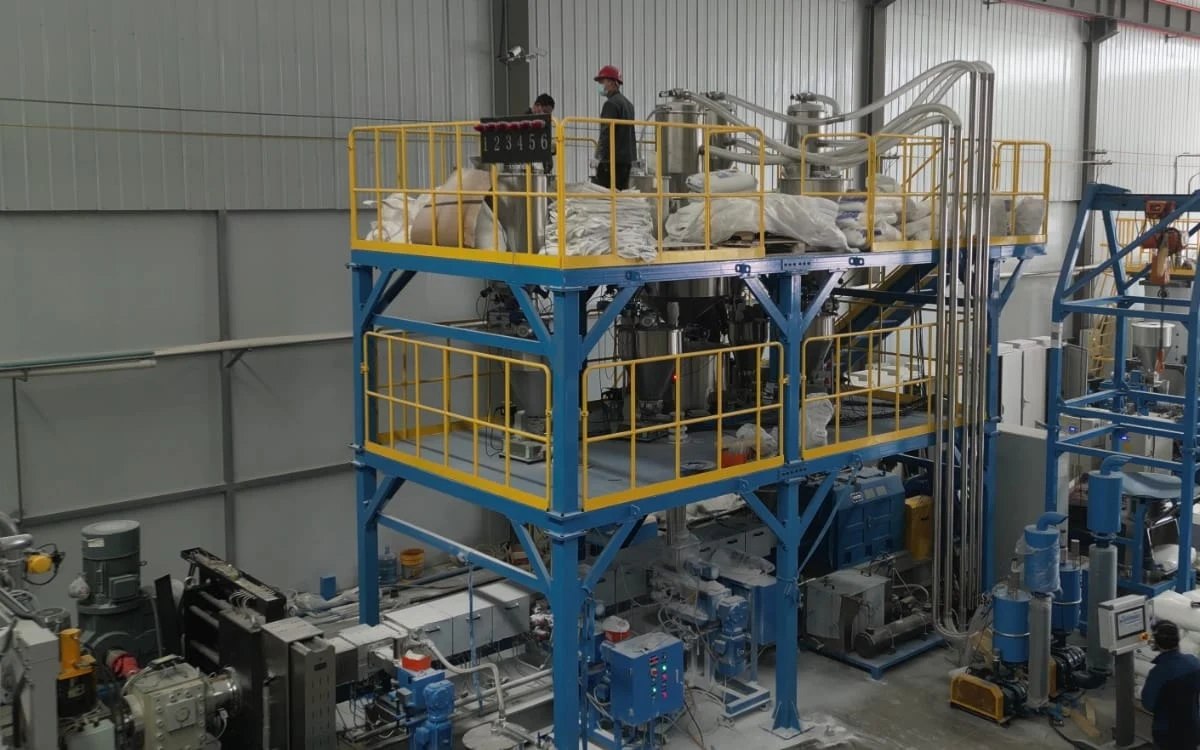 SAT110
PP + CaCO₃ High-Fill Compounding, Underwater Pelletizing Line
SAT1102,500–4,000 kg/h
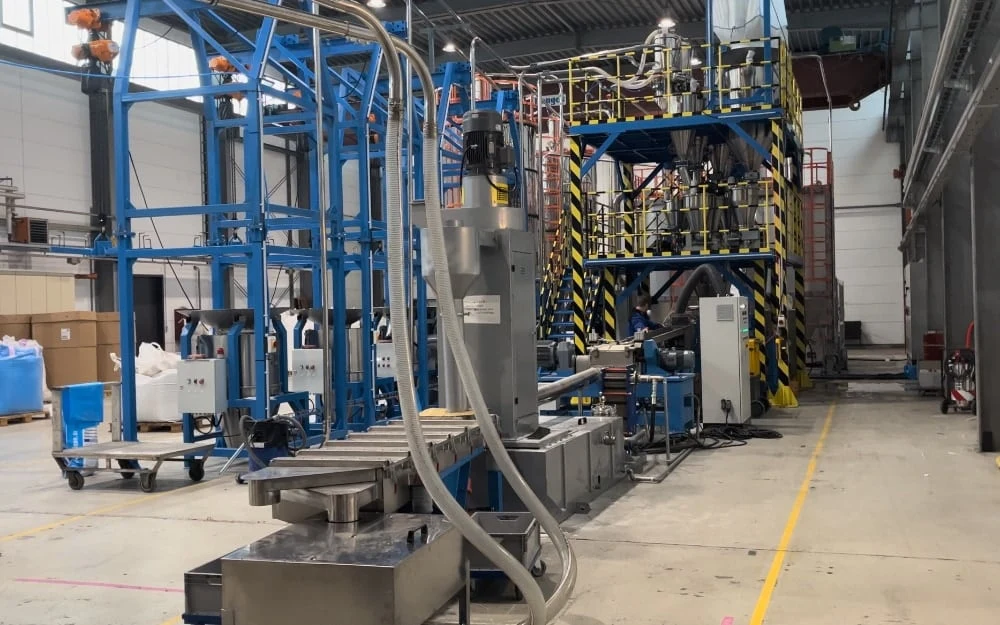 U6
Engineering Plastic Reinforcing Compounding Line in Germany
U6~800 kg/h
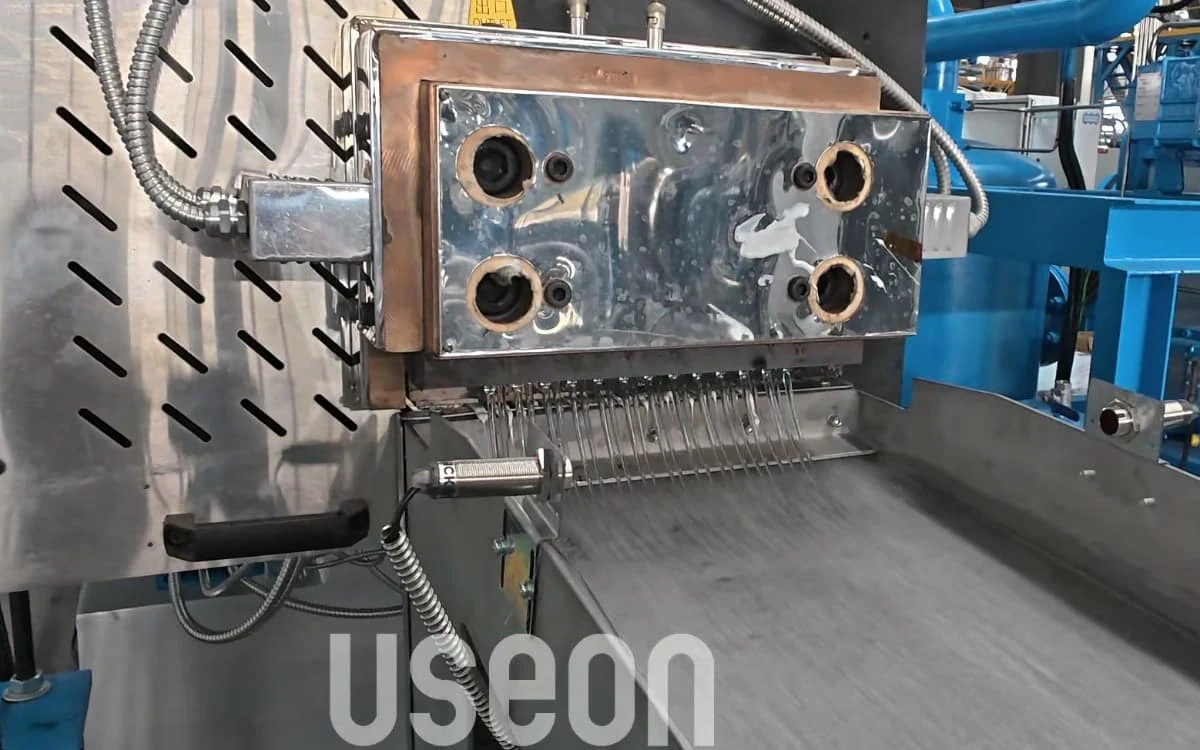 TDY110
BOPET Crushed Film Recycling Line in Middle East
TDY110600–900 kg/h
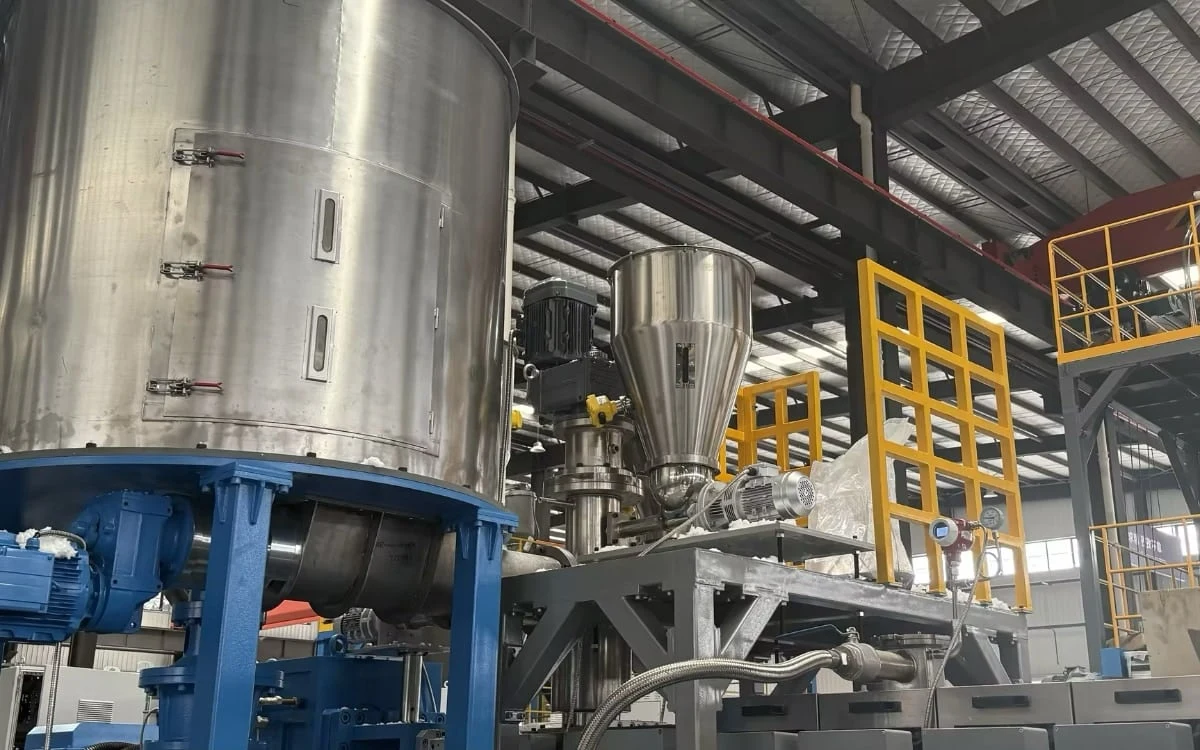 SAT95
Low-Bulk-Density PA Waste Fiber Recycling Line
SAT95L/D 40
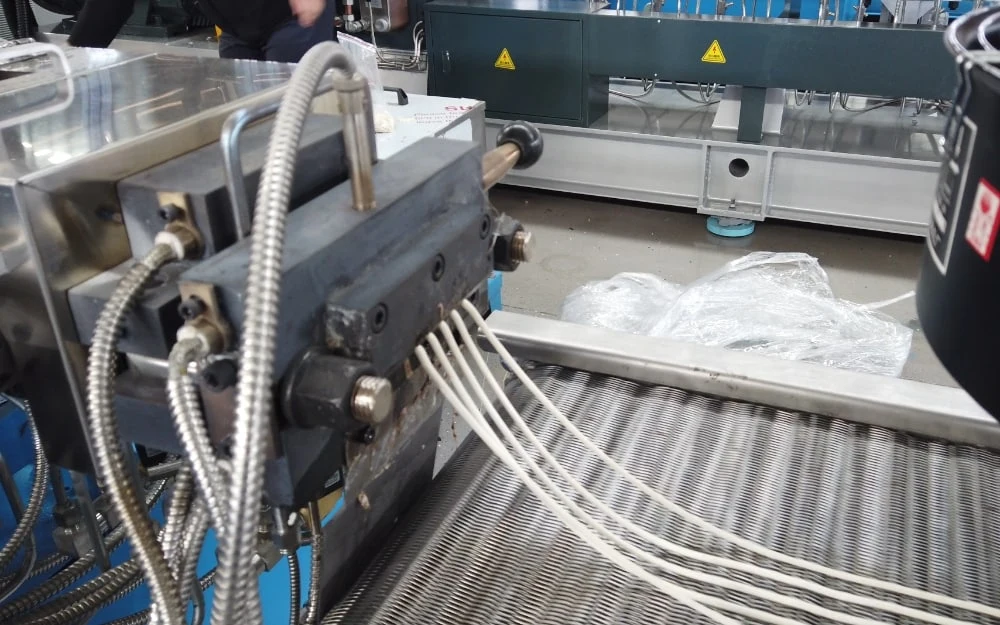 U3
U3 Twin Extruder for LCP Compounding
U350 kg/h
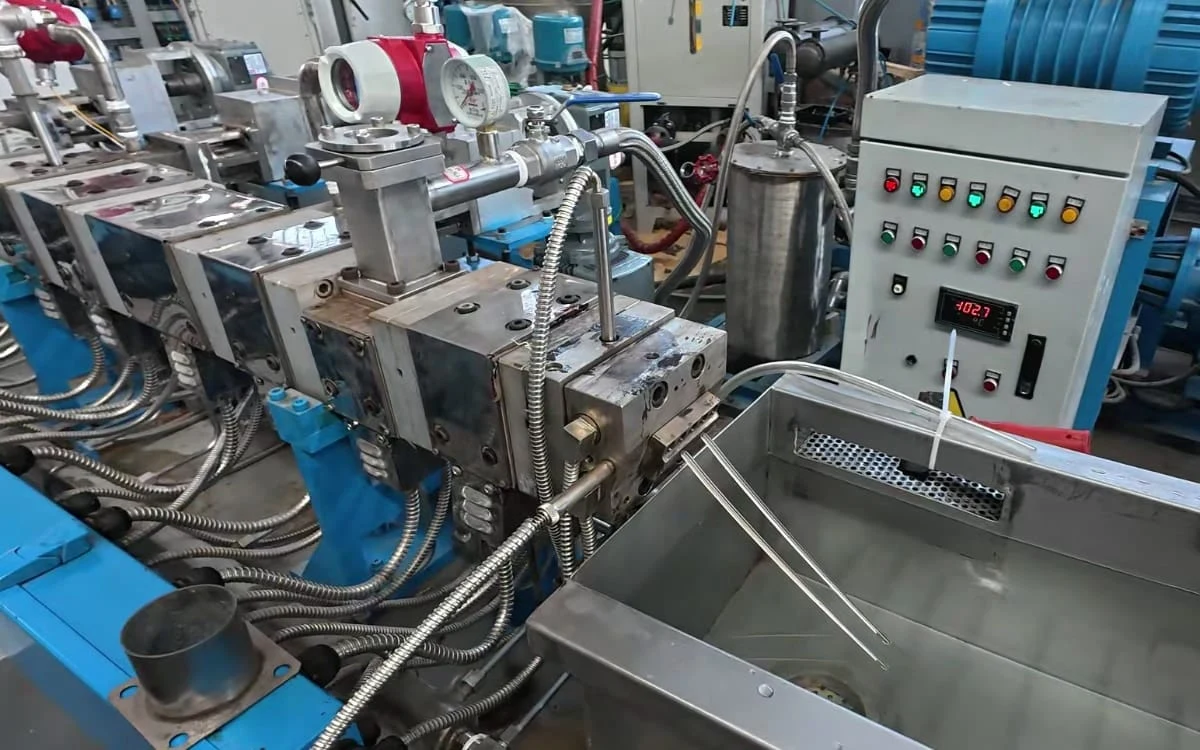 Lab line
Two-Stage Lab Extrusion Line for Polymer Devolatilization
LAB35 + LAB30L/D 74 + 58
Before you size the line
Three guides from our process engineers.
Single Screw Extruder vs Twin Screw Extruder
Where each one fits, and when a twin screw is worth it.
Read the guide ThroughputTwin-Screw Extruder Throughput Bottlenecks: How to Find the Real Bottleneck
How to find the real bottleneck of a twin screw line.
Read the guide Melt temperatureWhy Is the Melt Temperature Higher Than the Set Temperature in a Twin Screw Extruder?
Where the heat in a twin screw extruder comes from.
Read the guideFAQ
Are you a manufacturer or a trading company?
We are a direct manufacturer. Since 2008, we have been designing and building extruders in our own facility. We handle the core manufacturing steps—from gearbox assembly to final testing—ourselves, ensuring we have full control over quality and timelines.
How do I choose between the SAT Series and the U+ Series?
It depends on your performance requirements. The SAT Series is our proven workhorse for 90% of heavy-duty tasks. The U+ Series (18 Nm/cm³) is our flagship for maximum throughput and European-class performance.
Is the EC Series right for my business?
Absolutely, if you prioritize Cost-Effectiveness. The EC Series is designed for applications like Color Masterbatch, Powder Coatings, and general compounding where extreme torque is not necessary. It delivers USEON's signature reliability with a standard specific torque, offering the best Price-Performance Ratio and a faster Return on Investment (ROI).
When should I choose a Counter-Rotating (TDY) extruder?
Choose TDY for heat-sensitive materials like PVC, XLPE, or HFFR. Its low-shear action prevents degradation. For most other mixing tasks, Co-Rotating (U+/SAT/EC) is more efficient.
Can USEON extruders handle large-scale petrochemical projects?
Yes. We build Jumbo-Compounders (e.g., SAT360) with outputs over 60 tons/hour for Polyolefin finishing, featuring 24/7 continuous operation and DCS integration.
Can your extruders process recycled materials?
Yes. While we are well-known for PET recycling, our twin screw technology is equally effective for a wide range of other materials:
- Film & Woven Scraps: Light-density PP/PE/PA films or fibers fed via specialized side feeders.
- Engineering Plastic Regrinds: Re-compounding ABS, PS, PC, or PA scraps from injection molding.
- Upcycling: Adding fillers or modifiers to recycled materials to upgrade their properties (e.g., PP + Talc).
Our high-vacuum degassing and melt filtration systems ensure excellent quality even with printed or moisture-laden scraps.
Get a quote
Tell us the material, the formulation and the output you need. We recommend the series and the size, and quote the complete line.
- 01Polymer, fillers or fibres and their share
- 02Target output and pelletizing method
- 03Series, size, configuration and quotation

Souder Chen
Head of Compounding Division
With USEON since 2008. Twin screw compounding, devolatilization and recycling lines.