
Compounding for Rotational Moulding
Complete lines for rotational moulding compounds, from the premixing system to the mill: coloured PE, PP, PA and PC on a single screw extruder, and crosslinkable PE on a twin screw extruder that keeps the material from reacting in the barrel.
- Single screw · colouring
- Twin screw · crosslinkable PE
- Mill with cooling jacket
From premix to rotomoulding powder
Rotational moulds are filled with powder, not pellets. The line compounds the colour and additives into the polymer, then the mill grinds the compound to powder. Which extruder sits in the middle depends on whether the PE is crosslinkable.
Compounded, not dry-blended
Pigment melt-compounded into the polymer gives an even colour and keeps the impact strength that dry-blended pigment can cost the moulded part.
A controlled size cut
Rotomoulding powder is commonly milled to around 35 mesh (about 500 µm). The sieve returns oversize particles to the mill.
Free-flowing, dense powder
Rounded particles without tails pour and pack well, so the powder spreads evenly over the mould wall.
Common materials in rotational moulding
PE is the main family; the same lines compound PP, PC and PA with colour masterbatch and additives.
Polymers
Basic formula
- PE / PP / PC / PA
- Colour masterbatch
- Additives
Single screw extruder for colouring
Rotomoulding compounders change colour often and run many grades. The screw and the mill are designed around that.
Minimum waste at colour change
A special mixing zone keeps the material lost while changing colour to a minimum.
High output, less energy
A special melting zone gives high output with less average energy consumption.
Cooling jacket on the mill
The cooling jacket lets the mill handle all kinds of polymer without sticking.

Eight lines for rotomoulding compounders
USEON has supplied 8 lines to producers of rotational moulding material, including the largest European distributor for rotational moulding material.
Crosslinkable PE: compound now, crosslink in the mould
Crosslinkable PE powder has to reach the rotomoulder unreacted. The extruder must melt and mix the PE while staying below the temperature at which the crosslinking agent starts to react — a narrow window.
Twin screw
Precise temperature control and an appropriate screw design keep the material from reacting during compounding.
- Precise temperature control along the barrel.
- Screw design chosen to avoid reacting during compounding.
- Typical products: diesel fuel tanks, chemical storage tanks.
Projects · Europe
Two rotomoulding lines in Europe
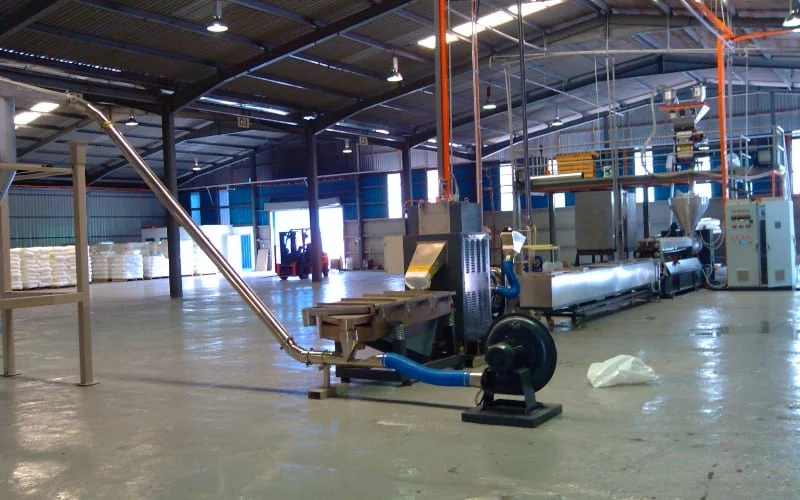
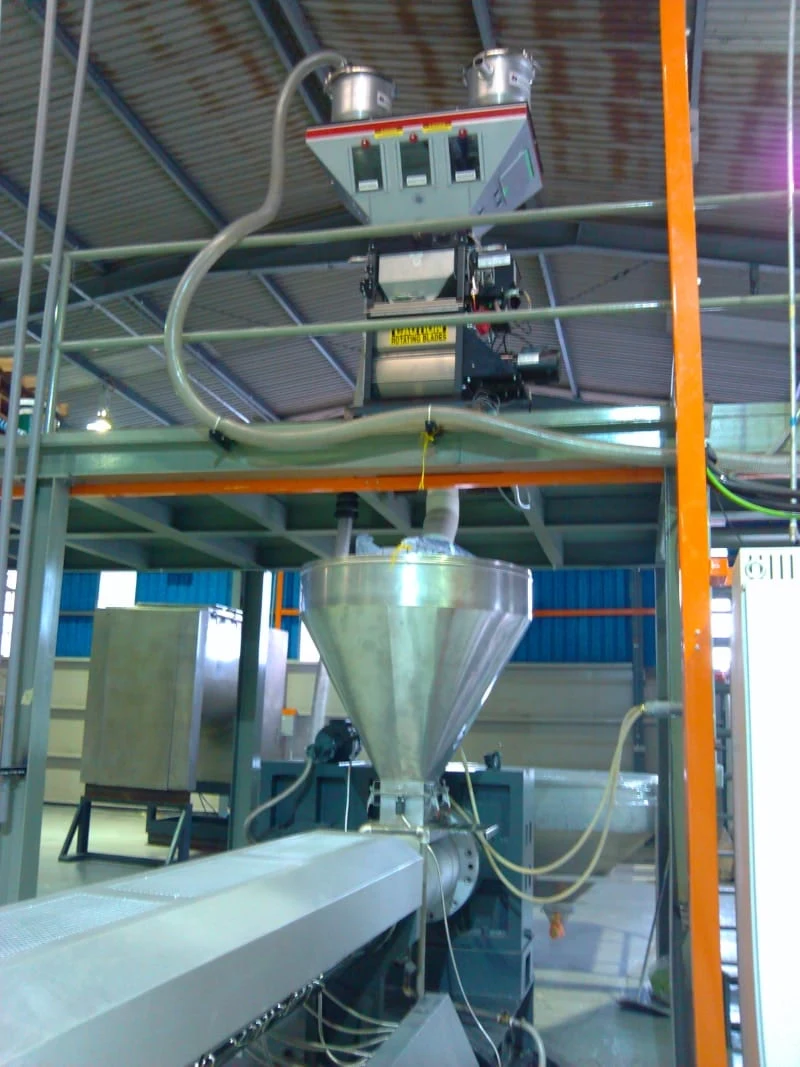
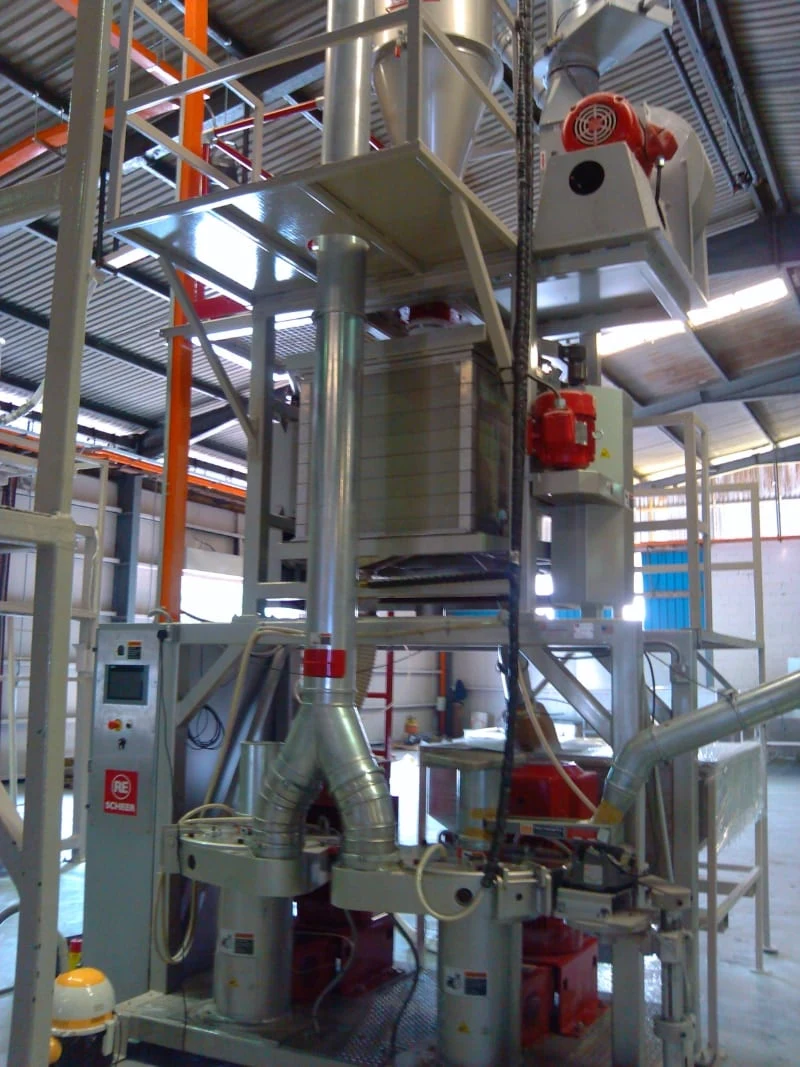
A single screw colouring line for Matrix in the UK, and a twin screw line in Poland compounding XLPE for rotational moulding.
- Market
- UK · Poland
- Lines
- 2
- Output
- 1,000 + 600 kg/h
- Extruders
- TDD150 / SAT65
1,000 kg/h rotational moulding compounding line in the UK · TDD150 600 kg/h XLPE pelletizing line in Poland · SAT65
SolutionPolyolefin compounding SolutionColor masterbatch MachineSingle screw extruder
Tell us the polymer and grade family, whether the PE is crosslinkable, how often you change colour, and the powder output you need. We will propose the extruder, the screw design and the mill for your rotomoulding compound.
- 01Polymer, colour changes & additives
- 02Single or twin screw
- 03Mill & powder handling

Souder Chen
Head of Compounding Division
With USEON since 2008. Twin screw compounding, devolatilization and recycling lines.