
Other Plastic (PE/PP) Recycling
PE and PP scrap that is hard to feed and hard to mix: foam, bottle caps, film and sheet, glass-fibre-filled parts. A twin screw extruder degasses and filters the melt, and can modify it in the same pass.
- PE foam
- PE bottle caps
- Glass-fibre PP sheet
- PE/PP film and sheet scrap
- PP flakes
Why a twin screw extruder for plastic recycling
Compared with a single screw extruder, a twin screw extruder has four advantages for recycling.
Better mixing
For polymers of different MFI, and for polymer with filler and fibre.
Better degassing
Vacuum takes the volatiles out of the melt, which polymer foam needs most.
Less residence time
Better temperature control and a shorter stay in the barrel for engineering plastics.
Self-cleaning screws
The self-cleaning effect makes material changes more convenient.
Three scrap streams, three line set-ups
The extruder is the same. What changes is how the scrap gets in and what is added on the way.
| Scrap | Raw material | Line set-up | Product |
|---|---|---|---|
| PE foam | Crushed, under 25 mm · bulk density 200 kg/m³ | Force feeder for low bulk densityExtra feeder: colour masterbatch or virgin PEStrong vacuumStrong mixing | PE pellets from foam of different MFI |
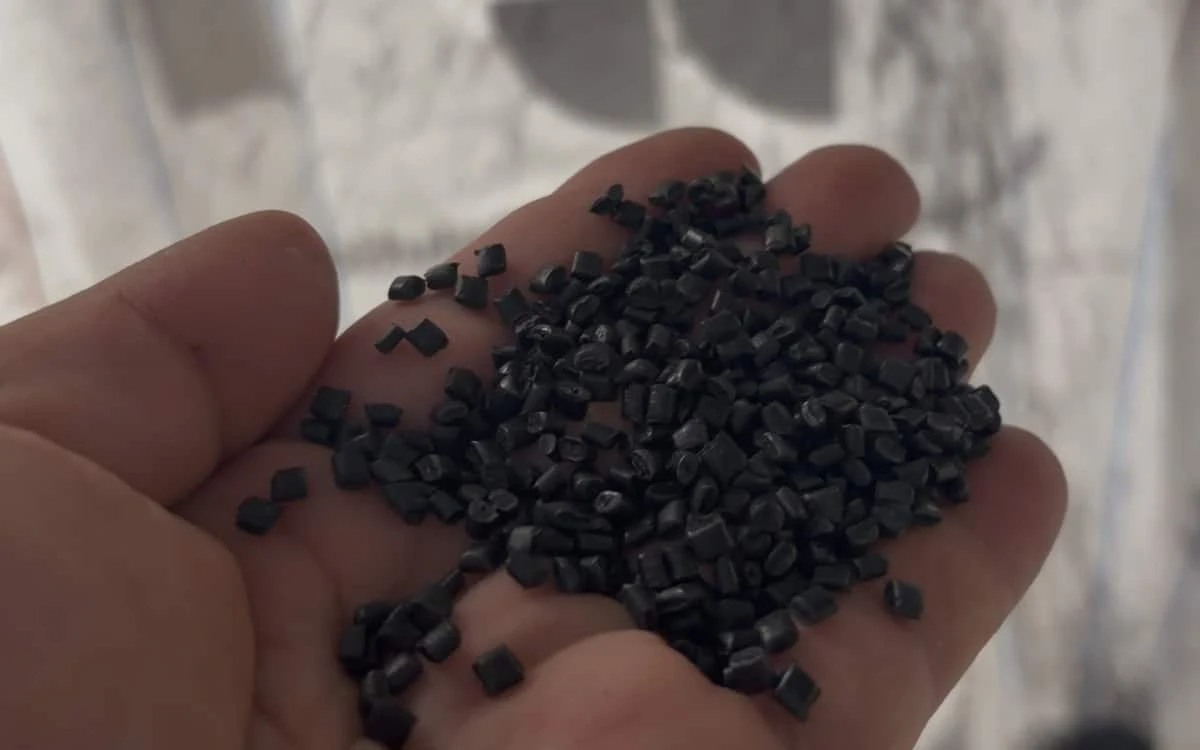
| PE bottle caps | — | Strong mixingSide feeder: CaCO₃ or talc powder | Filled PE compound for injection moulding |
| PP sheetwith 30% glass fibre | Crushed, under 20 mm · bulk density 350 kg/m³ | Strong mixing cuts the fibre shortSide feeder: TPE or other polymer | Modified PP compound for sheet extrusion |
The line, station by station
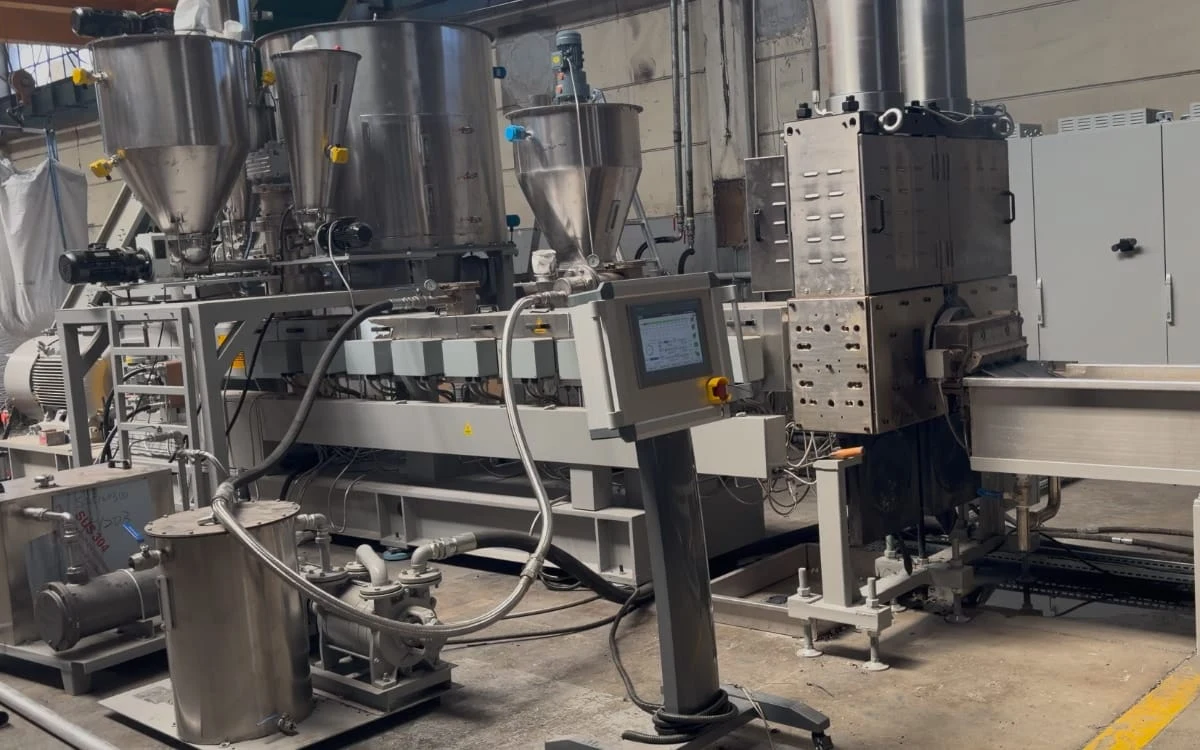
As delivered for PP and PE scrap at 600–1,500 kg/h. Feeding and pelletizing are chosen with the material.
| Station | Equipment | What it does |
|---|---|---|
| Feeding | Force-feeding systemFeeders for virgin polymer and additivesLiquid injection | Mechanical assistance reduces bridging and feed-rate fluctuations of low-bulk-density scrap. |
| Extrusion & degassing | SAT twin screw extruder, L/D 40Multi-stage vacuum ventingTwo-stage water-ring vacuum pump | Plasticizes and mixes the recipe; extracts volatiles and moisture. |
| Filtration | Continuous screen changerMelt pump | Intercepts unmelted particles and inorganic impurities; the melt pump re-stabilizes the pressure of the filtered melt. |
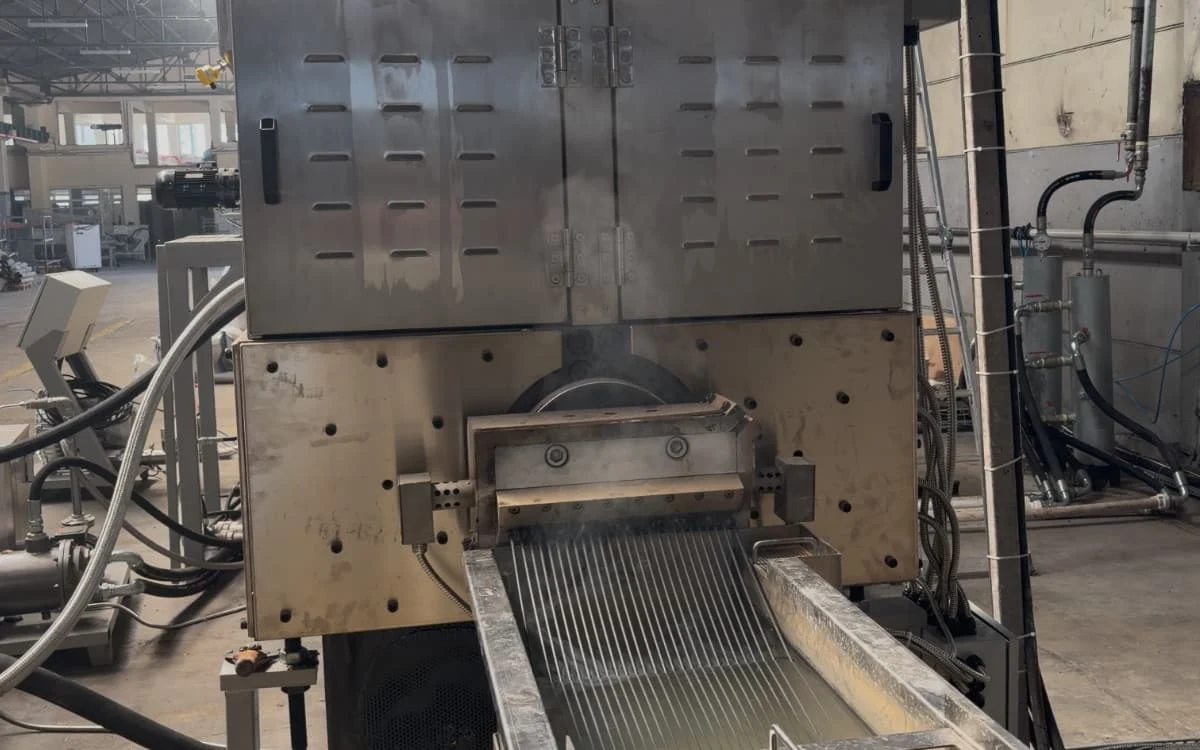
| Pelletizing | Water-cooled strand or underwater pelletizingClassifierStorage silo | Underwater pelletizing has no strands to break when the melt strength varies between batches. |
Delivered lines
| Delivered line | Extruder | Pelletizing | Output |
|---|---|---|---|
| High-GF PP UD tape scrap, Europe | SAT110, L/D 40 | Water-cooled strand pelletizing | 600 kg/h · 1,000 kg/h on pure PP flakes |
| PP crushed material with virgin PP, India | SAT110, L/D 40 | Underwater pelletizing | ~1,500 kg/h |
| Crushed plastic flakes, recycling and modification | SAT95 | Underwater pelletizing | 1,000 kg/h |
Reference project · Europe
70% glass-fibre PP scrap, compounded to about 30%
- Extruder
- SAT110, L/D 40
- Pelletizing
- Water-cooled strand
- Bulk density
- 296 g/L
- Glass fibre
- 70% → ~30%
Force-feeding system for scrap of 296 g/L, of which 64.7% is finer than 5 mm. It reduces bridging and feed-rate fluctuations.
Wear-resistant barrel liners and screw elements where the 70% glass fibre loads them.
Virgin PP and additives are metered in continuously to a theoretical target of about 30% glass fibre.
In commercial operation at 600 kg/h; 1,000 kg/h when the line pelletizes 100% pure PP flakes.
More on PP and PE recycling
Know How
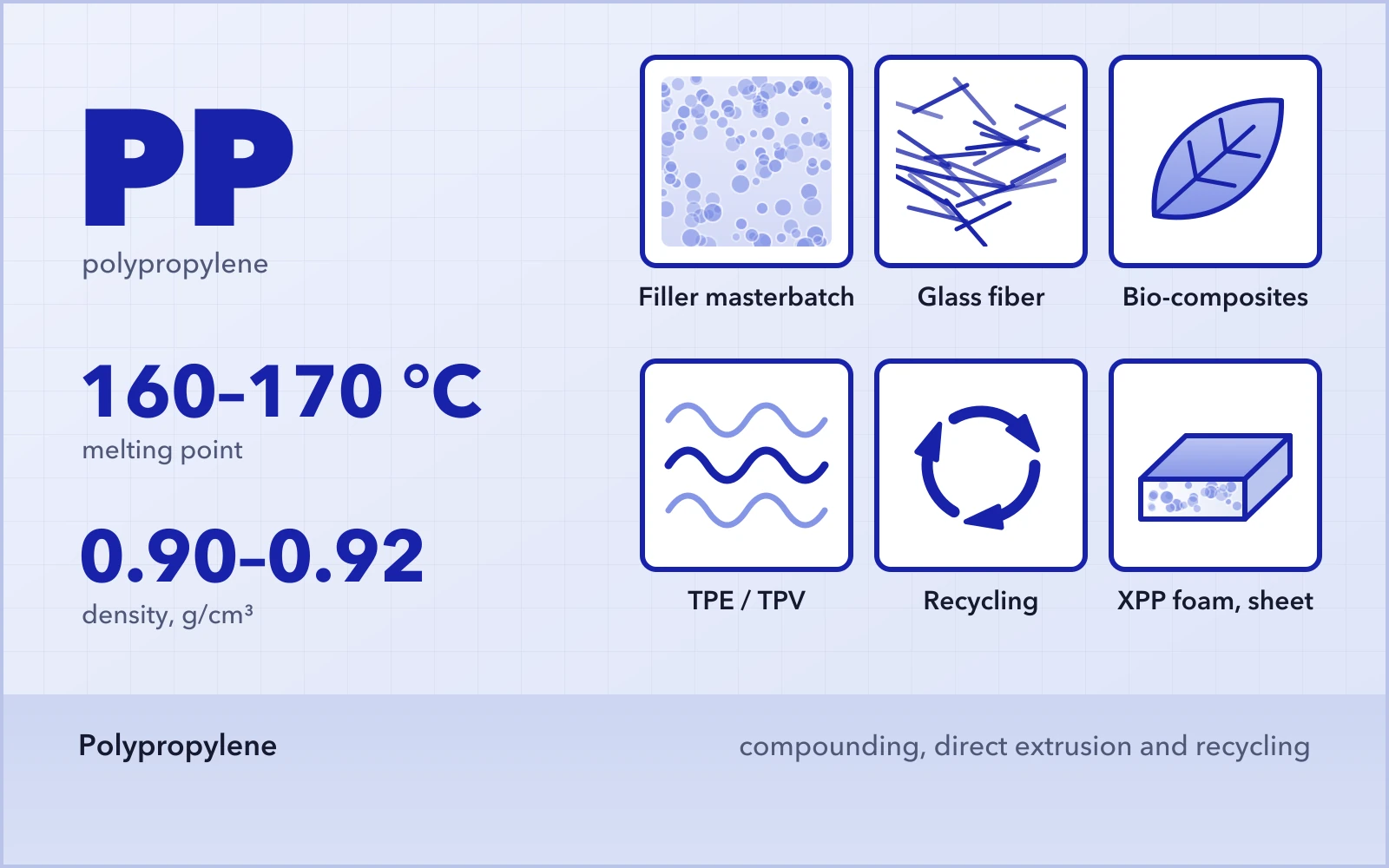
Polypropylene (PP) Compounding & Extrusion Guide – Manufacturing, Processing & Recycling
PP processing route by route, with a section on recycling: moisture, bulk density, degassing and feeding.
 Read the guide
See also
 Know How
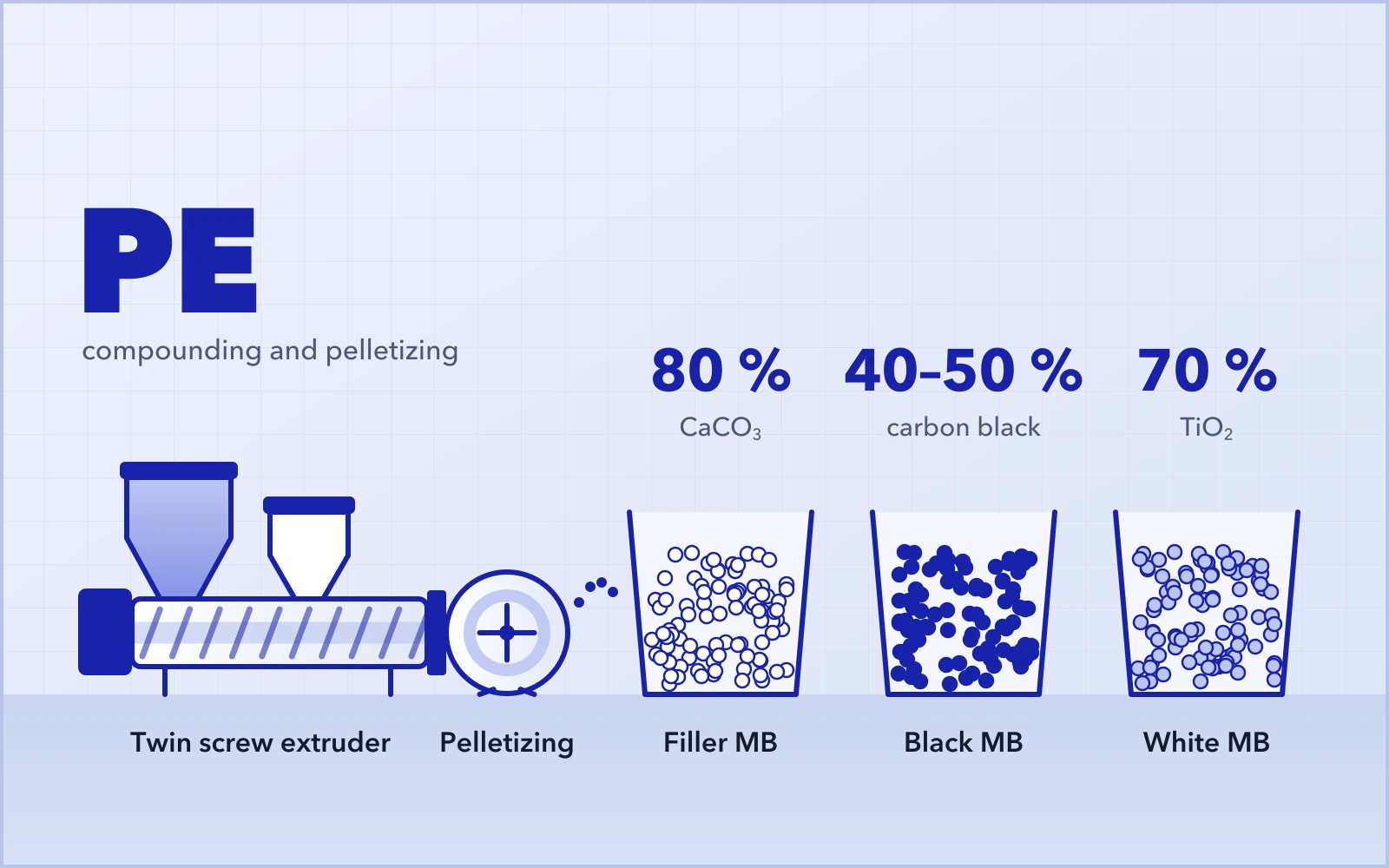
PE Compounding, Extrusion & Pelletizing: Applications, Formulations and Extruder Solutions
PE and polyolefin recycling: materials, products and what limits them.
 Machine
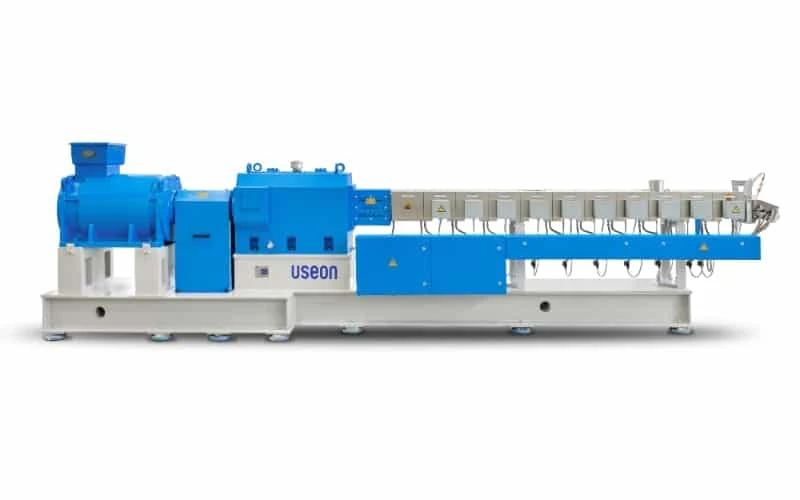
Co-rotating Twin Screw Extruder
The SAT series used on the delivered lines.
 Pelletizing
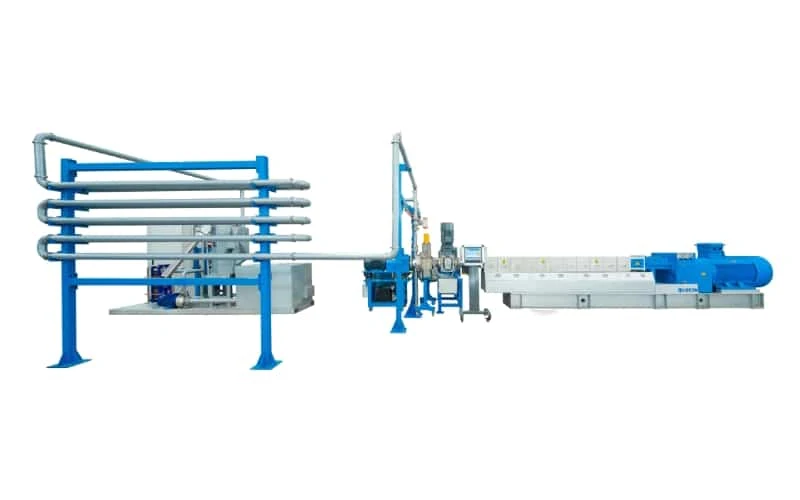
Underwater Pelletizing System
For melts whose strength varies between batches.
 Upcycling
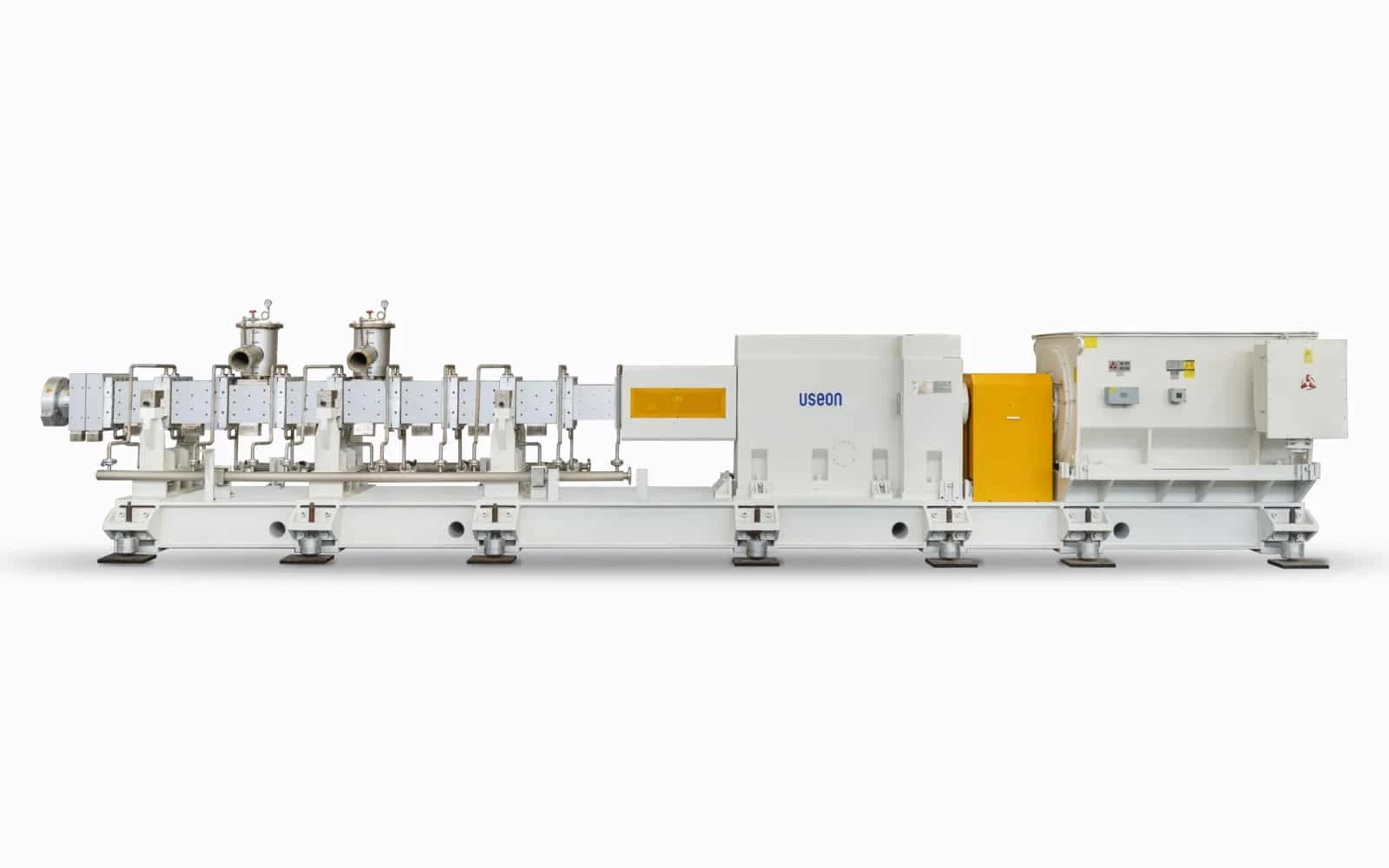
PET Recycling
Bottle flakes, film and fibre: PET has pages of its own.
Get a quote
Tell us what scrap you have, in what form it arrives and what the pellets are for. We set up feeding, degassing and filtration for it.
- 01Scrap: polymer, form, size, bulk density, contamination
- 02Output per hour and what the pellets are for
- 03Line set-up, pelletizing and quotation

Souder Chen
Head of Compounding Division
With USEON since 2008. Twin screw compounding, devolatilization and recycling lines.