
Extruder & Compounding Machines
USEON builds the extruders, pelletizing systems and controls of a compounding line. Each machine is supplied on its own or as part of a complete, ready-to-run line.
- Extruders
- Pelletizing systems
- Control system
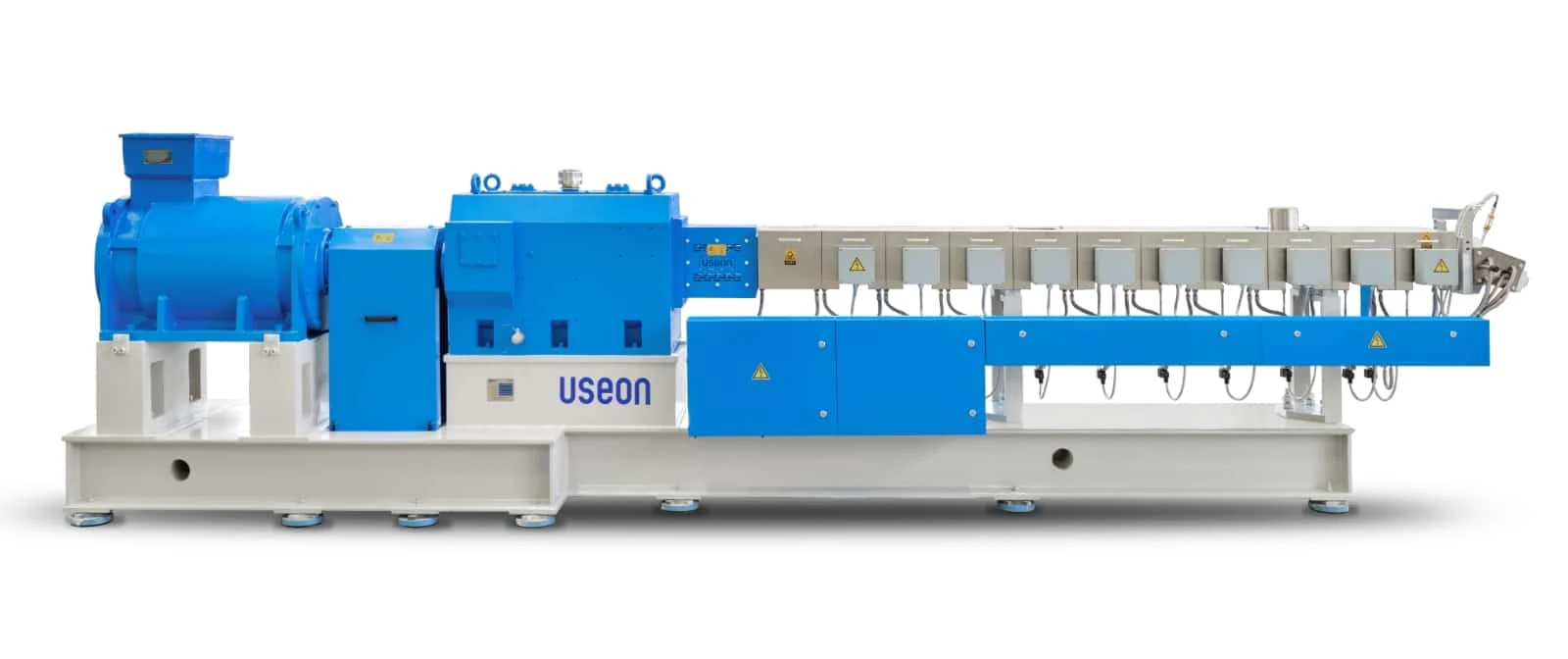
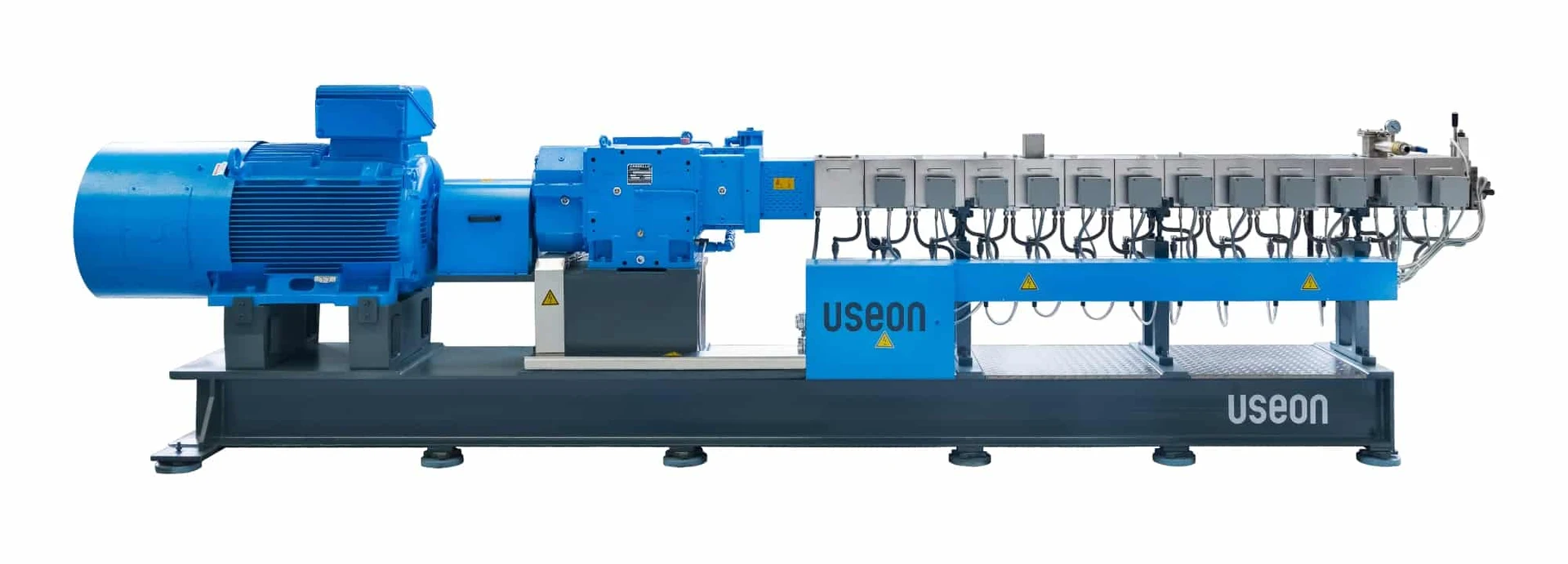
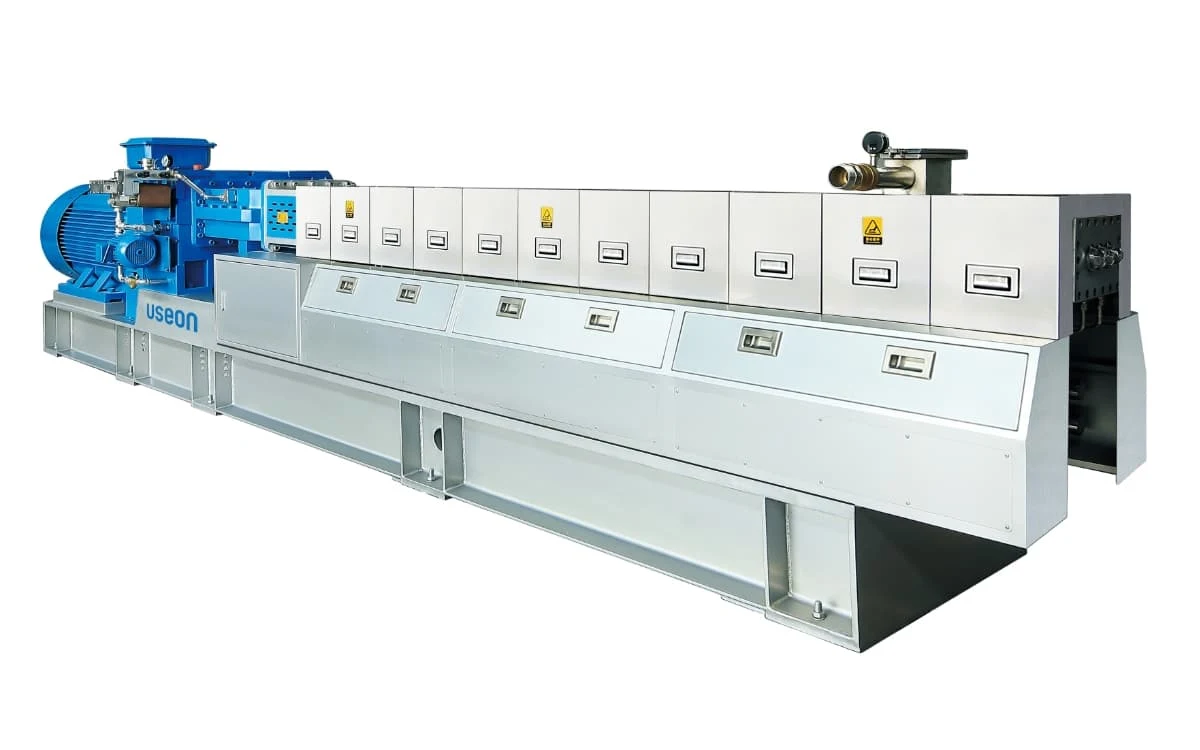
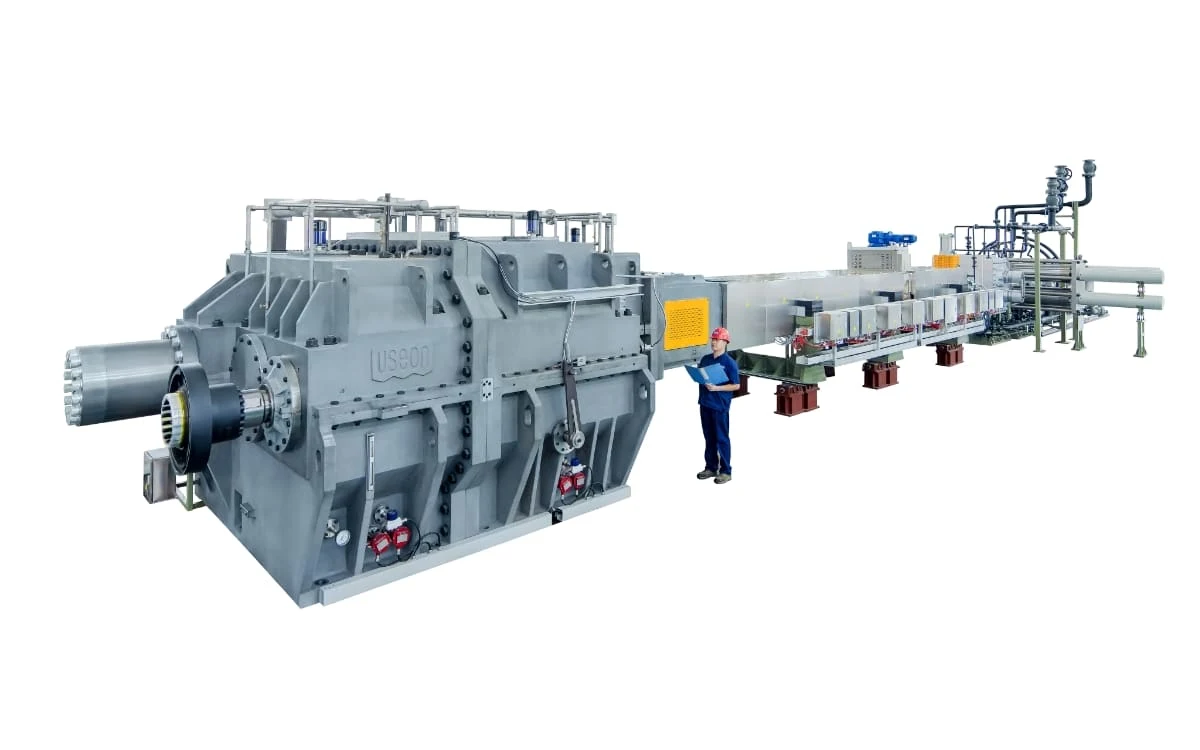
- Twin screw diameter, Lab-20 to the large SAT
- 22–360mm
- Single screw diameter, TDD20 to TDD500
- 20–500mm
- Underwater pelletizing, UWP300 to UWP4000
- 50–8,000kg/h
The machines, in the order the material meets them
A compounding line has seven stations and one control system. Every machine with a page of its own is linked from its station.
- 01Feeding
Vacuum loading, volumetric or loss-in-weight feeders, side feeders.
Shown with each application - 02Extruder
Melts, mixes, degasses and builds pressure.
- 03Melt filtration
Screen changer and melt pump.
Configured with the line - 04Pelletizing
Six ways to cut the pellet.
- 05Dewatering & classifying
Centrifugal dryer, vibrating classifier.
Part of each pelletizing system - 06Conveying & storage
Blower and silo.
Configured with the line - 07Packing
Bags or jumbo bags.
Configured with the line
One control system for all seven stationsIntelligent extruder control system
Buying a whole line for one product? Masterbatch machine shows a complete filler, color or additive masterbatch line, station by station.
Extruders, by screw arrangement
One, two or three screws, or two extruders in a row. The arrangement follows from the material: how it feeds, how much shear it takes and whether it may meet water at the die.
Most lines
Twin screw
The standard for compounding. Usually the more economical choice.
- Sizes
- 22–360 mm · five series
High filler
Triple screw
When feeding volume limits the output: light powders, very high filler loading.
- Sizes
- SAT-T35 to SAT-T95
Heat-sensitive
Tandem: twin + single
Mixing in the twin screw, cooling and pressure build-up in a slow single screw.
- Sizes
- SAT52-TDD150 to SAT95-TDD240
Melt extrusion
Single screw
Melt extrusion with venting, force-fed lumps, or the second stage of a tandem.
- Sizes
- TDD20 to TDD500
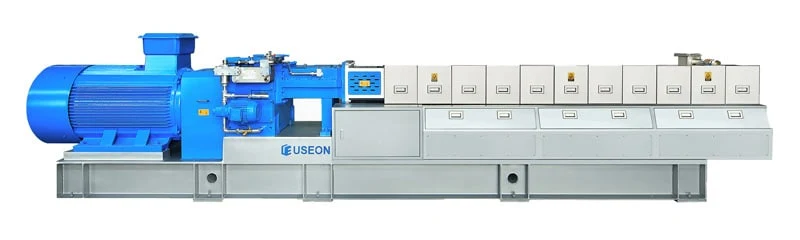
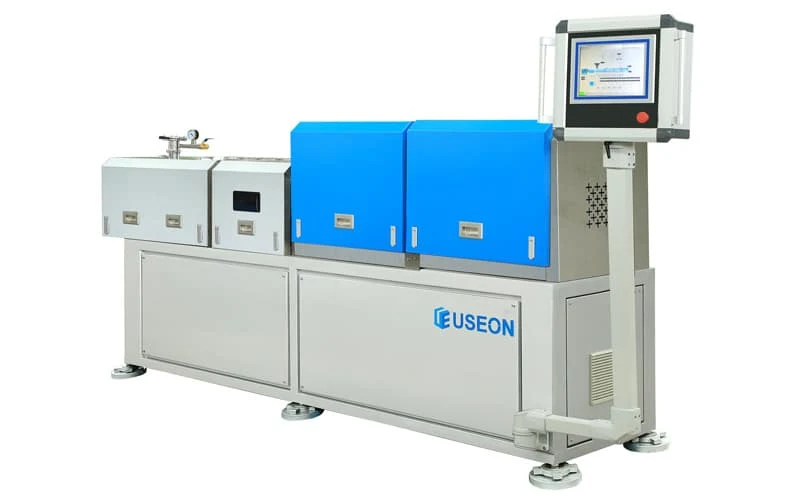
Twin screw extruders: five series
Compare the series side by side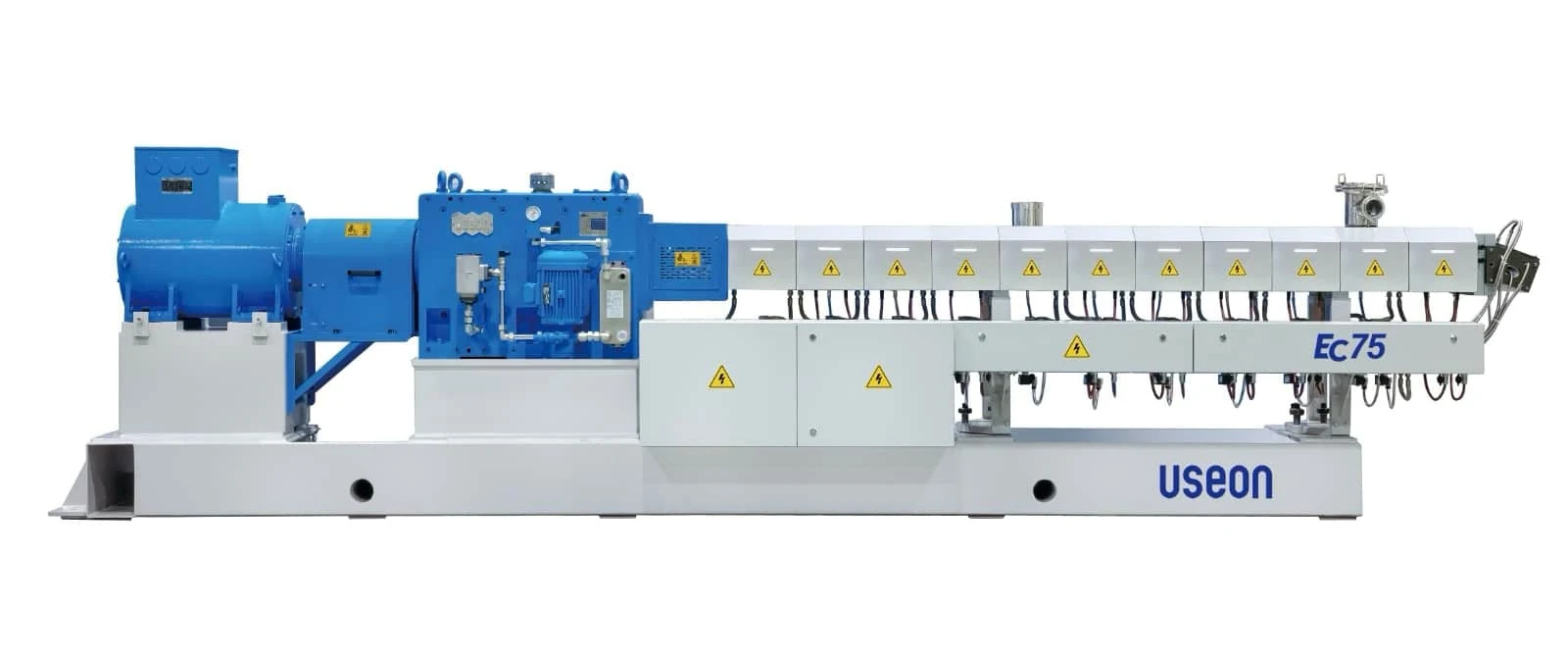
Pelletizing: six ways to cut a pellet
There is no perfect pelletizing machine, only the one most suited to your material. Where the cut happens and whether the pellet meets water decide the choice.
| Method | After the die | Pellet meets water | Pellet shape | Typical materials |
|---|---|---|---|---|
| Water cooling strand | Strand dieWater bathWater wiperCutClassifier | Yes | Cylindrical | Most compounds: engineering plastics, glass fibre reinforced, colour masterbatch |
| Air cooling strand | Strand dieAir cooling conveyorCutClassifier | No | Cylindrical | Materials that must stay dry: PLA / PBAT, starch blends, natural fibre, high filler |
| Under water strand | Strand dieWater slideCutCentrifugal dryerClassifier | Yes | Cylindrical | Recycling with frequent screen changes; PET; glass fibre reinforced PBT / PA |
| Water ring | Die plateCut at die faceWater ringCentrifugal dryerClassifier | Yes | Lens-shaped | PE / PP filler masterbatch, TPV / TPE, EVA, soft PVC |
| Underwater | DiverterDie plateCut under waterWater loopCentrifugal dryer | Yes | Near-spherical | Soft and sticky elastomers, micro-pellets, XLPE, high throughput |
| Air cooling die face | Die plateCut at die faceAir conveying, cycloneVibration cooling conveyor | No | — | PVC, HFFR, WPC, high filler and degradable masterbatch |
Intelligent extruder control system
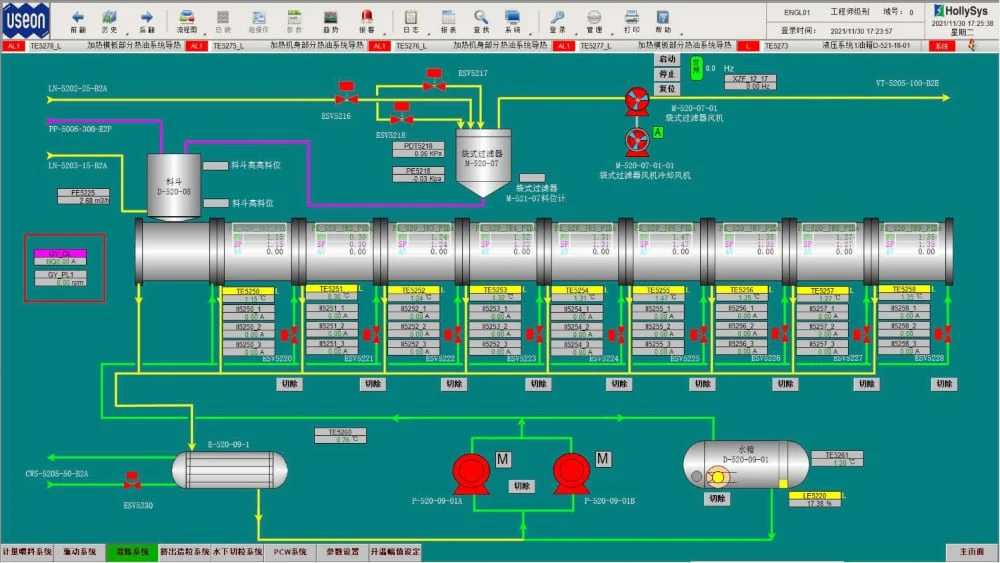
One control system runs all seven stations. It is built for production management, and our experts can diagnose your machines via the internet.
The design is modular: it covers your present demands and can be extended for future requirements.
Or start from the material
If you know what you want to make but not yet which machine, the industry pages go the other way round: from the product to the line.
Compounding & extrusion
Masterbatch, engineering plastics, cable, TPE, PVC and bioplastic compounds, reactive extrusion, polyolefin finishing.
Find your application IndustryFoam extrusion
XPS and PET foam boards, EPS and PLA foam beads, XPE and microfoam sheet, and lab-scale lines.
Find your foam lineOther lines built on these machines
UpcyclingDevolatilizationSheet extrusionNew energySpecial application
Before you choose
Three guides from our process engineers.
Single Screw vs Twin Screw Extruder: Key Differences & How to Choose
Where each one fits, and when a twin screw is worth it.
Read the guide ThroughputTwin-Screw Extruder Throughput Bottlenecks: How to Find the Real Bottleneck
How to find the real bottleneck: feeding, torque, venting or the die.
Read the guide Melt temperatureWhy Is the Melt Temperature Higher Than the Set Temperature in a Twin Screw Extruder?
Where the heat in a twin screw extruder comes from.
Read the guideNot sure which extruder fits? Tell us the material, the formulation and the output you need. We recommend the machine and quote it alone or as a complete line.
- 01Polymer, fillers or fibres and their share
- 02Target output, and the machines you already run
- 03Recommendation, configuration and quotation

Souder Chen
Head of Compounding Division
With USEON since 2008. Twin screw compounding, devolatilization and recycling lines.