
PET Recycling
Twin screw extrusion lines that take PET bottle flakes, popcorn, film, fibre and sheet scrap straight to pellets, fibre, strap, film, sheet or foam. A strong vacuum replaces the traditional drying process and keeps the IV drop small.
- Bottle flakes
- Popcorn
- BOPET film
- Fibre & yarn
- Sheet scrap
- IV drop, about 0.04 dl/g
- < 5%
- Vacuum level at the extruder
- < 0.5kPa
- Energy saved against the traditional drying process
- Up to 40%
- Output per extruder, SAT65 to SAT175
- 200–4,000kg/h
About PET: every product needs its own IV
PET resins are produced commercially from ethylene glycol (EG) and terephthalic acid (TPA). What a recycled PET can become depends on the intrinsic viscosity it keeps.
Intrinsic viscosity by application
dl/g
| Application | Intrinsic viscosity (IV) | Molar mass |
|---|---|---|
| Textile | 0.64dl/g | 15,000–20,000 g/mol |
| Bottle | 0.75–1.0dl/g | 24,000–36,000 g/mol |
| BOPET film | 0.64dl/g | 15,000–20,000 g/mol |
| Sheet | 0.7dl/g | 20,000–25,000 g/mol |
| Tire cord | 1.0–1.2dl/g | 36,000–50,000 g/mol |

Hydrolysis reaction
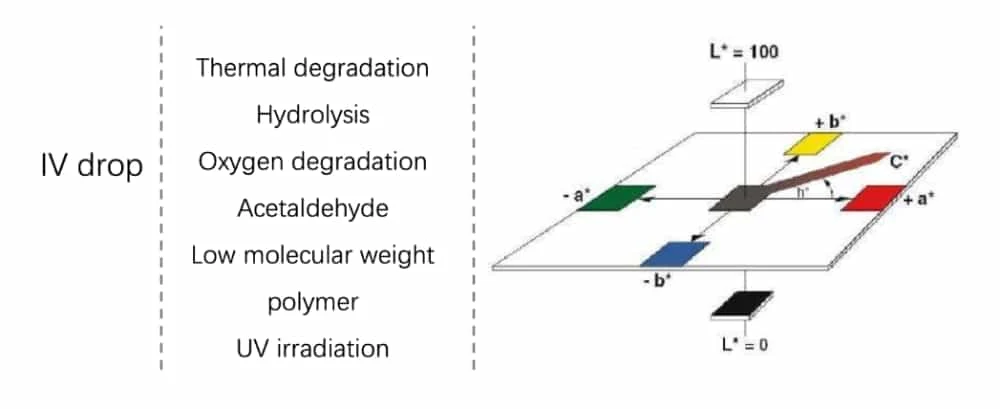
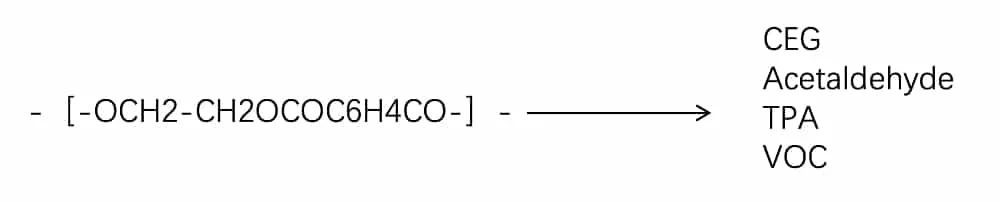
Esterification, the first step of PET synthesis, also occurs during melt polycondensation, solid-state polycondensation and extrusion. It is an equilibrium reaction, so it is always accompanied by its reverse: hydrolysis.
Thermal degradation reaction
Thermal degradation happens above the melting point and is inevitable. Its activation energy is higher than that of polycondensation, so it becomes heavier as the temperature rises.
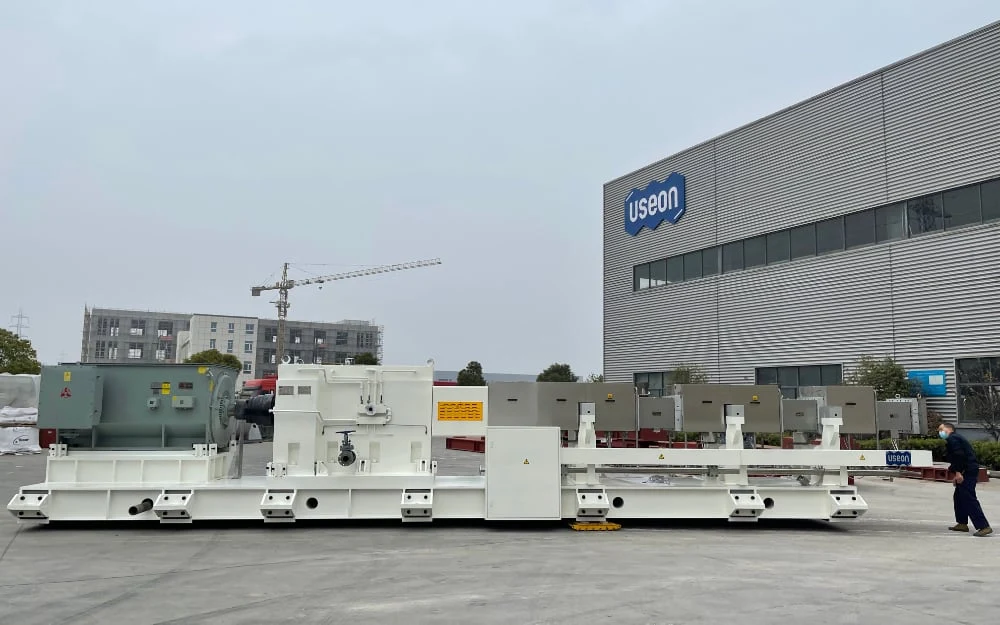
Special extruder for PET recycling
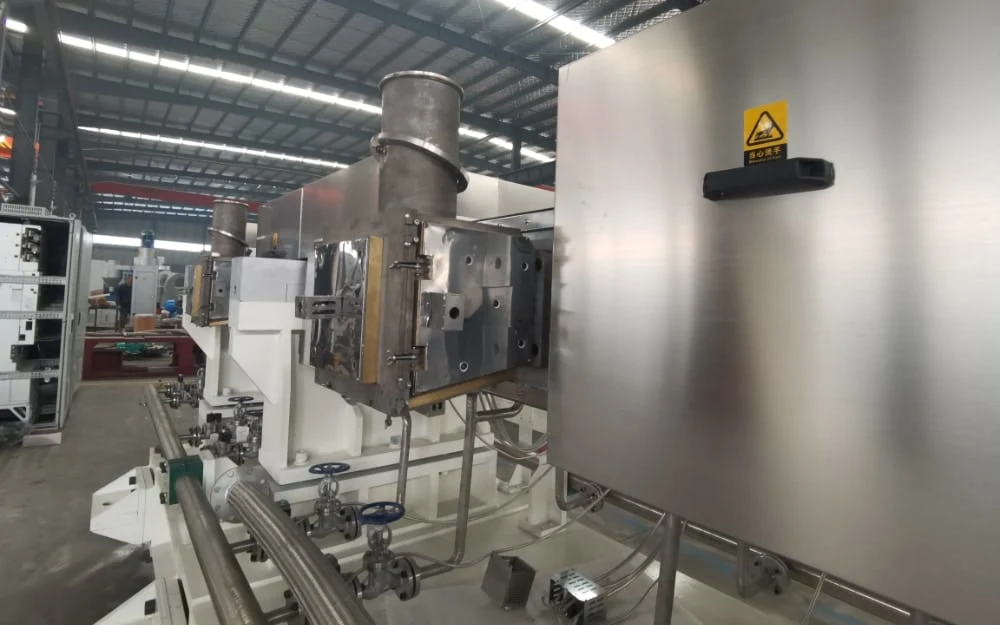
Four design decisions answer the two reactions above: remove the moisture under vacuum, and melt at a lower temperature with less shear.
High torque gearbox
Processes PET at lower temperatures and a lower speed with less shearing, and at the same time gives a higher output.
Strong vacuum
Less VOC content and better colour. IV drop below 5%, about 0.04 dl/g.
Special force feeding system
Higher output for low bulk density material: crushed cloth, yarn and fibre, BOPET film, PET sheet, bottle flakes.
Excellent screw design
Better molecular weight distribution. Avoids yellowing and overheating; shorter residence time means less polymer degradation.
- Pre-drying-free technology
- Better dispersion, so a lower percentage of additives
- Inline compounding: colour, anti-UV agent or chain extender added in the same extruder
Applications of PET extrusion
The same extruder and vacuum system sit at the front of eight product routes. Pick the product you want to sell.
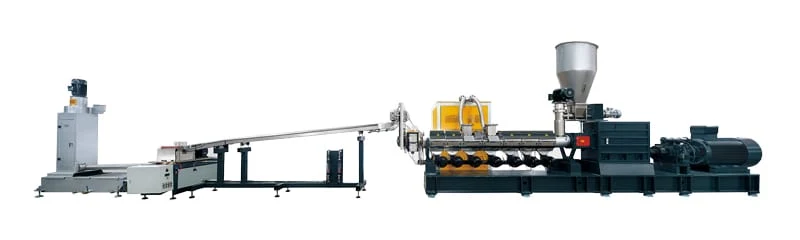
Pellets, fibre and strap
| Product | Raw material | Line | Notes |
|---|---|---|---|
| PET flakes to pellets | Flake, sheet, scrap, fines, popcorn (from fibre, film, clothes) | Twin screw extruderPelletizing | Recycle PET and maintain the same material quality as virgin PET. |
| Bottle flakes to PSF | Flake, popcorn, scrap, film, fibre, sheet with moisture less than 1.5% | Twin screw extruderGear pumpCF filterPSF | — |
| Bottle flakes to POY | Clean bottle flakes with moisture less than 1% | Twin screw extruderGear pumpCF filterLSPPOY | — |
| PET to strap | — | Pelletizing lineSSP2 / 4 strap extrusion | 2 or 4 straps from one die. |
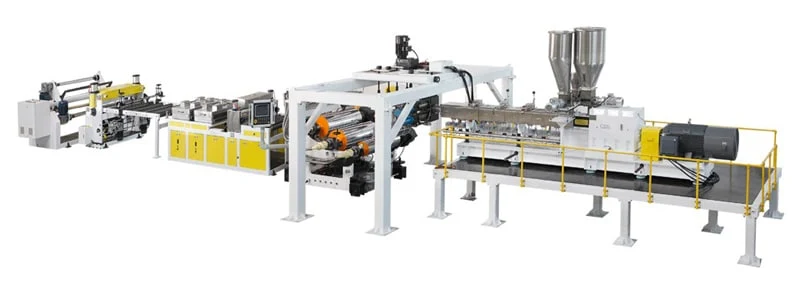
Direct extrusion: film, sheet and foam
| Product | Structure | Data | Notes |
|---|---|---|---|
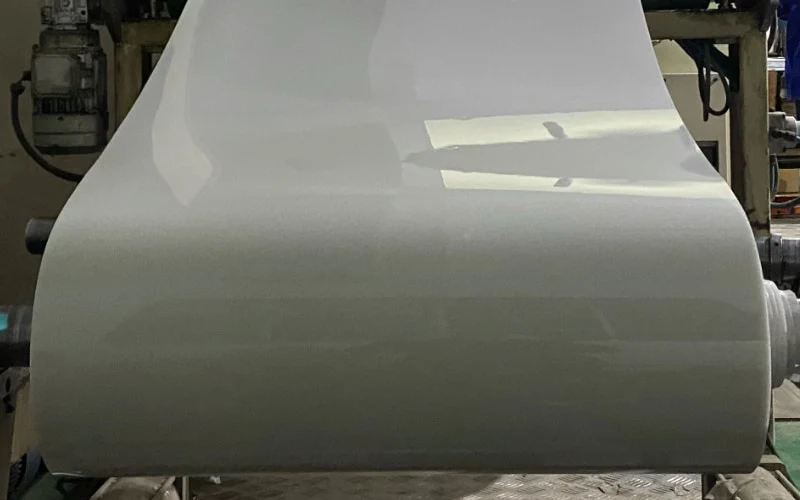
| BOPET film extrusion | A/B/C co-extrusion | SAT75–SAT135–SAT75: 2.5 t/h total · SAT95–SAT175–SAT95: 4.5 t/h total | — |
| PET sheet extrusion | Single-layer or multi-layer co-extrusion, 0.15–3 mm, for thermoforming | SAT75 to SAT110 · co-extrusion SAT75 / SAT52 to SAT95 / SAT65 · width 600–3,000 mm · 500–2,000 kg/h | Direct extrusion saves energy, space and manpower. |
| PET foam sheet | Physically foamed central layer, solid skin layers on both sides | Density 0.8–1.1 g/cm³ · thickness 0.5–1.5 mm | Production cost 5–30% lower than a solid sheet; better heat insulation for hot containers. |
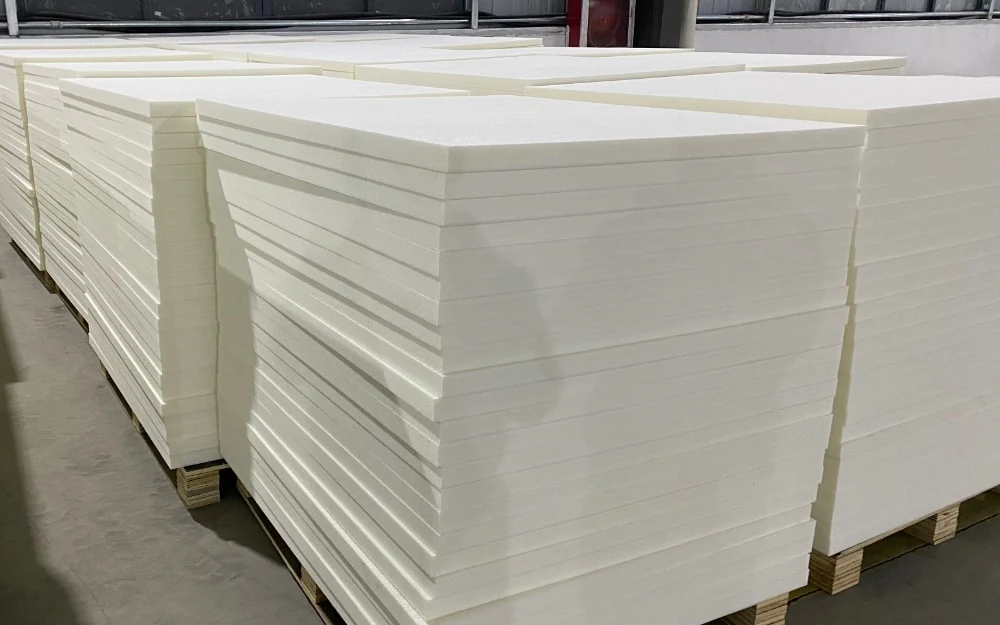
| PET foam board | Reaction, mixing and foam extrusion in one step | Density 80–350 kg/m³ · width 600–1,220 mm · thickness 5–60 mm | Core material for road and rail transportation, aviation and wind power. |
Extruder specification
| Type | Dia. (mm) | Motor (kW) | Output (kg/h) |
|---|---|---|---|
| SAT65 | 62.4 | 75–90 | 200–300 |
| SAT75 | 71 | 132–160 | 400–600 |
| SAT95 | 93 | 160–220 | 600–900 |
| SAT110 | 108 | 250–315 | 1100–1500 |
| SAT135 | 130 | 400–630 | 1500–2500 |
| SAT175 | 175 | 800–1200 | 2500–4000 |
Machine page: Co-rotating Twin Screw Extruder
Reference project · North America
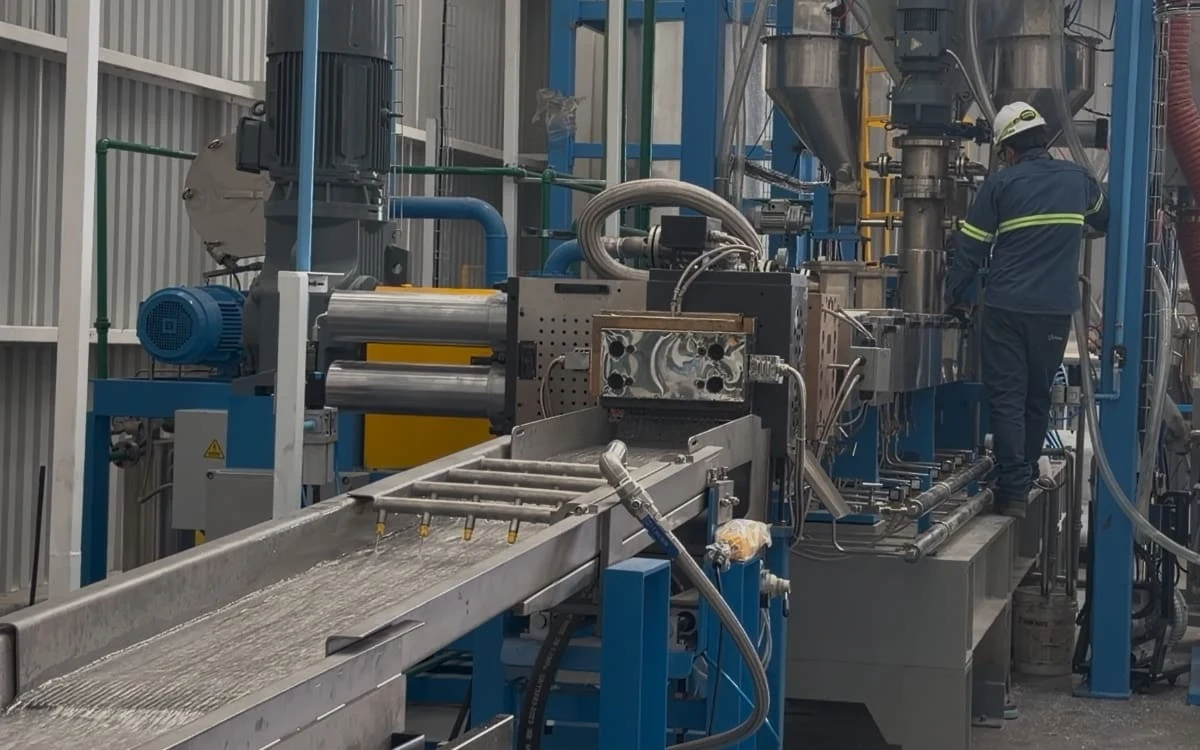
1,200 kg/h rPET bottle flakes recycling and pelletizing line
- Extruder
- SAT110, L/D 36, 315 kW
- Material
- rPET bottle flakes ≤ 10 mm
- Capacity
- ~1,200 kg/h
Forced feeding manages low density. A drying silo and a single-screw forced feeder pre-compress the lightweight flakes and reduce bridging.
Dual-stage vacuum mitigates hydrolysis risk. A Roots pump and a screw pump remove moisture and low-molecular-weight volatiles from the melt zone.
Melt pump and a 1,600 cm² screen changer keep head pressure stable through screen changes and minimise strand breakages.
Inline crystallization uses the pellets’ residual heat and reduces the risk of clumping.
More PET projects
 Middle East
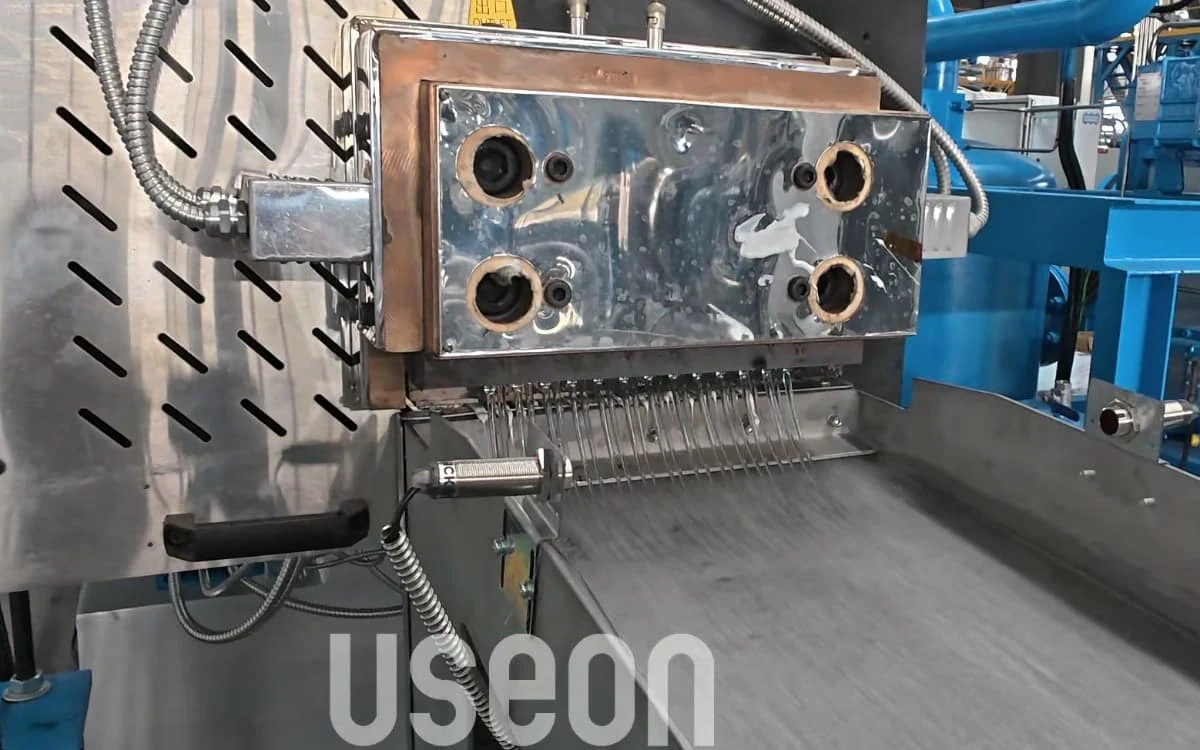
BOPET Crushed Film Recycling Line in Middle East
TDY110600–900 kg/h
 China
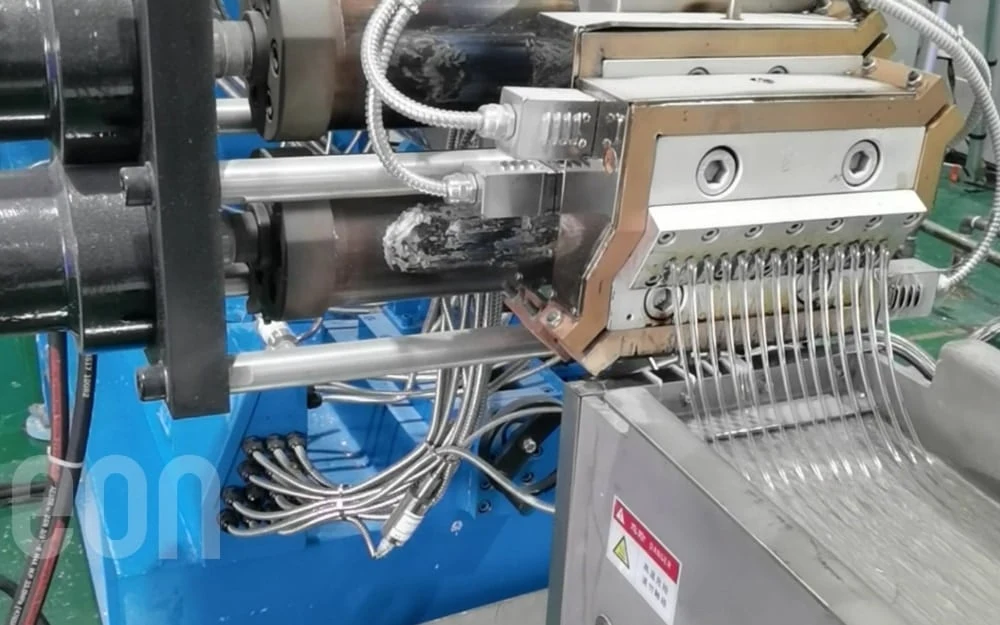
TDZ180 Extruder for BOPET Film Recycle
TDZ180800–1,000 kg/h
 USA
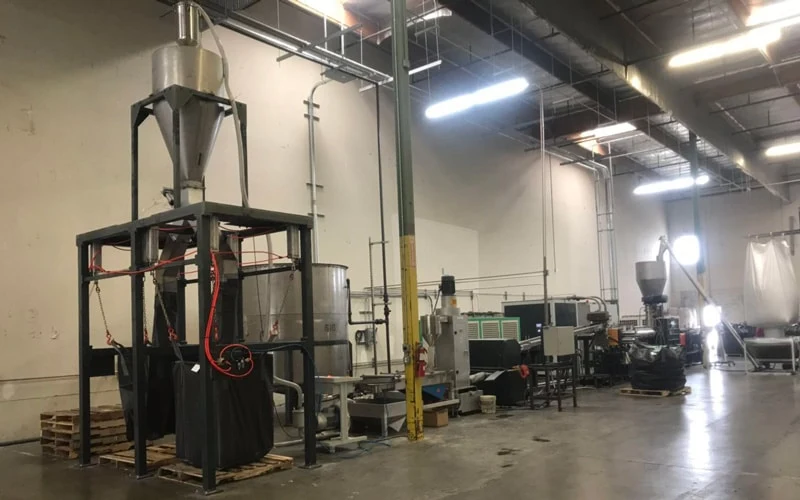
1100kg/h PET Bottle Flakes Recycling Line in USA
SAT1101,100 kg/h
 China
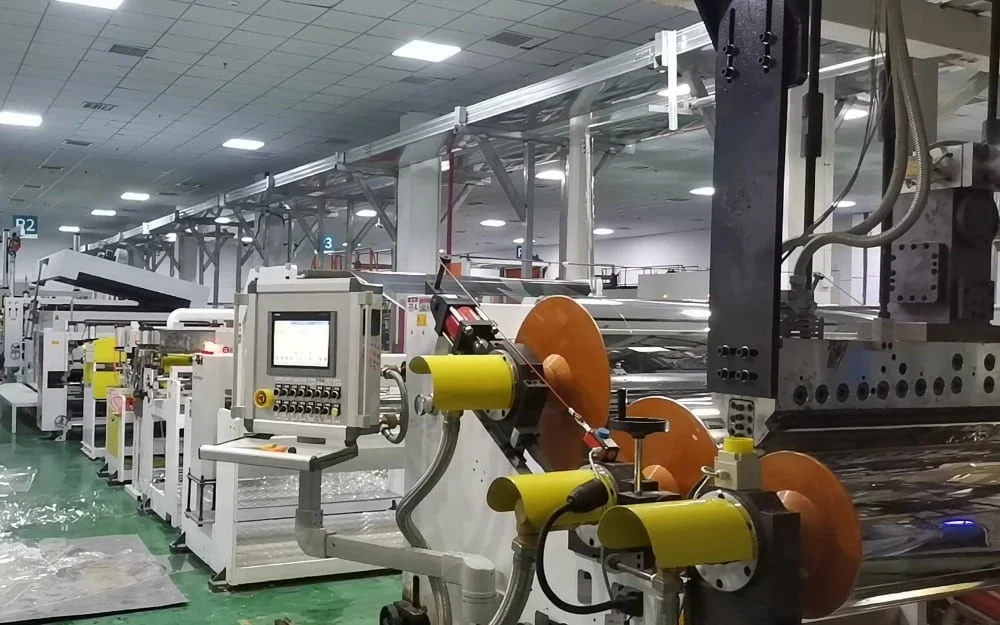
800-1200kg/h PET Sheet Production Line in Jiangsu
SAT95 + SAT65800–1,200 kg/h

Get a quote
Tell us what PET waste you have and what you want to make from it. We configure the feeding, the vacuum and the downstream for that route.
- 01Raw material: form, moisture, bulk density
- 02Product route and target IV
- 03Extruder size, line layout and quotation

Souder Chen
Head of Compounding Division
With USEON since 2008. Twin screw compounding, devolatilization and recycling lines.