
PET Bottle Flakes Pelletizing Line
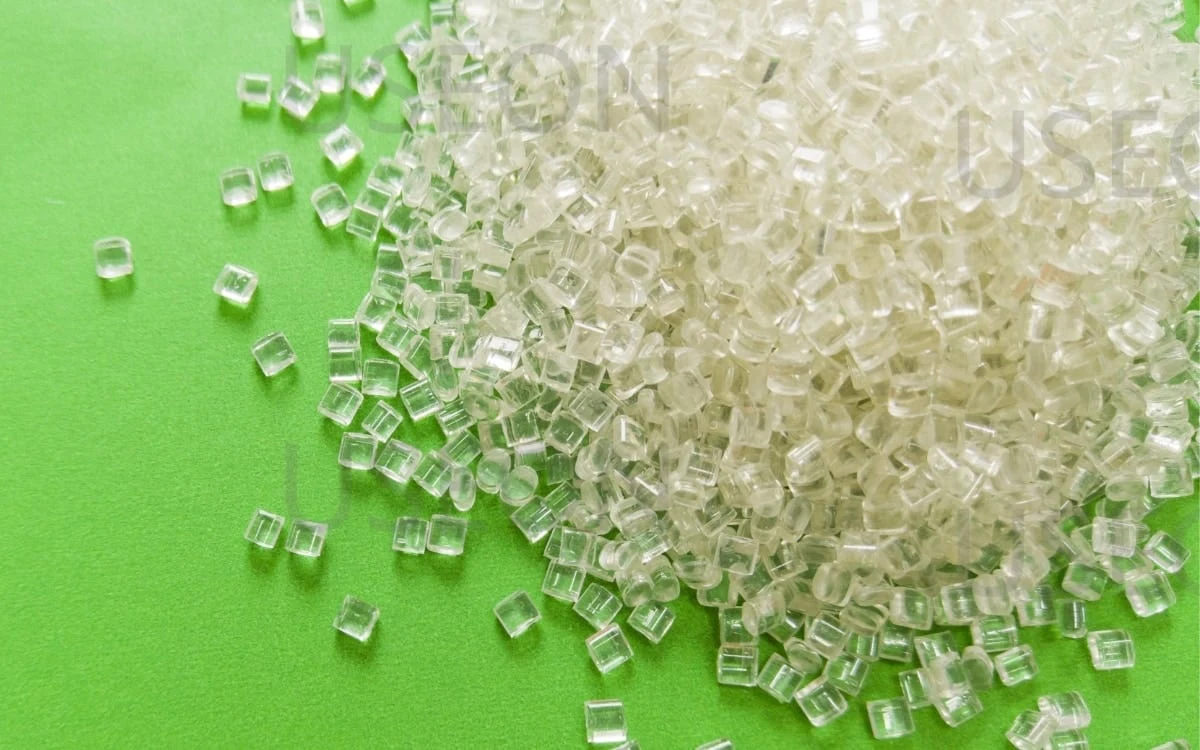
PET bottle flakes and PET popcorn go into the twin screw extruder without the pre-drying step. A highly efficient vacuum system streamlines the whole process and keeps the final pellets in good quality.
- Bottle flakes
- PET popcorn
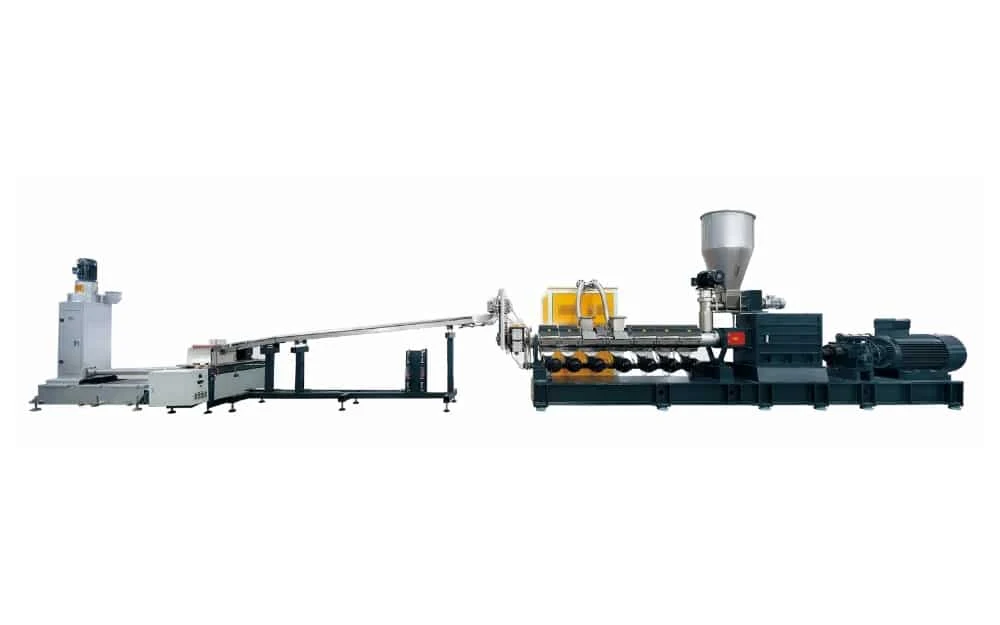
One step less: no pre-drying
Traditionally PET has to be crystallized and dried before it is extruded. This line removes the moisture inside the extruder instead.
| Route | Process | Result |
|---|---|---|
| Traditional routeDry first, then extrude | Pre-crystallizationPre-dryingSingle screw extruderPelletizing | An energy and time consuming step in front of every extruder. |
| USEON lineExtrude and degas in one machine | Flakes or popcornTwin screw extruder + vacuumPelletizingPET pellets | Up to 35% energy saved by the pre-drying-free technology. |
- Streamlined process: fewer machines to run and to maintain
- Minimized investment
How the vacuum keeps the IV drop small and how the screw design avoids yellowing is explained on the main page.
The line, station by station
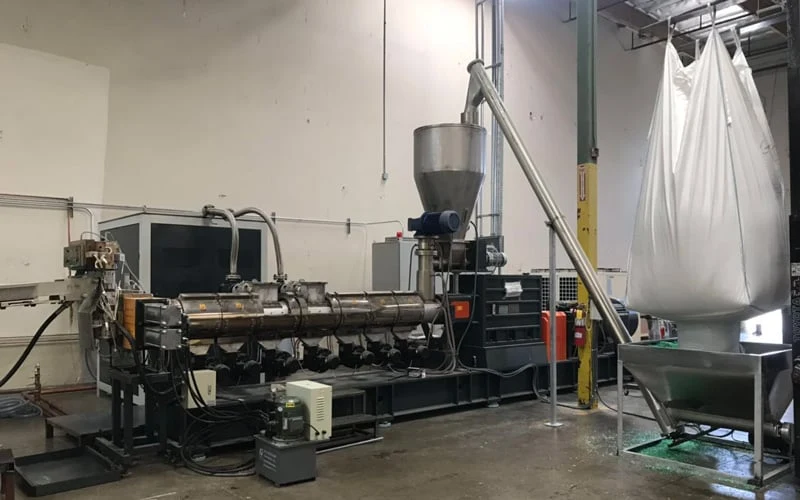
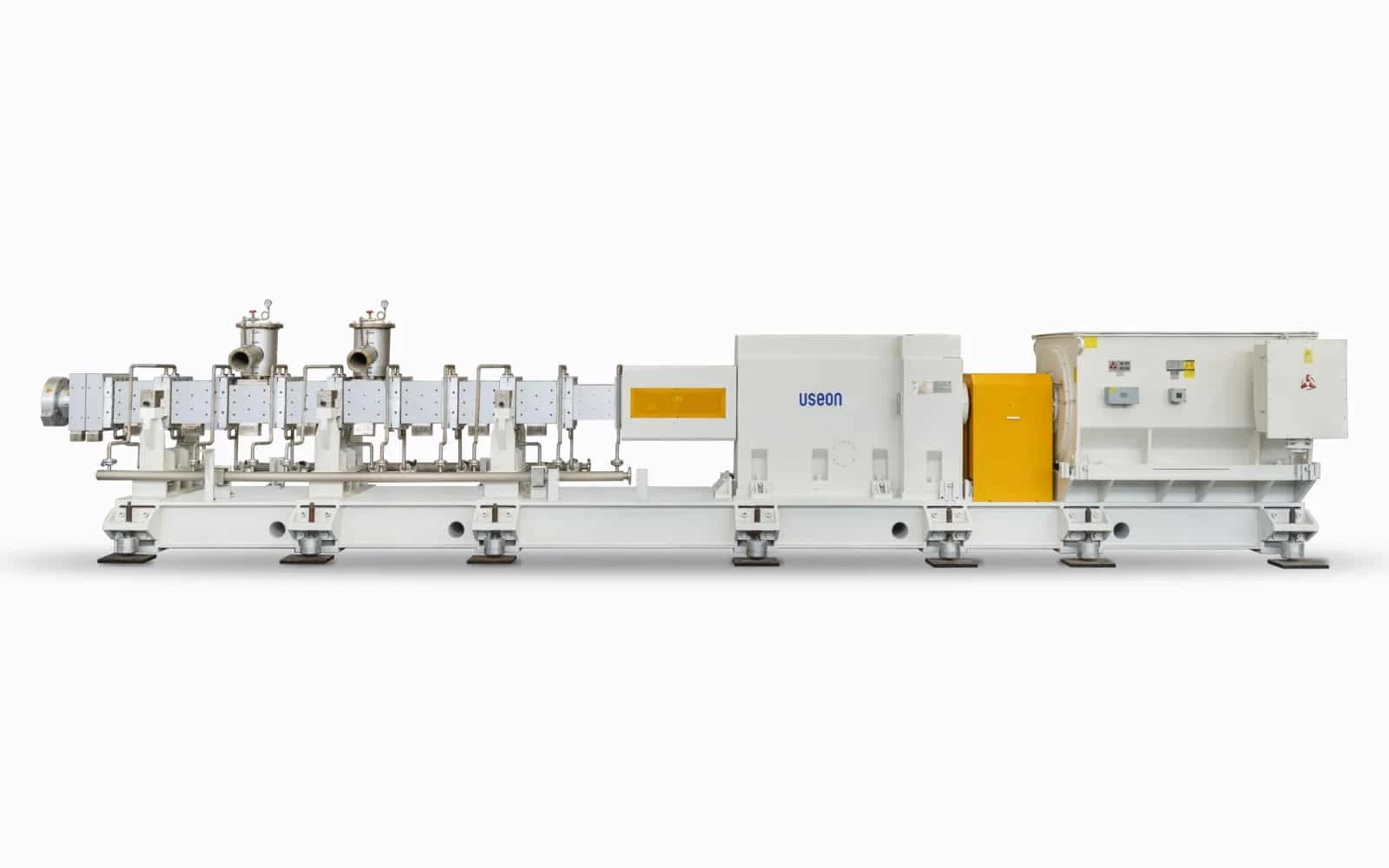
A complete pelletizing line as delivered for a 1,200 kg/h rPET project. Sizes change with the capacity; the stations stay the same.
| Station | Equipment | What it does |
|---|---|---|
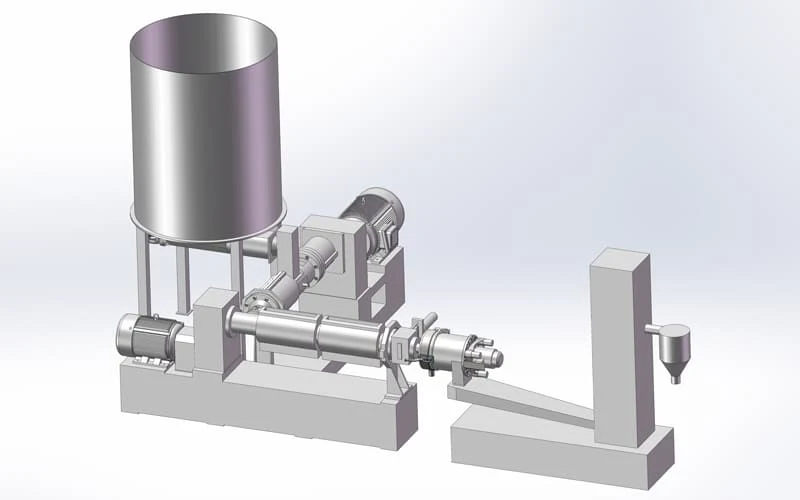
| Feeding | Insulated siloLoss-in-weight feedingSingle-screw forced feeder | Pre-compresses the lightweight flakes so they do not bridge. |
| Extrusion & degassing | SAT twin screw extruderRoots pump + screw vacuum pump | Moisture and volatiles leave the melt zone. |
| Filtration | Melt pumpDouble-piston hydraulic screen changer | Keeps the head pressure stable through screen changes. |
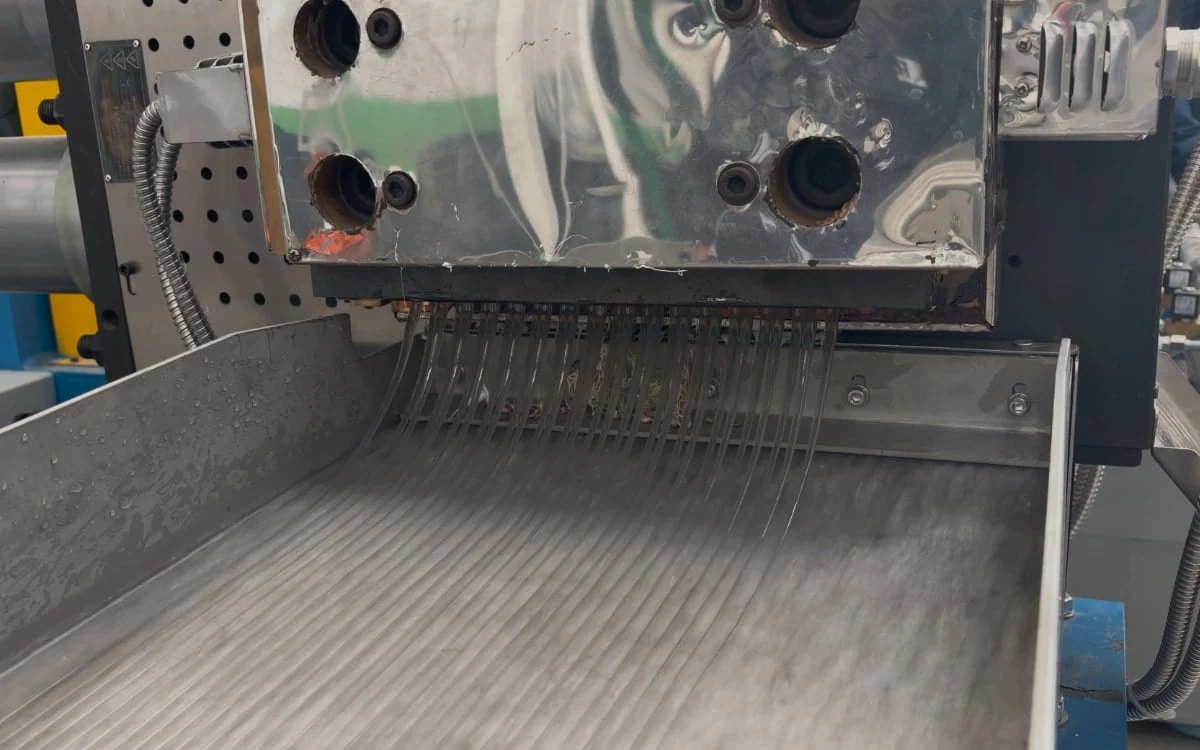
| Pelletizing | Under water strand pelletizing system | Strands are guided through water before cutting. |
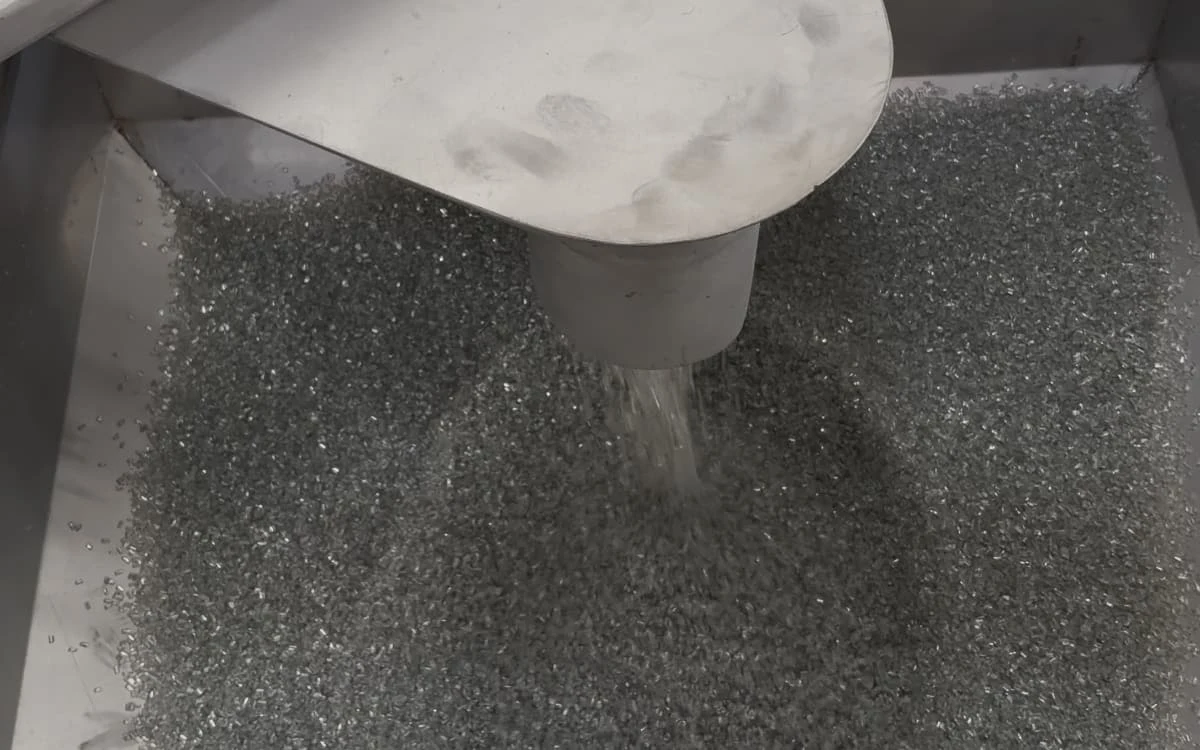
| Post-treatment | Drying siloCrystallizing silorPET pellets | Residual heat crystallizes the pellets. |
Raw materials
Two feedstocks run on the same line. What changes is the feeding.
PET bottle flakes
Low bulk density flakes, up to 10 mm in the reference line. Gravity feeding leads to bridging; a single-screw forced feeder compresses the flakes for a continuous feed rate. Delivered at 300 to 1,200 kg/h.
PET popcorn
Popcorn made from fibre, film and clothes. It runs on the same extruder sizes as bottle flakes: delivered at 350–450 kg/h on SAT75 and at 1,000–1,200 kg/h on SAT110.
Ground film, waste cloth and fibre
Fluffy scrap that is not densified first is fed by a force-feeding system on a separate line.
Sheet, scrap and fines are also processed. Tell us the form, moisture and bulk density of your material.
Extruder specification
| Model | Output (kg/h) | Screw Speed | Dia. Of Screw (mm) | L/D |
|---|---|---|---|---|
| SAT75 | 300–400 | 400 | 71.4 | 40 |
| SAT95 | 600–700 | 400 | 93 | 40 |
| SAT110 | 900–1100 | 400 | 108 | 40 |
| SAT135 | 1500–1600 | 400 | 133 | 40 |
| SAT175 | 2200–2500 | 400 | 170 | 40 |
Machine page: Co-rotating Twin Screw Extruder
Delivered lines by extruder size
Flake and popcorn pelletizing lines with a project page, grouped by the extruder they run on.
SAT75
300–600 kg/h deliveredKnow How
Guide to Polyethylene Terephthalate (PET)
The material behind this line: structure, grades, intrinsic viscosity and processing.
 Read the guide
See also
 Upcycling
PET Recycling
IV by application, the extruder and all eight product routes.
 PET Recycling
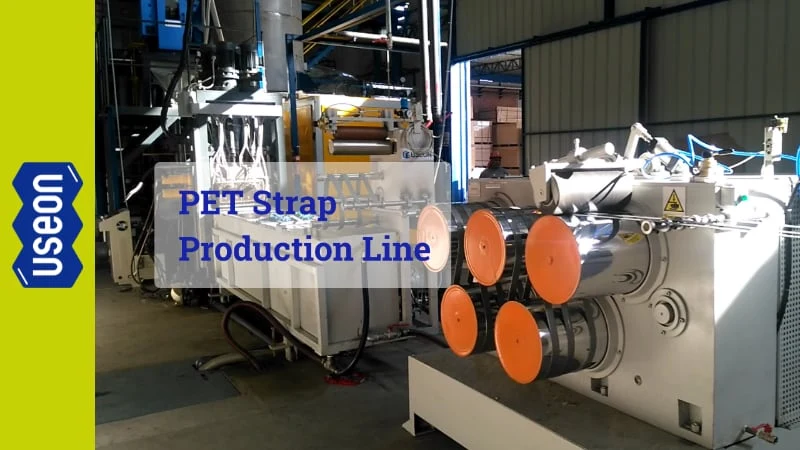
PET Straps Production Line (4 Straps Output)
From flakes to strap, four straps from one die.
 PET Recycling
BOPET Film & PSF Waste Pelletizing Line
Ground film, waste cloth and fibre with force feeding.
Get a quote
Tell us what you feed and how much you need per hour. We size the extruder and lay out the feeding, filtration and pelletizing around it.
- 01Material: flakes or popcorn, moisture, bulk density
- 02Output per hour and what the pellets are for
- 03Extruder size, line layout and quotation

Souder Chen
Head of Compounding Division
With USEON since 2008. Twin screw compounding, devolatilization and recycling lines.