
BOPET Film & PSF Waste Pelletizing Line
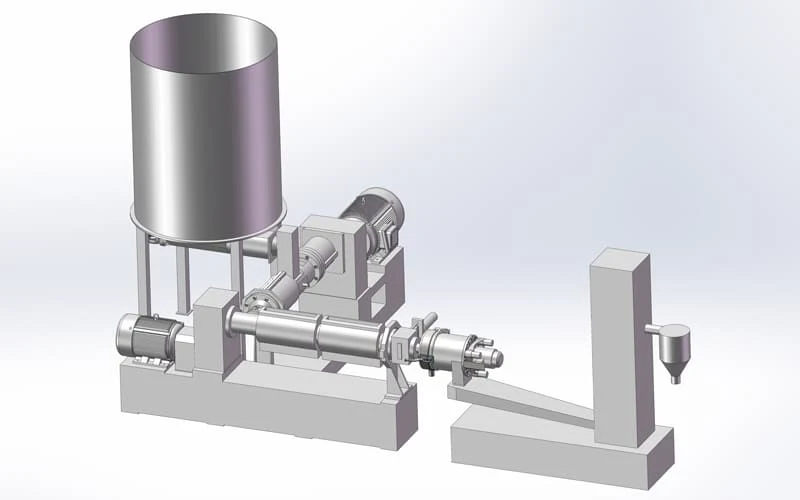
A force-feeding system in front of the extruder significantly increases the raw material intake of light PET scrap: ground film, waste cloth and waste fibre. The line is user-friendly and requires low maintenance.
- Ground film
- Waste fibre
- Waste cloth
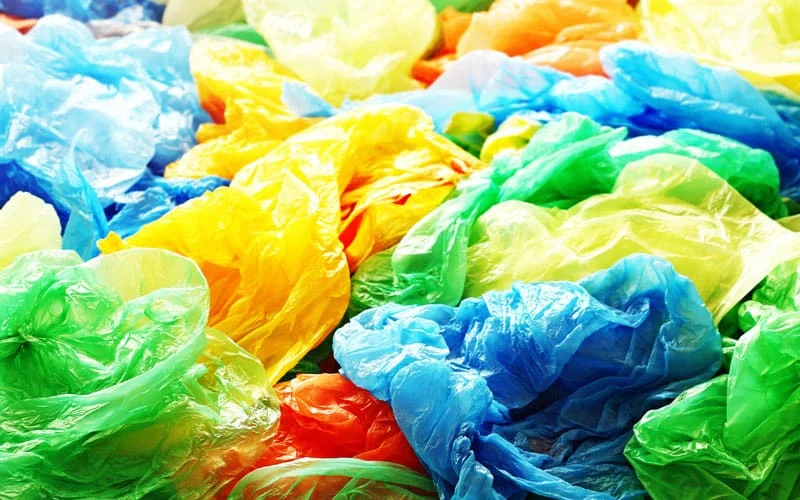
- PET plastic bags
With light scrap, the feeding decides the output
Crushed film weighs about 150 kg/m³. It does not fall into an extruder by itself.
| Feeding | What happens | Result |
|---|---|---|
| Gravity feedingThe scrap bridges | HopperBridging at the feed throatStarved screws | The feeding restricts the continuous throughput. |
| USEON lineThe scrap is pushed in | Silo with agitatorForce feederFilled screw channelsStable output | Output increased by up to 60%–100%. |
More output
The force-feeding system increases the raw material intake of the extruder.
Lower specific energy consumption
The same extruder turns out more pellets per hour.
Simple operation
User-friendly, with low maintenance.
Polyester film and fibre hydrolyse in the melt like bottle flakes do. How vacuum and screw design keep the IV is explained on the main page.
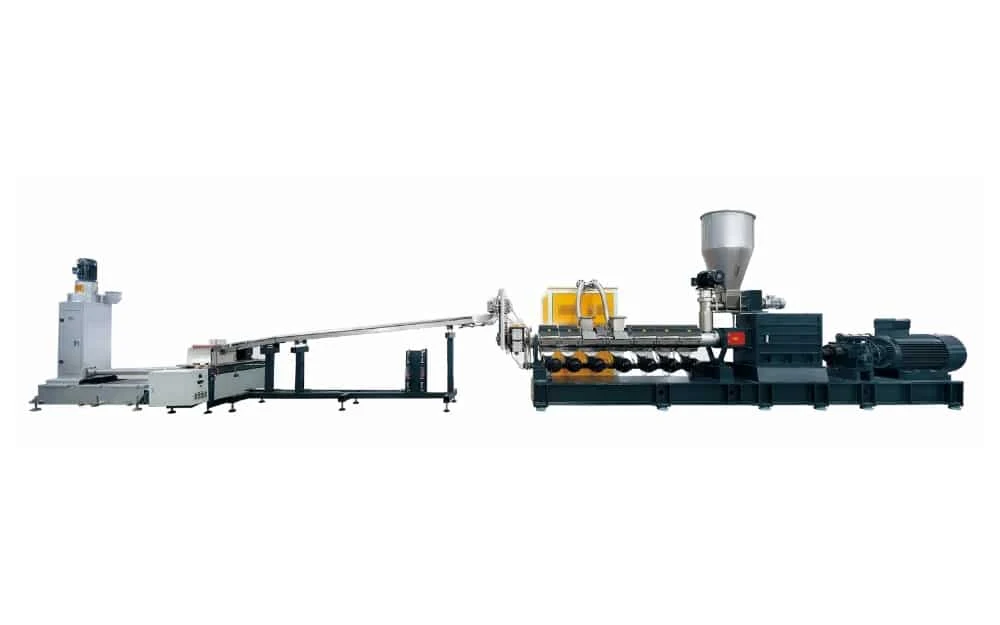
The line, station by station
As delivered for crushed BOPET film at 600–900 kg/h. Extruder and pelletizing are chosen with the material and the capacity.
| Station | Equipment | What it does |
|---|---|---|
| Feeding | Flat-bottom silo with agitatorVertical force feeder | Applies continuous mechanical thrust to the scrap and fills the screw channels. |
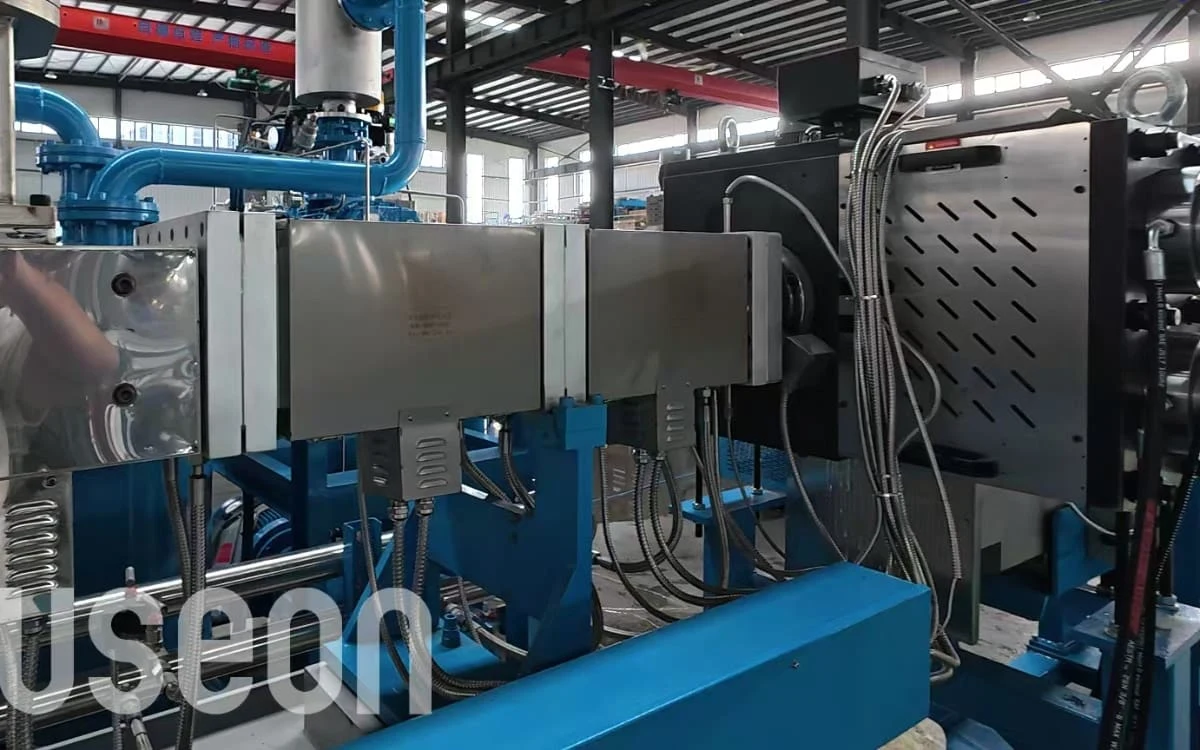
| Extrusion & degassing | TDY counter-rotating or TDZ conical twin screw extruderVacuum chamberRoots pump + screw pump | Extracts residual moisture and low-molecular-weight volatiles from the melt. |
| Filtration | Double-station dual-pillar screen changer | Intercepts unmelted impurities; fewer interruptions during screen changes. |
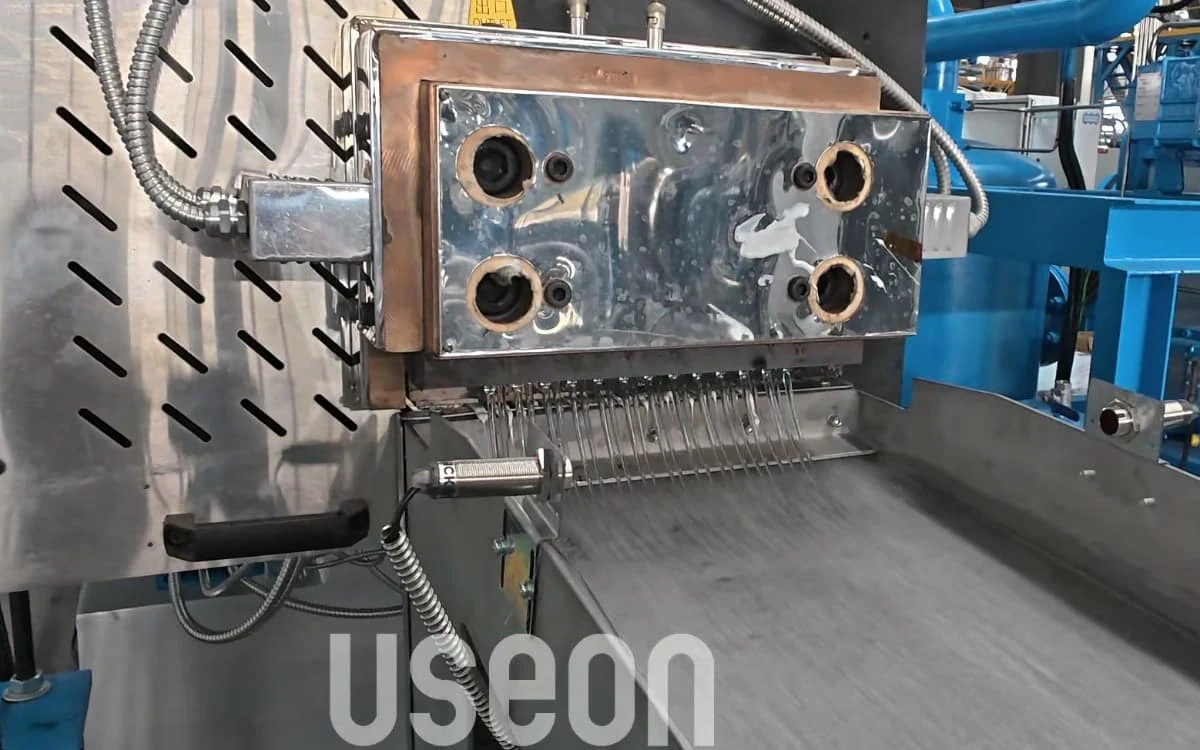
| Pelletizing | Water-cooled strand or under water strand pelletizingPET pellets | Uniform cutting; granules with a consistent appearance and bulk density. |
Recyclable materials
What these materials share is their low bulk density, not their shape.
Film
Ground film and bags
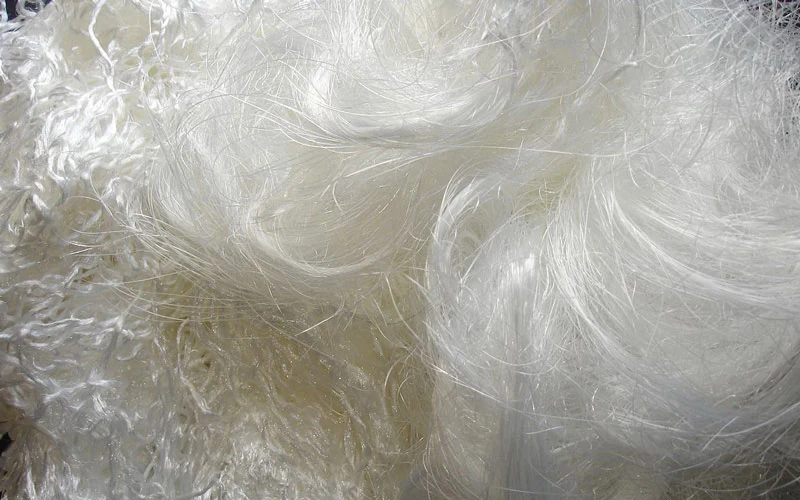
Fibre
Waste fibre and cloth
Bottle flakes and PET popcorn run on the bottle flakes line.
Delivered lines
| Delivered line | Extruder | Pelletizing | Output |
|---|---|---|---|
| BOPET crushed film, Middle East | TDY110, L/D 28 | Water-cooled strand pelletizing | 600–900 kg/h |
| BOPET film recycle | TDZ180 conical twin screw | Under water strand pelletizer | 800–1,000 kg/h |
| BOPET film recycling, China | TDY110 counter-rotating | Underwater strand pelletizing system | 1,000 kg/h |
| BOPET film recycle, Shantou, China | TDY counter-rotating | — | 1,000 kg/h |
Reference project · Middle East
BOPET crushed film, recycled at 600–900 kg/h
- Extruder
- TDY110, L/D 28
- Main motor
- 250 kW
- Material
- Film ~10 × 10 mm
- Bulk density
- ~150 kg/m³
Flat-bottom silo and a vertical force feeder at the first open barrel reduce bridging and raise the filling degree of the screws.
Vacuum chamber at the 5th barrel with a Roots pump and a screw pump, against hydrolysis and IV loss.
Double-station dual-pillar screen changer keeps melt pressure fluctuations controllable.
Stable at full load in the factory acceptance test; pellets uniform, without obvious void defects.
More on PET recycling
Know How
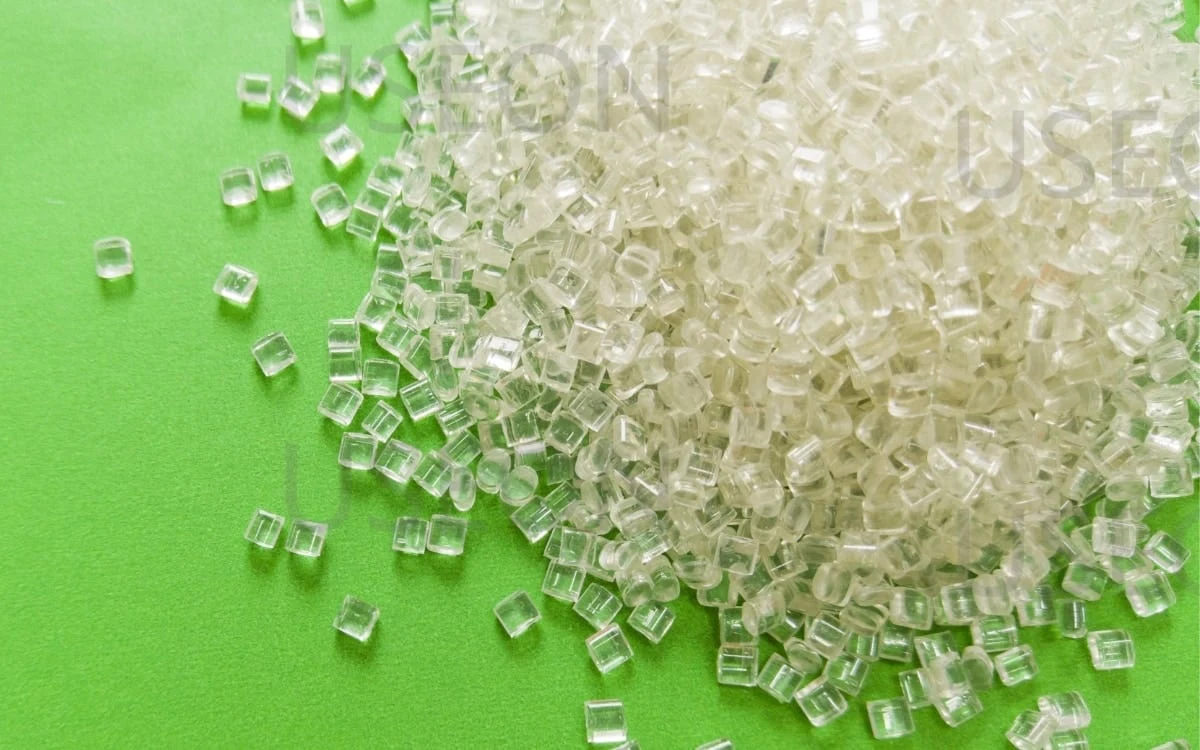
Guide to Polyethylene Terephthalate (PET)
The material behind this line: structure, grades, intrinsic viscosity and processing.
 Read the guide
See also
 Upcycling
PET Recycling
IV by application, the extruder and all eight product routes.
 PET Recycling
PET Bottle Flakes Pelletizing Line
Bottle flakes and popcorn, without pre-drying.
 PET Recycling
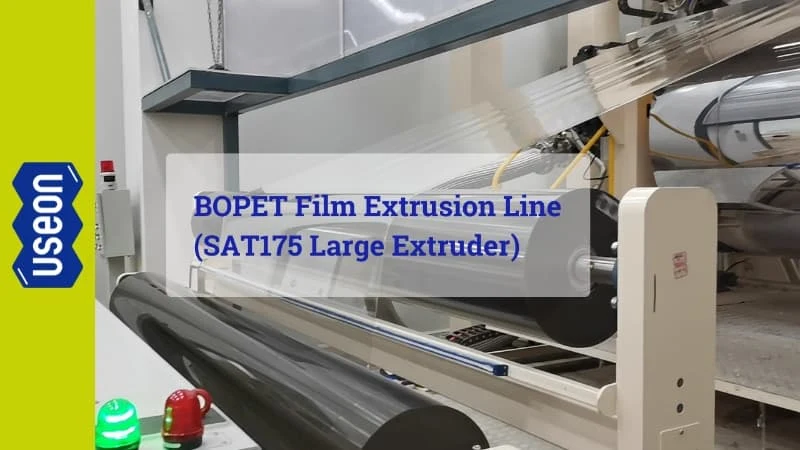
BOPET Film Extrusion Line
The film line the edge trim comes from.
 Machine
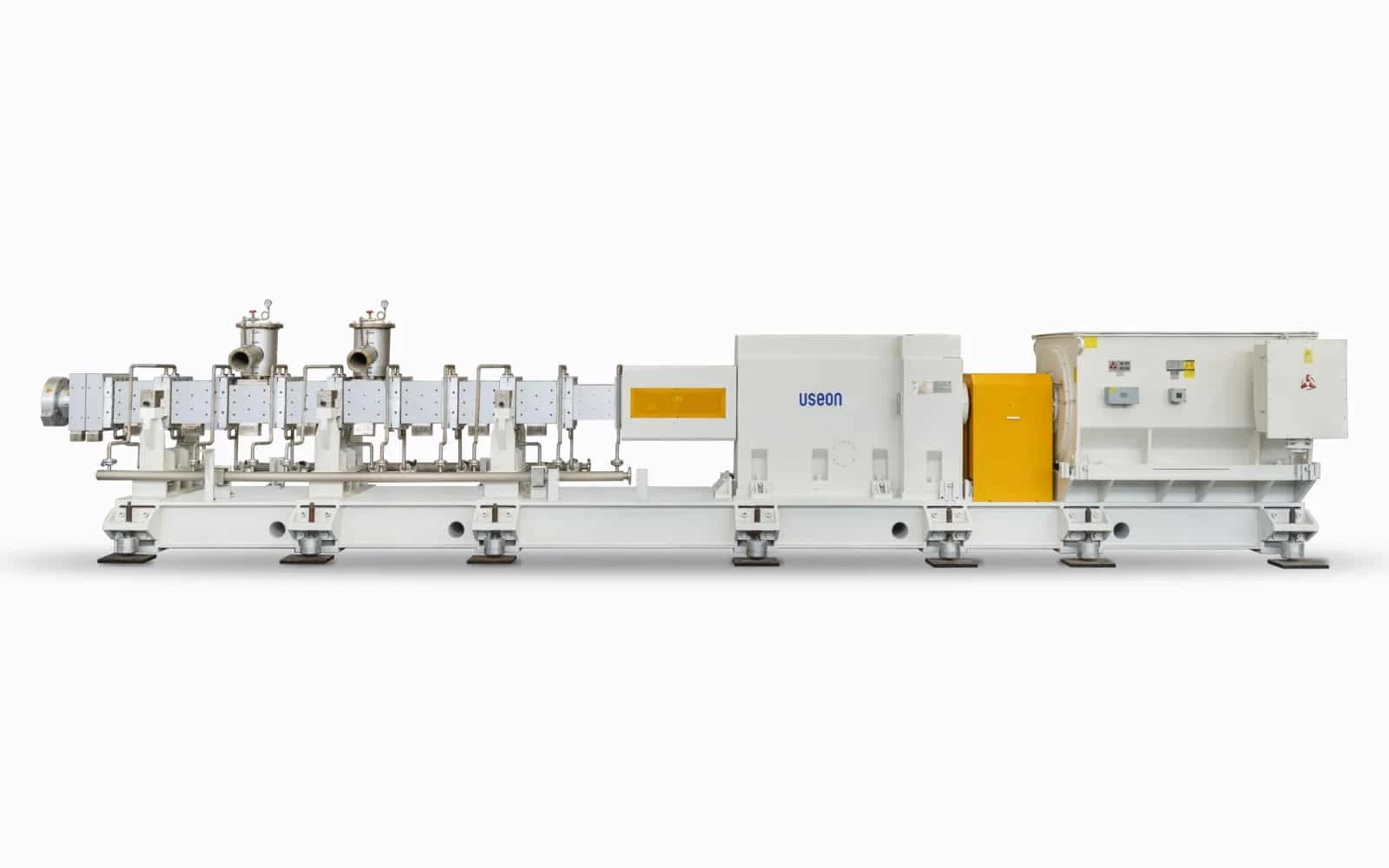
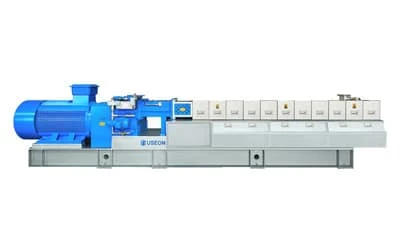
Counter-rotating Twin Screw Extruder
The TDY series used on the delivered film lines.
Get a quote
Tell us what scrap you have and in what form it arrives. We size the force feeder and the extruder for its bulk density.
- 01Scrap: film, fibre or cloth; size, bulk density, moisture
- 02Output per hour and what the pellets are for
- 03Extruder type, pelletizing and quotation

Souder Chen
Head of Compounding Division
With USEON since 2008. Twin screw compounding, devolatilization and recycling lines.