
SAT110 Twin Screw Line for High-GF PP UD Tape Scrap Recycling Compounding
A SAT110 twin screw line in commercial operation in Europe, diluting 70% GF PP UD tape scrap to about 30% GF at 600 kg/h.
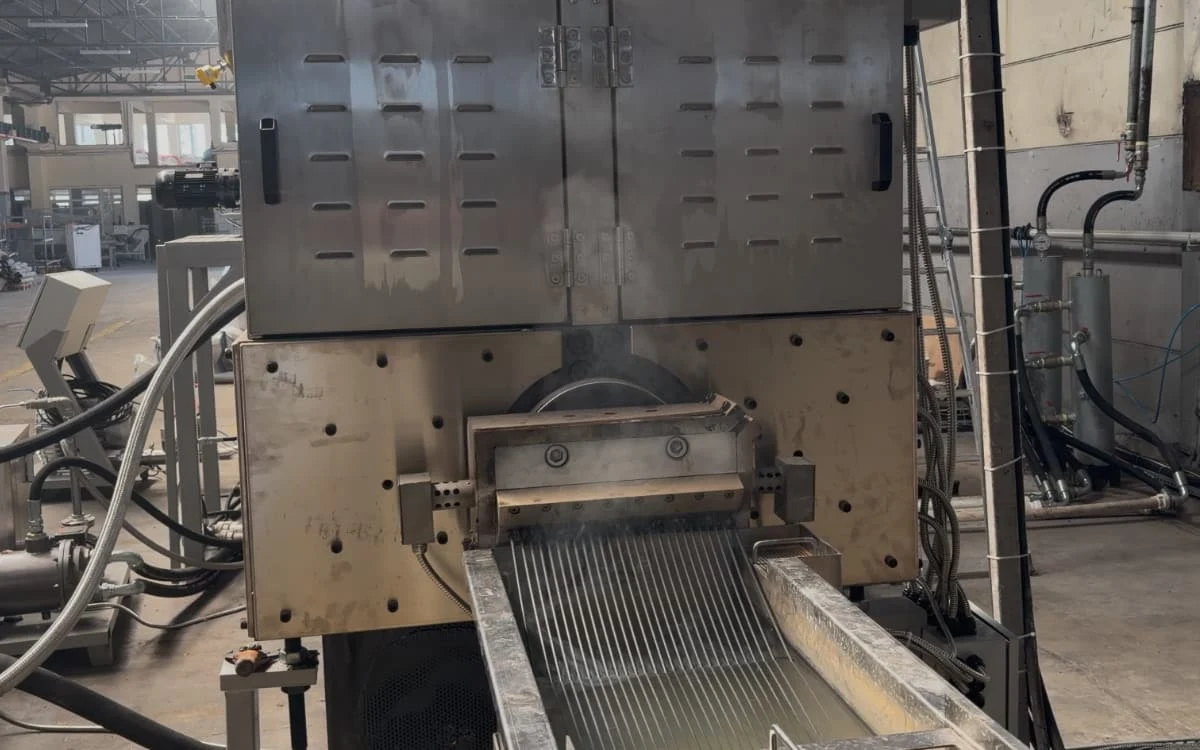
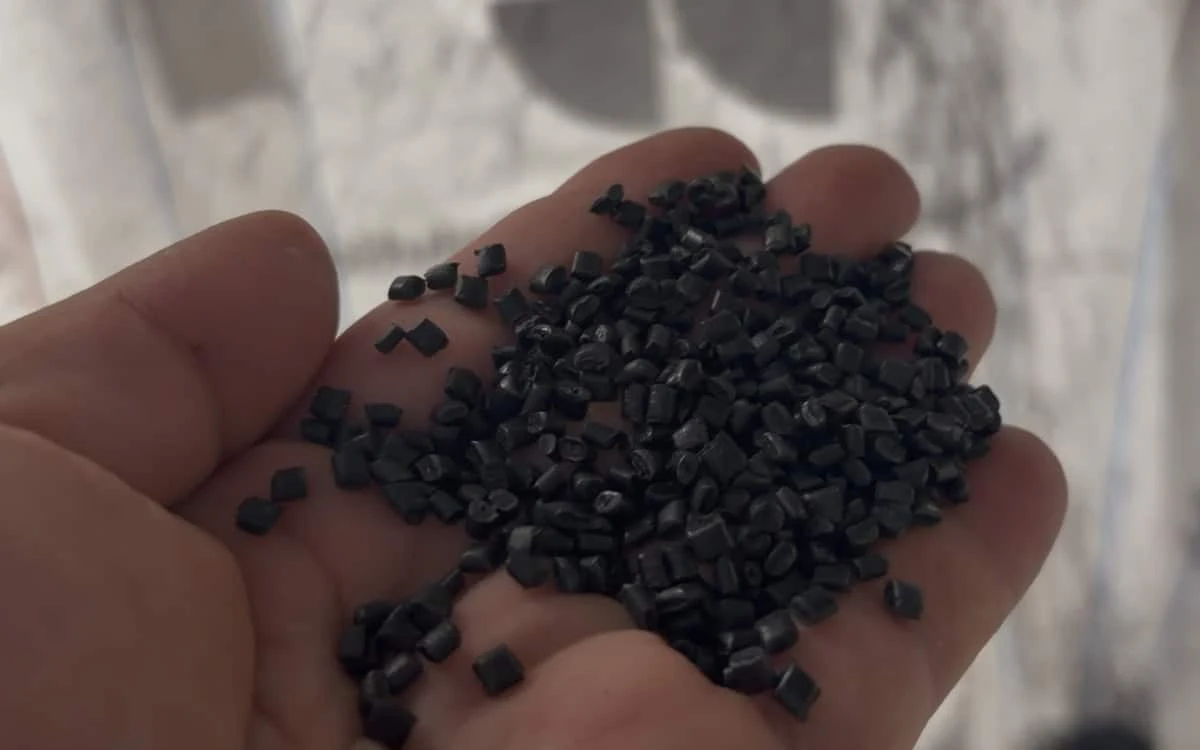
This case study documents a USEON SAT110 twin screw line in commercial operation at a customer facility in Europe. Through the continuous addition of virgin PP and additives, the line compounds 70% GF PP UD tape scrap to a theoretical target of approximately 30% GF at a commercial production throughput of 600 kg/h, while a separate pure PP flake pelletizing condition achieves 1,000 kg/h.
Production Conditions
| Parameter | Condition 1:High-GF PP Scrap Dilution | Condition 2:Pure PP Flake Pelletizing |
|---|---|---|
| Material | PP UD tape scrap + Virgin PP + Additives | 100% pure PP flakes |
| Initial GF Content | 70% | No obvious glass fiber |
| Bulk Density | 296 g/L | 400 g/L |
| Particle Size | 0–5 mm fraction accounted for 64.7% of the screened sample; 5–10 mm fraction accounted for 25.4% | < 15 mm |
| Process Goal | Theoretical target approx. 30% GF | Continuous melt pelletizing |
| Throughput | 600 kg/h | 1,000 kg/h |
Key Processing Challenges
Bulk Density and Feed Continuity
In the high-GF condition, the material features a low bulk density (296 g/L) and a high proportion of small particle fractions (0–5 mm), causing bridging and feed-rate fluctuations during conventional gravity feeding.
Abrasive Wear
The 70% glass fiber content causes abrasive wear on the barrel and screw elements during extrusion and plasticization.
Formulation Adjustment and Mixing
The theoretical glass fiber proportion is adjusted via the metered ratio of high-GF scrap to virgin PP. The twin screw extruder is responsible for continuous plasticization and mixing, requiring a process balance among plasticization, mixing, glass fiber length retention, and temperature rise.
Production Line Configuration
- Force-feeding system
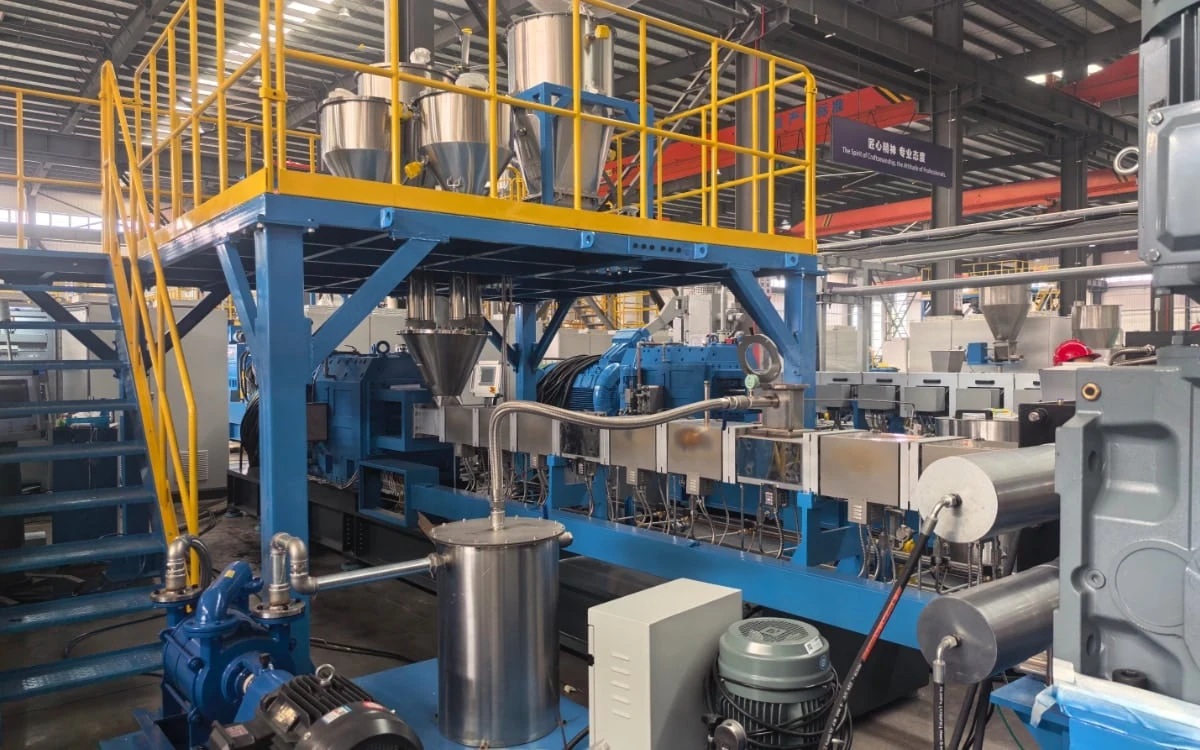
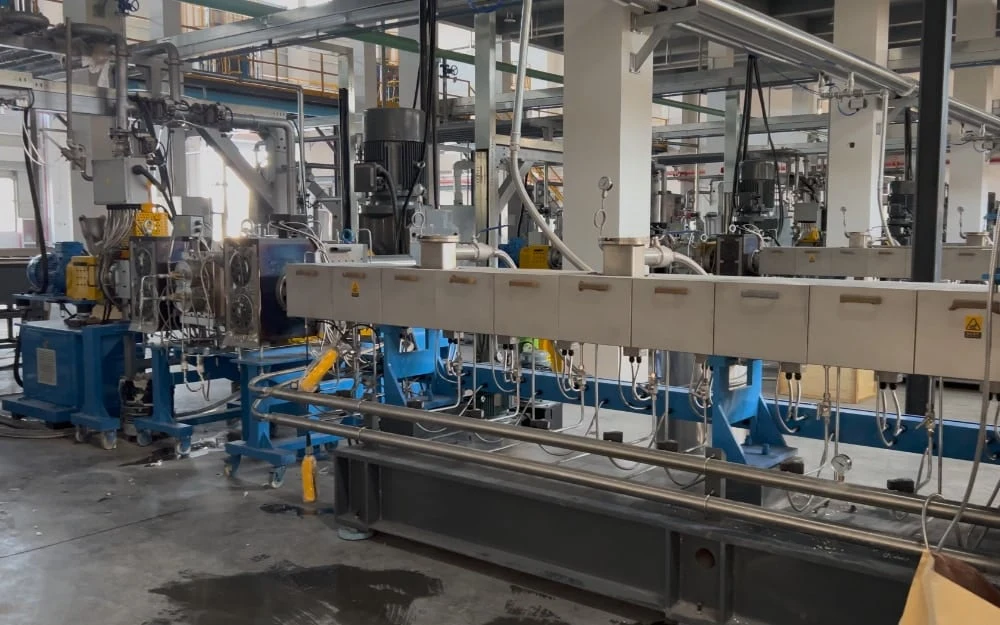
- SAT110 twin screw extruder
- Melt filtration
- Water cooling bath
- Strand dewatering unit
- Strand pelletizer
- Vibratory classifier
- Storage silo.
Core Configuration Analysis:
- Force-Feeding System: Utilizes mechanical assistance to process low-bulk-density scrap. It reduces bridging and feed-rate fluctuations, helping maintain continuous feeding.
- Wear-Resistant Configuration: To address abrasive wear caused by the high glass fiber content, wear-resistant barrel liners and key screw elements exposed to abrasive loads were implemented.
- Pelletizing and Classification: Following water-cooled strand pelletizing and dewatering, the pellets enter a vibratory classifier. This step separates pellet fines, joined pellets, and off-size pellets, improving the size consistency of the final product.
Production Video
Production Results
The SAT110 production line has entered commercial production at the European customer’s facility. The accompanying video was recorded at the customer’s production facility and shows the line in commercial operation.
- In the dilution compounding of high-GF PP UD tape scrap, with virgin PP and additives continuously metered into the process, the line operates at a commercial production throughput of 600 kg/h.
- In the 100% pure PP flake pelletizing condition, the line achieves a commercial production throughput of 1,000 kg/h.
The installed force-feeding system and modular twin screw configuration also enable the line to process low-bulk-density PE/PP film and sheet scrap. The actual production throughput will depend on the specific film morphology and bulk density.
FAQ
Why does PP UD tape scrap with a bulk density of 296 g/L require force feeding?
This material has a low bulk density and a high proportion (64.7%) of 0–5 mm particle fractions, leading to bridging and fluctuations in standard feeding systems. The force-feeding system uses mechanical thrust to help maintain continuous feeding.
How is the wear caused by high-GF material reduced?
To mitigate abrasive wear from the high glass fiber content, the extruder features wear-resistant barrel liners and specific wear configurations for the key screw elements exposed to higher abrasive loads.
How is the 70% GF content adjusted to a theoretical target of approximately 30%?
In production, virgin PP and additives are continuously metered into the high-GF scrap according to the formulation via the feeding system. The actual final glass fiber content should be verified through laboratory ash testing or another appropriate test method.
Why are the two throughputs 600 kg/h and 1,000 kg/h, respectively?
The two throughputs correspond to different material bulk densities, formulations, metering requirements, and processing loads. The high-GF condition requires stable feeding of low-bulk-density scrap alongside continuous metering and mixing of virgin PP. The pure PP flake condition is relatively simpler. These differences resulted in separate stable production throughputs on the same SAT110 extruder.
Can this production line process PE/PP film or sheet scrap?
Yes. The configured force-feeding system effectively overcomes the feeding challenges associated with low-bulk-density materials. Combined with the modular twin-screw design, this enables the line to process PE/PP film and sheet scrap. The actual throughput will depend on the specific material morphology and bulk density.
Get a quote
Tell us your material, formulation and target throughput.
- 01Process review
- 02Engineer call
- 03Line proposal

Souder Chen
Head of Compounding Division
With USEON since 2008. Twin screw compounding, devolatilization and recycling lines.