1,200 kg/h rPET Bottle Flakes Recycling and Pelletizing Line
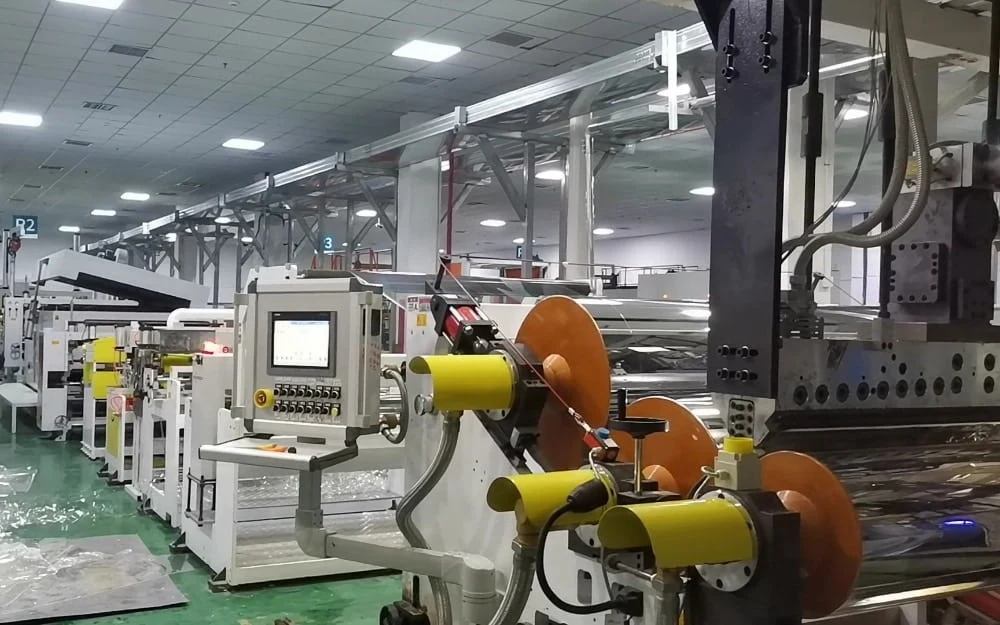
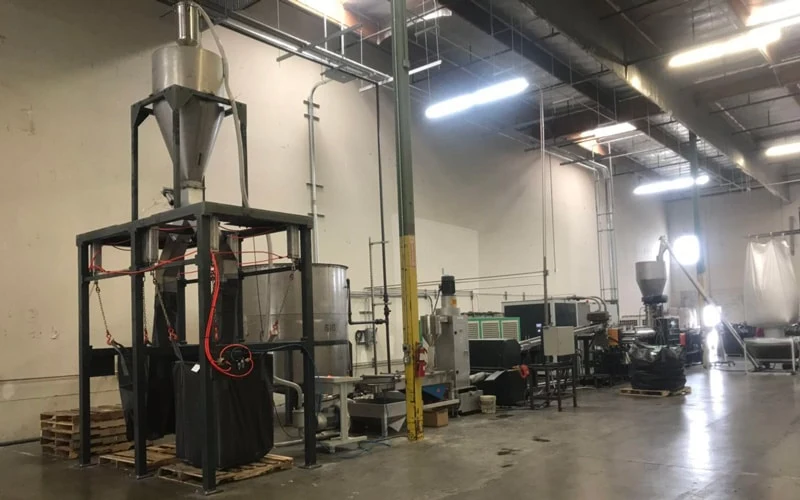
This project involved a customized 1200 kg/h rPET recycling line for a North American client, integrating forced feeding, dual-stage vacuum degassing, melt filtration, and inline crystallization to address moisture, impurities, and IV drop challenges during recycled PET processing.
Process Flow
- rPET bottle flakes
- insulated drying silo
- forced feeding
- SAT110 twin screw extrusion
- vacuum degassing
- melt pump
- hydraulic screen changer
- Under Water Strand Pelletizing System
- drying/crystallizing silos
- rPET pellets
Customer Needs & Processing Challenges
In PET bottle flakes recycling, materials typically present challenges such as low bulk density, fluctuating moisture and volatile contents, and the presence of mechanical impurities. For this project, the client’s main operational challenges included:
Feeding Stability
Lightweight PET flakes tend to bridge in standard hoppers, making it difficult to maintain a continuous, stable feed rate at the target capacity of 1200 kg/h.
IV Drop Management
PET is highly sensitive to moisture. Hydrolysis during high-temperature extrusion can cause a drop in Intrinsic Viscosity (IV), which affects downstream applications.
Continuous Filtration and Pressure
Impurities in the melt require large-area filtration. However, screen changes or partial screen blockage can cause head pressure fluctuations, which may lead to strand breakages and impact production continuity.
USEON Solution
Rather than merely supplying a single extruder, USEON engineered a complete PET recycling solution tailored to the physical characteristics of rPET flakes. The line integrates material feeding, extrusion, degassing, filtration, pelletizing, and crystallization to meet capacity and process requirements:
Pre-treatment & Feeding
Equipped with a 3000 L insulated stainless steel drying silo, a loss-in-weight feeding system, and a single-screw forced feeder.
Extrusion & Degassing
The SAT110 twin screw extruder is paired with a vacuum system combining a Roots vacuum pump and a screw vacuum pump to support stable and effective degassing.
Filtration & Stabilization
Integrated a 22 kW melt pump alongside a 1600 cm² double-piston large-area hydraulic screen changer.
Pelletizing & Post-treatment
Utilized an Under Water Strand Pelletizing System (a strand pelletizing process in which extruded strands are guided through water before cutting, rather than die-face underwater pelletizing), followed by vacuum loading into a two-stage post-treatment system consisting of a 1600 L drying silo and a 2500 L crystallizing silo.
Why This Configuration Works
Forced Feeding Manages Low Density
The combination of the drying silo and the single-screw forced feeder applies physical pre-compression to the lightweight flakes. This helps reduce bridging and supports a more consistent material input into the twin screw extruder.
Dual-Stage Vacuum Mitigates Hydrolysis Risk
The Roots and screw pump combination provides extraction capacity designed to remove moisture and low-molecular-weight volatiles from the melt zone. This is a critical step in helping mitigate the risk of IV drop.
Melt Pump + Filtration Supports Continuous Operation
The 1600 cm² screen changer accommodates a larger volume of impurities, helping to reduce the frequency of screen replacements. The melt pump works to restabilize the pressure after filtration. This engineering setup is designed to maintain continuous extrusion and minimize strand breakages.
Inline Crystallization Reduces Clumping Risk
Freshly cut, amorphous rPET pellets are prone to absorbing moisture and clumping. The inline crystallization system utilizes the pellets’ residual heat to change their state, which helps reduce the risk of pellet clumping and better prepares the material for downstream handling.
On-site Commissioning & Performance
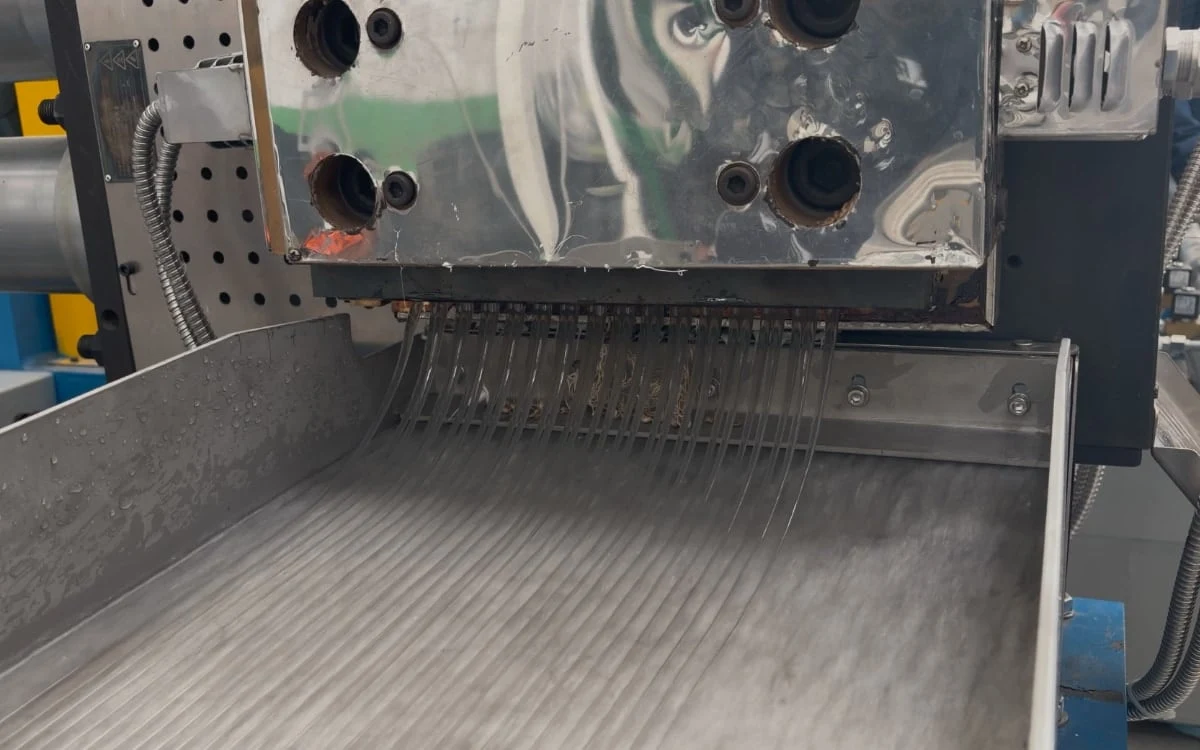
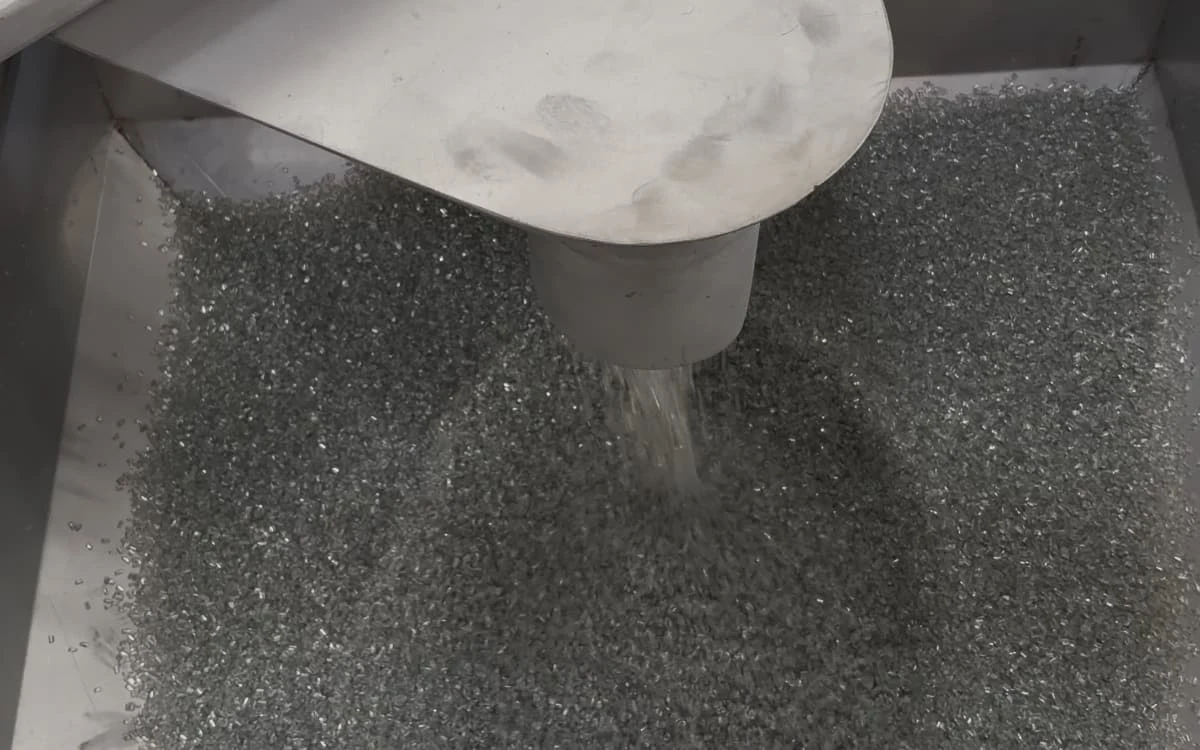
This rPET pelletizing line has been installed, commissioned, and put into operation at the client’s facility. The system demonstrates stable performance and has achieved the design capacity target of approximately 1200 kg/h. Observations during commissioning indicate continuous strand operation in the Under Water Strand Pelletizing System and a uniform pellet appearance. Following processing in the crystallizing silo, no obvious clumping was observed during subsequent storage tests. The operational parameters and final product conditions met the client’s engineering acceptance criteria.
Suitable Applications
The engineering logic and operational experience of this configuration provide a practical reference for projects involving rPET bottle flakes recycling, industrial PET waste yarn/film recovery, and engineering plastics compounding requiring degassing and large-area filtration.
FAQ
How does this line design help with IV drop control?
A: IV drop control relies on two main factors. First, the SAT110 twin-screw extruder uses a screw profile optimized for PET to provide gentle shearing. Second, the Roots + screw vacuum degassing system extracts moisture in the melt zone, which helps minimize hydrolysis at high temperatures.
Why is forced feeding important for PET flakes pelletizing?
A: Due to the low bulk density of rPET flakes, gravity feeding often leads to material bridging. A single-screw forced feeder applies mechanical force to compress the flakes, improving bulk density and supporting a more continuous feed rate.
Why are a melt pump and hydraulic screen changer used together?
A: Recycled plastics contain impurities that are captured by the screen changer. However, screen changes or partial screen blockage can cause head pressure fluctuations. The melt pump isolates these fluctuations from the die head, providing a stabilized output that helps keep the strands in the Under Water Strand Pelletizing System uniform and continuous.
Why is inline crystallization included in the rPET recycling line?
A: Newly cut rPET pellets are amorphous and hygroscopic, making them likely to clump. The inline crystallization system uses the residual heat from extrusion to crystallize the pellets. This helps reduce clumping risk, leaving the material better prepared for downstream processing.
Get a quote
Tell us your material, formulation and target throughput.
- 01Process review
- 02Engineer call
- 03Line proposal

Souder Chen
Head of Compounding Division
With USEON since 2008. Twin screw compounding, devolatilization and recycling lines.