
SAT75 Twin Screw Extruder Line for 75% CaCO3 Filler Masterbatch in Argentina
- Clients in: Filler Masterbatch
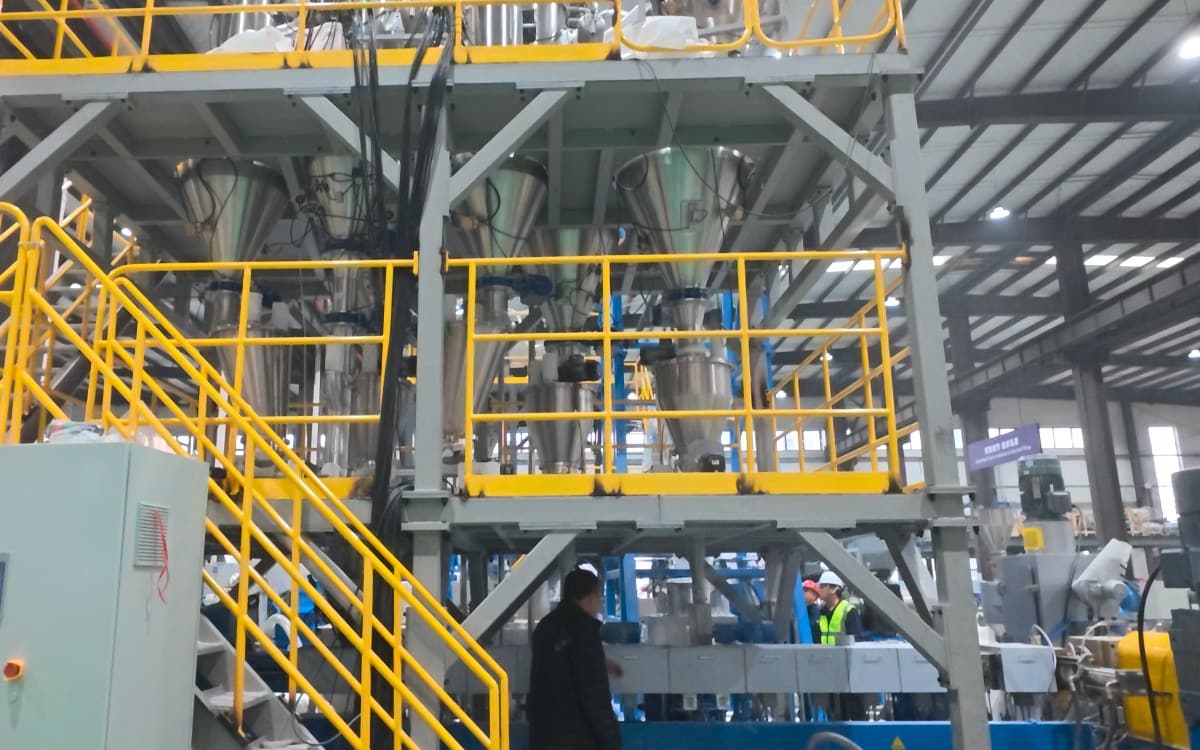
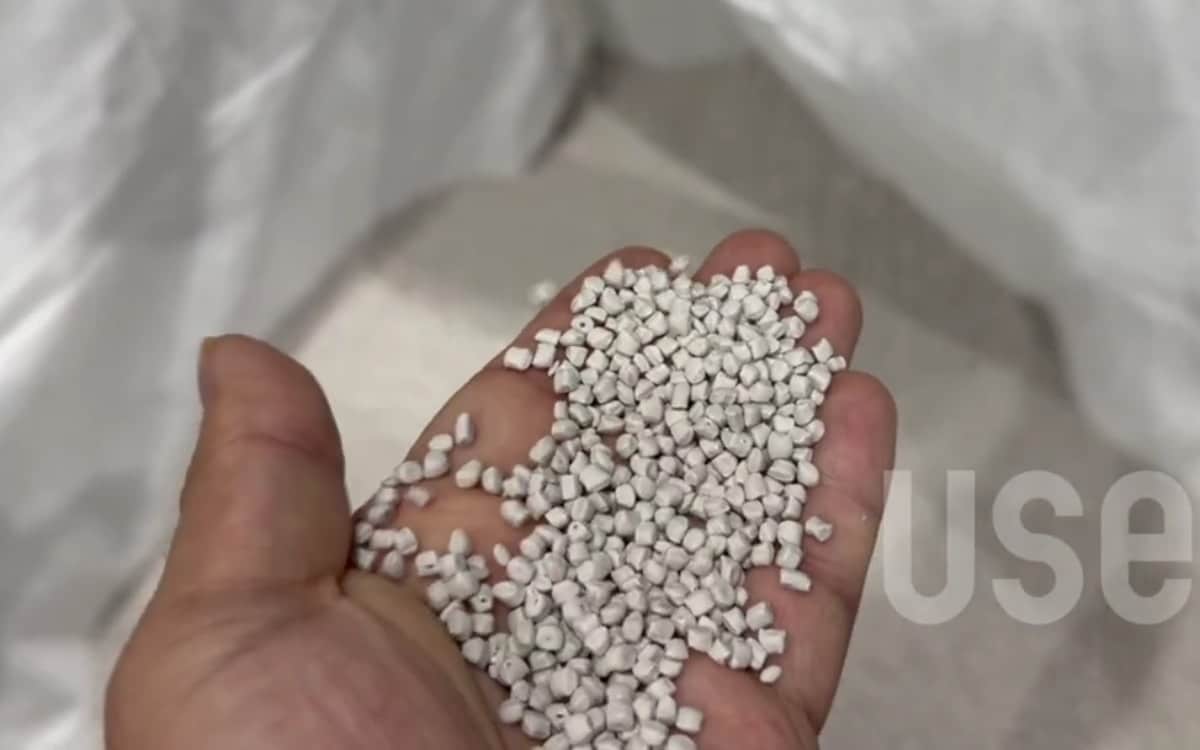
USEON engineered a SAT75 (L/D=60) twin screw extruder line for an Argentina customer producing 75% CaCO3-filled PP/PE-based filler masterbatch. The line integrates staged side feeding, WRP800 water ring pelletizing, and a dehumidifying dryer system to support 650–750 kg/h production and pellet moisture below 150 ppm during FAT.
Project Highlights
- Region: South America (Argentina)
- Processed Material: PP/PE-based filler masterbatch with 75% Calcium Carbonate (CaCO3) and additives
- Core Equipment: SAT75 twin screw extruder (250 kW main motor, 600 rpm, L/D=60)
- Pelletizing System: WRP800 water ring pelletizing system
- Capacity Target: 650–750 kg/h
- Moisture Requirement: Final pellet moisture below 150 ppm
Project Background
A South American client based in Argentina, focusing on high-quality polyolefin compounding, required a robust solution for a new 75% CaCO3 formulation. Given the high loading ratio, the client set defined targets for environmental dust control, feeding stability, and final pellet moisture. They requested a highly automated turnkey high-filler masterbatch production line with a CE-compliant electrical design to simplify localized operation and maintenance.
Producing high-filler masterbatch is not only about extrusion capacity. It requires coordinated design across the entire filler masterbatch production line. A 75% CaCO3 formulation requires close coordination between bulk powder handling, precise metering, staged side feeding, compounding, vacuum venting, melt pressure stabilization, water ring pelletizing, and final dehumidifying drying. A mismatch in any subsystem can affect continuous operation and final pellet quality.
Processing Challenges
- High Filler Loading: Introducing 75% CaCO3 powder significantly increases the risk of bridging at the main feeding port and presents challenges in achieving uniform dispersion within the polymer matrix.
- Dust Management: Unloading and conveying bulk calcium carbonate powder without proper containment can cause significant dust emissions, affecting the working environment.
- Target Moisture Limits: To maintain the surface quality of downstream products, the client required the final pellet moisture to meet the specified moisture requirement of below 150 ppm.
- Stable Pelletizing: Highly filled materials typically exhibit poor flowability, which can lead to melt flow fluctuations, negatively impacting the water ring pelletizing process.
USEON Engineering Solution
USEON engineered a complete turnkey solution covering the process from raw material handling to big-bag weighing and packaging. The system utilizes a bulk bag discharging station with a dust-control design, feeding materials via high-precision loss-in-weight feeders equipped with Mettler Toledo load cells. The core compounding process is built around the SAT75 twin screw extruder. The melt is then processed through a melt pump, a hydraulic plate screen changer, and the WRP800 water ring pelletizing system. Downstream processing includes centrifugal dewatering followed by a dehumidifying dryer system and hot-air drying silo to meet the specified moisture requirement. This case reflects USEON’s ability to integrate extrusion, feeding, pelletizing, drying, and automation into one coordinated production line for high-filler masterbatch applications.
Key Configuration and Engineering Logic
- Staged Side Feeding System: Instead of feeding all materials through the main port, the system employs two L/D=8 forced twin-screw side feeders. The majority of the CaCO3 powder is introduced into the barrel in stages after the resin has melted, which helps reduce bridging and supports feeding stability.
- L/D=60 Barrel Design: The extended barrel provides the necessary process length for multiple side-feeding and high-vacuum venting zones. It also supports staged powder incorporation, distributive mixing, and vacuum venting for the 75% calcium carbonate formulation.
- Melt Pump & Pelletizing Integration: To address the flow characteristics of highly filled materials, a melt pump is installed before the WRP800 water ring pelletizing system. This configuration is designed to stabilize melt flow fluctuation and reduce extrusion surging, supporting consistent pellet formation.
- Moisture Control Logic: Centrifugal dewatering removes most surface water after water ring pelletizing, but highly filled compounds can still retain residual moisture. The dehumidifying dryer system and hot-air drying silo are configured to further reduce moisture after centrifugal dewatering, helping the final pellets meet the specified moisture requirement of below 150 ppm.
- CE-Compliant Electrical Design: The entire line is controlled by a Siemens PLC + HMI system and features Schneider low-voltage components. This CE-compliant electrical design supports reliable automation and simplifies maintenance and spare parts sourcing in overseas markets.
Project Video
FAT Verification Results
During the Factory Acceptance Test (FAT), the complete filler masterbatch production line was tested from powder feeding to final big-bag weighing and packaging. The output reached the target range of 650–750 kg/h. The WRP800 water ring pelletizing system produced uniform, well-shaped pellets without obvious agglomeration. Moisture testing confirmed that the final pellet moisture remained below 150 ppm during FAT. The line met the customer’s acceptance criteria for feeding stability, pelletizing consistency, moisture control, and automated operation.
This equipment configuration is suitable for various high-filler masterbatch lines processing inorganic powders (e.g., CaCO3, talc, barium sulfate). It is particularly applicable for PP/PE-based filler masterbatch projects that require reliable dispersion, dust containment, and specified moisture control. For customers evaluating a CaCO3 masterbatch production line or a twin screw extruder for high-filler masterbatch, this case shows how feeding, pelletizing, drying, and automation can be engineered as one integrated system.