

Underwater Pelletizing System
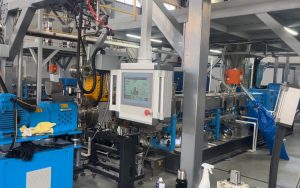
The USEON Underwater Pelletizing System is engineered to address process instability in elastomers, high-viscosity melts, micro-pelleting, and high-throughput compounding. Built on a foundation of delivering over 100 complete production lines worldwide, we provide systematic solutions integrating melt distribution, die-face thermal management, and automated drying to ensure consistent pellet quality under demanding conditions.
USEON can provide complete compounds production lines with underwater pelletizing system, such as TPU/TPV production line.
Trusted By








Table of Contents
Applications & Engineering Practice
Based on our extensive project experience across various industries, USEON Underwater Pelletizing System has proven its adaptability in the following specialized areas:
1. High-End Elastomers & Melt Devolatilization (POE, TPU, EPDM, SAN)
For materials with lower hardness (e.g., Shore A 40 range) or elevated feeding temperatures (e.g., around 80°C) prone to sticking, instant water quenching effectively inhibits pellet deformation and agglomeration.
Engineering Experience: We have extensive industrial experience in POE (Polyolefin Elastomer), delivering large-capacity units (e.g., TDD500 series) for petrochemical giants. For EPDM and SAN melt devolatilization, the system effectively handles pelletizing challenges after deep volatile removal. In specific TPU projects, the system achieved a stable output of 1,000 kg/h under elevated feeding temperatures.
Typical Materials: POE, TPU, EPDM, SAN, TPE, TPV, EVA, SBS, SIS, Hot Melt Adhesives (HMA).
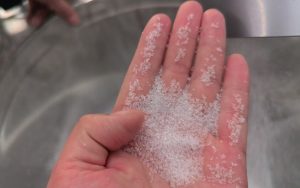
2. Precision Micro-Pelleting & Specialty Oligomers (Micro-Pellets ≤ 1.0mm)
Micro-pellet and oligomer production place stringent demands on die-face pressure balance and cutter stability.
Engineering Experience: USEON has successfully delivered production lines for 0.8mm precision spherical PS pellets in selected applications. Additionally, we have developed customized underwater pelletizing solutions for global chemical engineering corporations to handle specialty oligomers with precise cutting control.
Typical Materials: Specialty Oligomers, PS, PE, PA, and various high-precision functional masterbatches.
3. Reinforced Plastics, Cable Compounds & Grafting (XLPE, MAH, Reinforced)
The enclosed underwater process helps manage dust generation and strand breakage common in traditional pelletizing of highly modified compounds.
Engineering Experience: For leading compatibilizer manufacturers, we have successfully processed MAH (Maleic Anhydride) grafted PP/PE materials. In XLPE cable compounds and 80% CaCO3 high-filler projects, wear-resistant configurations ensure high pellet purity and consistency.
Typical Materials: MAH Grafted Compatibilizers, XLPE/LDPE Cable Compounds, High-filled PP/PE, Glass Fiber reinforced PA.
4. Heat-Sensitive, Biodegradable & Foaming Materials (PLA, PS/PET Foaming)
Enclosed water loops and precise thermal logic help minimize thermal degradation during processing.
Engineering Experience: We have delivered PS/PET foaming dual-stage lab lines for renowned research institutions and support EPS recycling/re-foaming processes. In PLA/PBAT modification projects, the system supports tight temperature control (within ±1°C in selected configurations) to preserve sensory quality and physical properties.
Typical Materials: PLA, PBAT, PS/PET Foaming materials, Starch-based alloys.
5. Large-Scale Recycling & Petrochemical Applications
Underwater pelletizing offers significant automation advantages for processing high-throughput recycled or petrochemical-grade materials.
Engineering Experience: In the field of PP/EPS industrial recycling, USEON has delivered automated lines with throughputs reaching 3,000 kg/h. Furthermore, our system architecture possesses the engineering foundation to scale up to 35 – 50 t/h for large-scale production.
Typical Materials: Recycled PP, PE, EPS, PS flakes, and petrochemical-grade polyolefins.
Selection Guide
Note: Each pelletizing method has preferred applications. Selection typically depends on material rheology, target pellet size, and line layout.
| Evaluation Criteria | Underwater Pelletizing | Water-Ring Pelletizing | Strand Pelletizing |
|---|---|---|---|
| Common Application Preference | Soft elastomers, high-viscosity, micro-pellets | Standard Polyolefins (PE/PP) | Rigid engineering plastics, reinforced compounds |
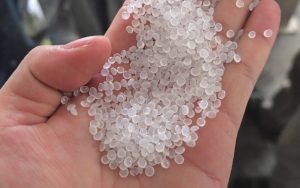
| Pellet Morphology | Highly uniform near-spherical pellets | Lens-shaped pellets | Cylindrical pellets |
| Automation & Operation | Automated startup sequences, reduced manual dependency | Semi-automatic operation | Operator monitoring required |
| Typical Diameter Capability | 0.8mm - 4.0mm (Material dependent) | Typically 2.5mm - 4.0mm | Typically 2.0mm - 4.0mm |
| Throughput Scalability | 50 kg/h to industrial-scale (Modular) | Often suitable for < 2 t/h | Often suitable for < 3 t/h |
Specification of Underwater Pelletizer
| Model | Diverter | Hole No. | Knife No. | Knife moving | Water system | Output |
|---|---|---|---|---|---|---|
| UWP300 | D30 | 8~10 | 4~6 | Manually | W300 | 50~300kg/h |
| UWP500 | D40 | 20~30 | 6~8 | Manually | W500 | 200~700kg/h |
| UWP1000 | D50 | 40~80 | 8~12 | Hydraulic | W1000 | 2ton/h |
| UWP2000 | D60 | 100~160 | 10~16 | Hydraulic | W2000 | 2~6ton/h |
| UWP4000 | D60 | 100~160 | 12~18 | Hydraulic | W2000 | 3~8ton/h |
| UPD250 | D70 | 700~1000 | 16~22 | Hydraulic | PCW250 | 10~20ton/h |
| UPD300 | D120 | 1000~2000 | 16~24 | Hydraulic | PCW300 | 20~35ton/h |
| UPD400 | D160 | 2000~3000 | 20~40 | Hydraulic | PCW400 | 35~50ton/h |
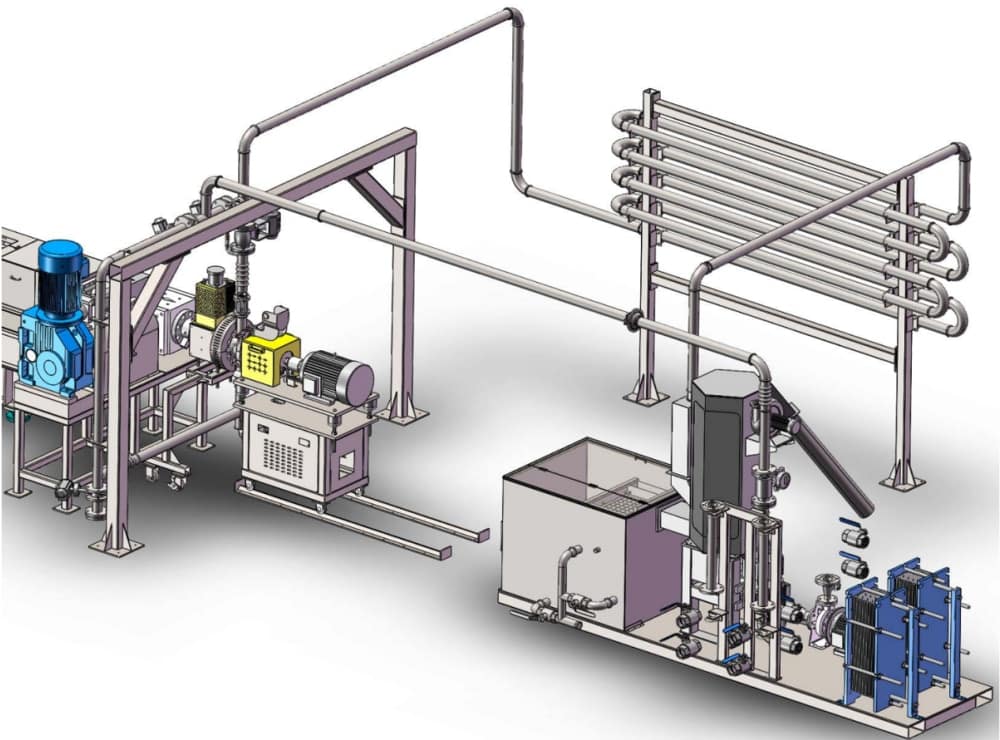
3D Assembly Drawing of Underwater Pelletizer
Diverter & Pelletizer
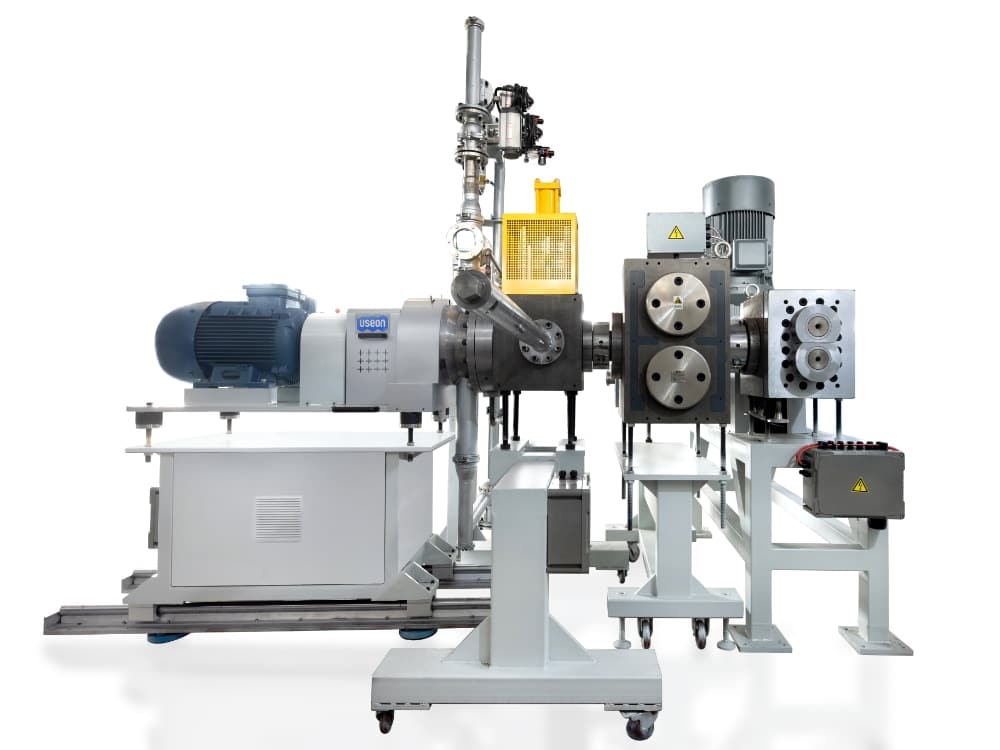
Diverter
- Discharge position
- Working positino
- Hydraulic driving
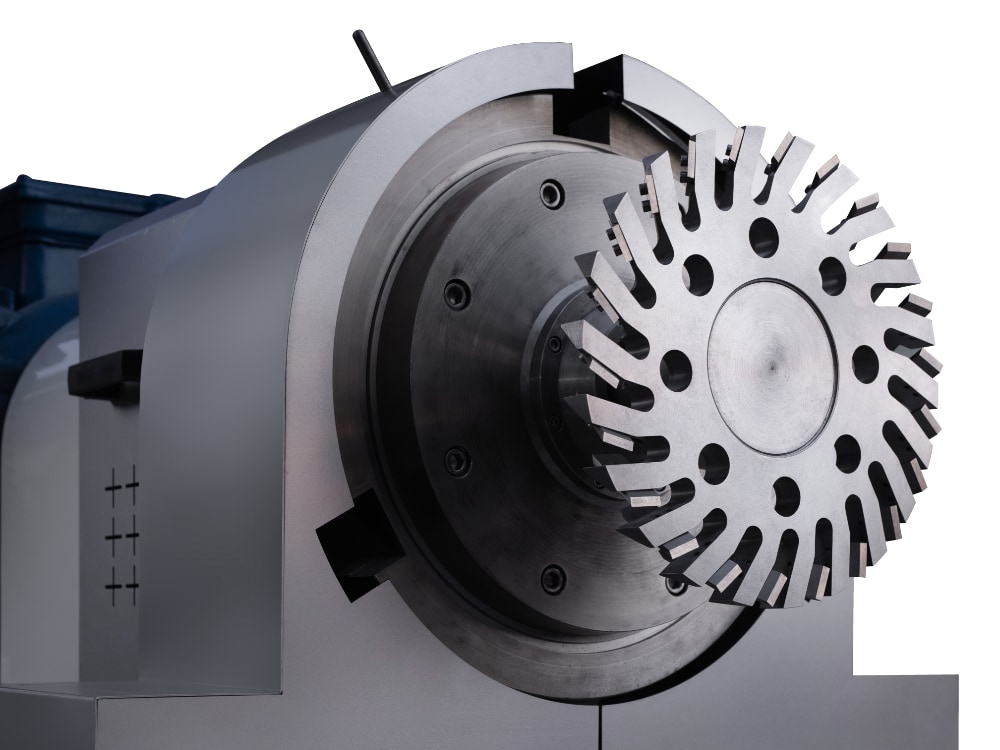
Pelletizer
- Die plate heating: eletrcial heater or Oil
- Two type of knife: bevel and vertical. It is designed for different material.
- Two type of pressure setting for knife: Manually and Hydraulic.
- Online polish for knife
- One button start/stop
- Knife length indication
With hydraulic station, the knife pressure can be setting on the touching screen, and the system will regrind knife automatically according to the setting time and pressure.
Dewater and Water Circulation System
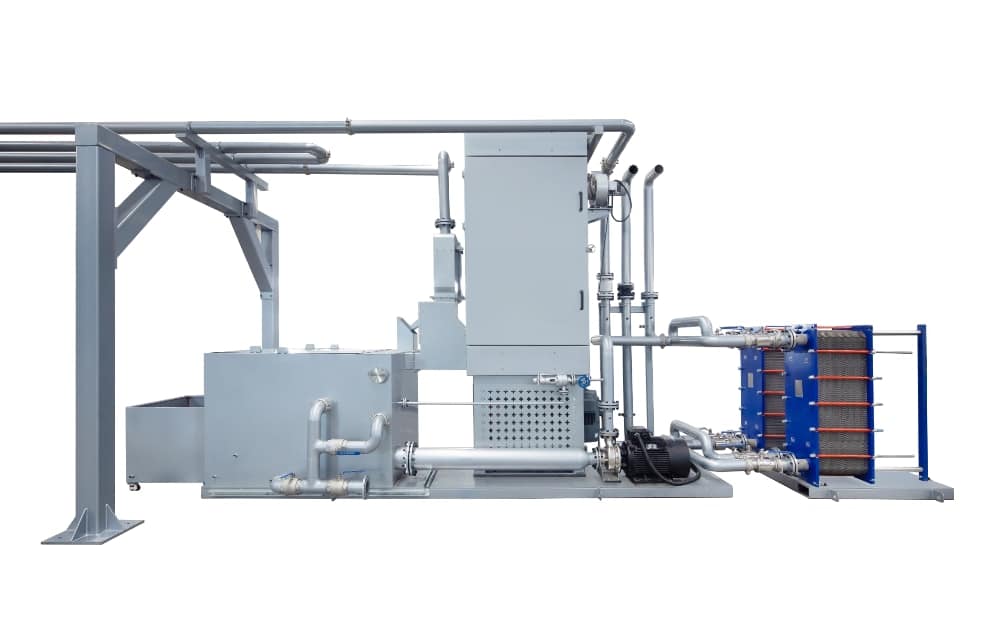
- The water tank with heater and water level and temperature control.
- The filter with rotating belt and servo motor which will automatically discharge the powder from the dewater system.
- The dewater system with extra fan for removing the moisture.
- The cooling pipe with water flow control and indicate on the touching screen.
- The heat exchanger is easily for cleaning.
- One pneumatic valve to control the outside cooling water flow, which will be interlock with the water temperature in the tank.
Projects / Clients
FAQ
We utilize multi-zone thermal management combined with a rapid-start diverter valve. This helps maintain sufficient thermal balance at the die face even when melt flow velocity is low during startup, reducing the risk of local cooling.
Yes. USEON provides both full turn-key extrusion lines and standalone underwater pelletizing units. Our modular systems can be customized to match your existing extruder’s flange interface, throughput requirements, and floor layout.