
600 kg/h PE Color Masterbatch Pelletizing Line: SAT65 with Five Loss-in-Weight Feeders
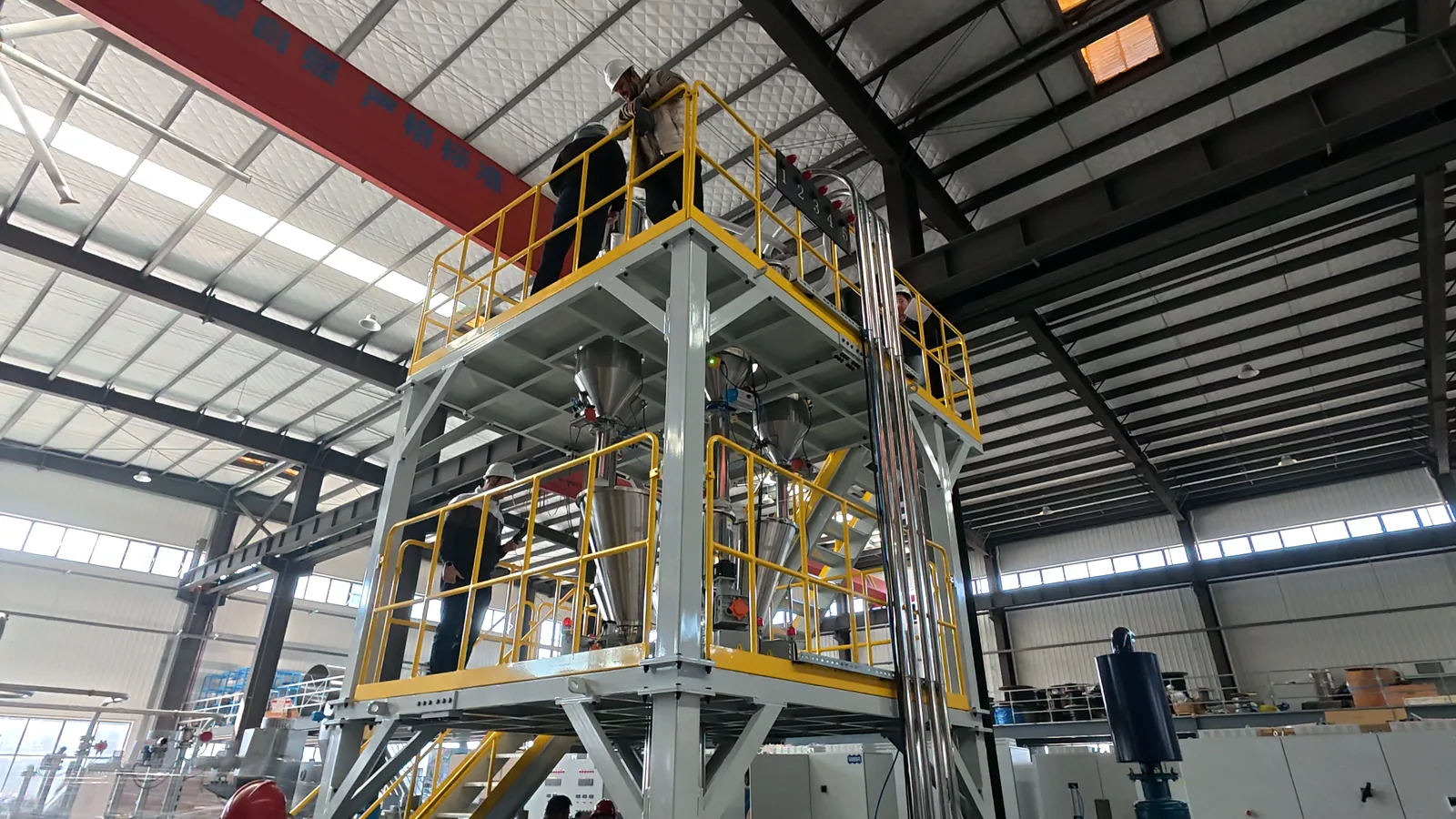
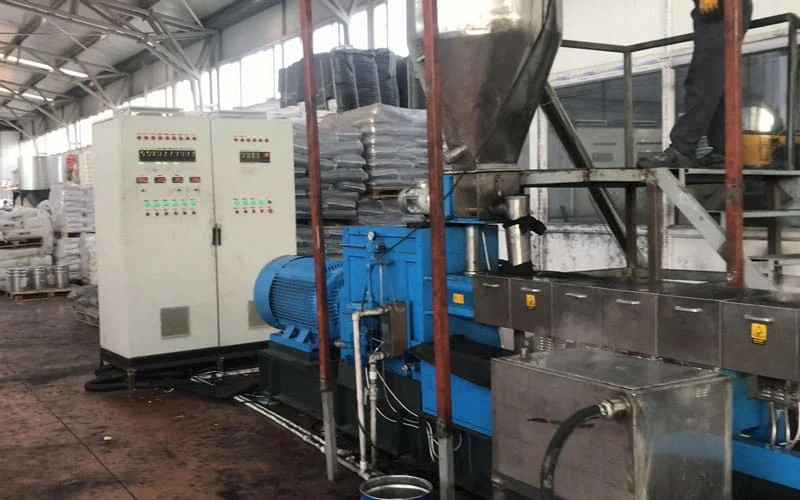
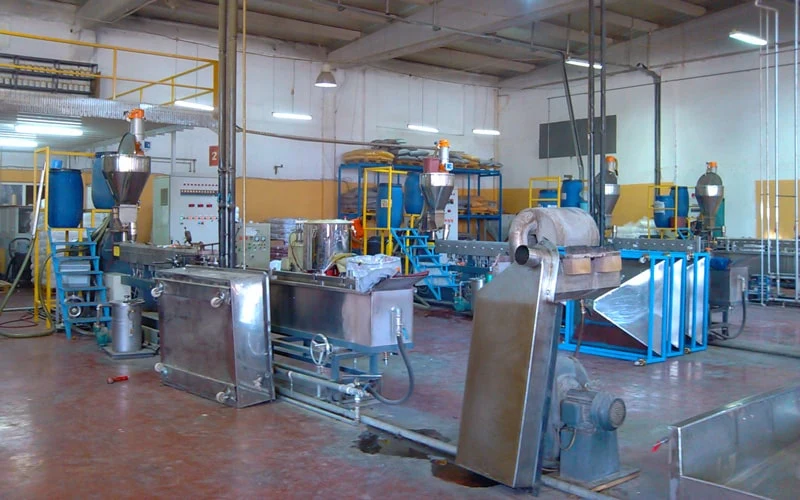
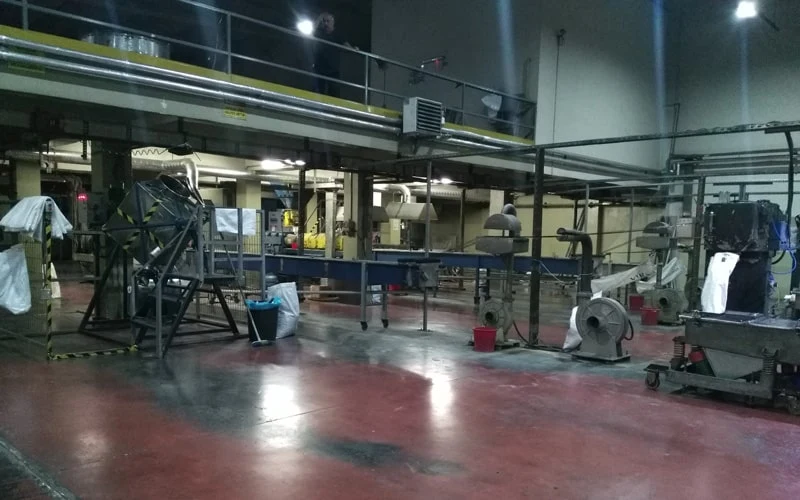
USEON built this PE color masterbatch pelletizing line around a SAT65 co-rotating twin screw extruder and five loss-in-weight feeders. Its design output is 600 kg/h, depending on the formulation, and the line has completed its factory trial run at USEON. The five twin screw loss-in-weight feeders meter each component separately and continuously by weight (rated accuracy ±0.5%): three large feeders handle the main components, and two small ones the minor components. Because every component is fed on its own, less premixing is needed. A vacuum loader lifts the raw materials to the feeder platform. The SAT65 extruder on this line has an L/D of 40 and a 160 kW main motor. It melts and compounds the components; the melt is vented through an atmospheric vent and a vacuum vent, then extruded as strands, cooled in a water bath, dried, pelletized and screened. Feeder rates, barrel temperatures and motors are set and monitored from one screen.
Design Focus: Dosing Accuracy
PE color masterbatch is a pigment concentrate in a PE carrier resin, which converters let down into film, molded parts or fiber. Its recipes have many components in very different proportions. The smallest run at only a few kilograms to a few tens of kilograms per hour, yet the color of the masterbatch, and of the converter's film or part, is sensitive to their ratio, so any fluctuation in a minor component's feed tends to show up as a color deviation. The line is therefore built around dosing:
Separate dosing
Up to five components are metered separately, each by its own feeder.
Large and small feeders
The three large feeders cover 100–600 kg/h (one) and 50–300 kg/h (two); the two small feeders cover 10–30 kg/h and 2–15 kg/h.
Automatic vacuum loading
A vacuum loader keeps the three stirred hoppers topped up, so operators only fill the floor bins and the two hand-fed hoppers.
Headroom in loading and screening
The vacuum loader and the vibrating screen are sized for 800 kg/h, above the 600 kg/h design output.
Process Flow
From raw material to finished pellets, the line runs in eight steps. Open the diagram to follow each step and machine.
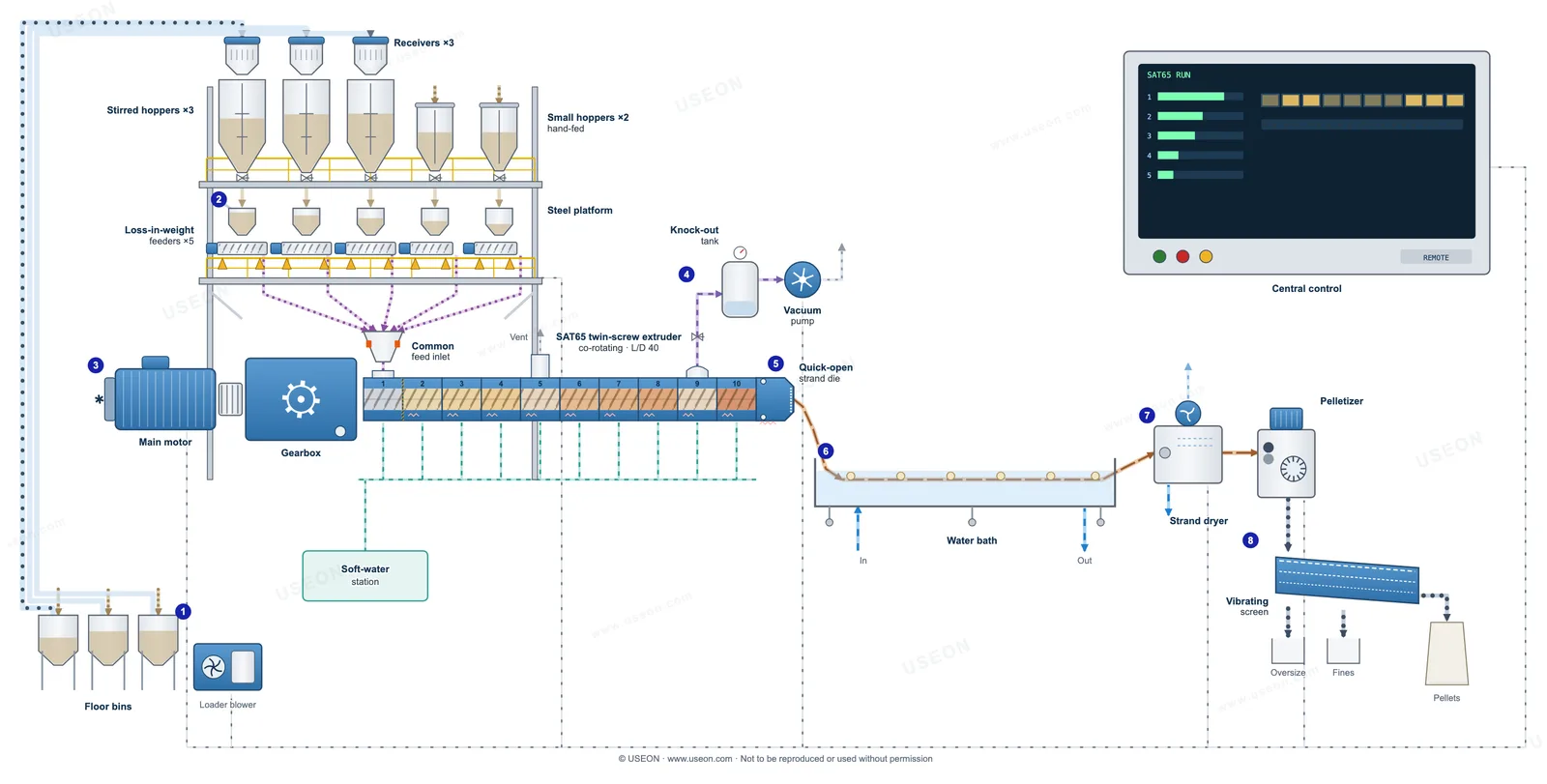 Open interactive diagram
Raw material loading
Raw materials are tipped into floor bins, and a vacuum loader with one blower and three receivers lifts them to the three stirred hoppers on the upper deck of the feeder platform. Minor components are loaded by hand into two hand-fed hoppers.
- Floor bins
- Vacuum loader
- Stirred hoppers
- Hand-fed hoppers
Gravimetric dosing
The platform has two decks: the hoppers are on top, and the five twin screw loss-in-weight feeders below them feed continuously at the set ratio. When a feeder's hopper reaches its low level, the pneumatic discharge valve on the stirred hopper above opens to refill it. The components drop by gravity through chutes into one common feed inlet on the extruder.
- Twin screw loss-in-weight feeders
- Feeder platform
- Common feed inlet
Twin screw compounding
A 160 kW main motor drives the co-rotating SAT65 twin screw extruder at a screw speed adjustable from 60 to 600 rpm. The components are melted, mixed and dispersed in the barrel; for how screw speed affects dispersion, see Does Higher Screw Speed Improve Dispersion? Each barrel zone is temperature-controlled separately and cooled by a closed soft-water loop.
- Main motor
- Torque-limiting coupling
- Gearbox
- SAT65 twin screw extruder
- Soft-water station
Atmospheric and vacuum venting
Barrel 5 has an open atmospheric vent with a vent insert, and a water ring vacuum pump evacuates the vent at barrel 9. Together they remove the air and moisture carried in with the material and the volatiles released from the melt. The extracted gas passes through a knock-out tank, which separates the condensate, before it reaches the pump.
- Vents
- Vacuum knock-out tank
- Water ring vacuum pump
Quick-open strand die
The melt leaves the 27-hole strand die (4 mm holes, with melt temperature and pressure sensors) as strands.
- Quick-open strand die
Strand drying
A suction strand dryer removes the surface water before the strands enter the pelletizer.
- Strand dryer
Pelletizing and screening
The 11 kW strand pelletizer cuts the 27 strands into pellets. The vibrating screen takes out oversize (doubles, longs and clusters) on a 6 mm top screen and fines through a 20-mesh bottom screen, and the on-size pellets go on to packing.
- Strand pelletizer
- Vibrating screen
Central control: One industrial PC controls the line. The feed ratios of the five feeders, the barrel zone temperatures and the motors are set and monitored on one screen, and operating data can be transferred remotely and stored.
Key Configuration & Design
Feeders sized to each component
A loss-in-weight feeder loses accuracy toward the bottom of its range, so a large feeder struggles to dose a component added at only a few kilograms per hour. Instead of five identical feeders, the line uses three large and two small ones, so both the main components and the minor ones run on a feeder whose range fits. Pneumatic vibrators on the hopper above the common feed inlet help poorly flowing material drop into the extruder.
Feeders and extruder interlocked
On a feeder fault, the extruder stops after a delay, so the line does not keep making off-ratio material; if the extruder stops, the feeders stop at once, so the feed inlet does not flood. Melt pressure at the die is also interlocked and stops the extruder on overpressure. The main motor trips on overcurrent or stall, and a torque-limiting coupling sits between the main motor and the gearbox.
One blower, three receivers
A single loader blower serves three receivers, which refill the three stirred hoppers in turn.
Two vents
The open vent at barrel 5 lets off air and moisture early, so the vacuum vent at barrel 9 only has to draw off the remaining gas and volatiles. This helps reduce bubbles and strand breaks.
Quick-open die
Because the strand die opens quickly, stops for cleaning it or changing the die plate are shorter; a spare 15-hole die plate is supplied with the line.
Project Video
Factory Trial Run
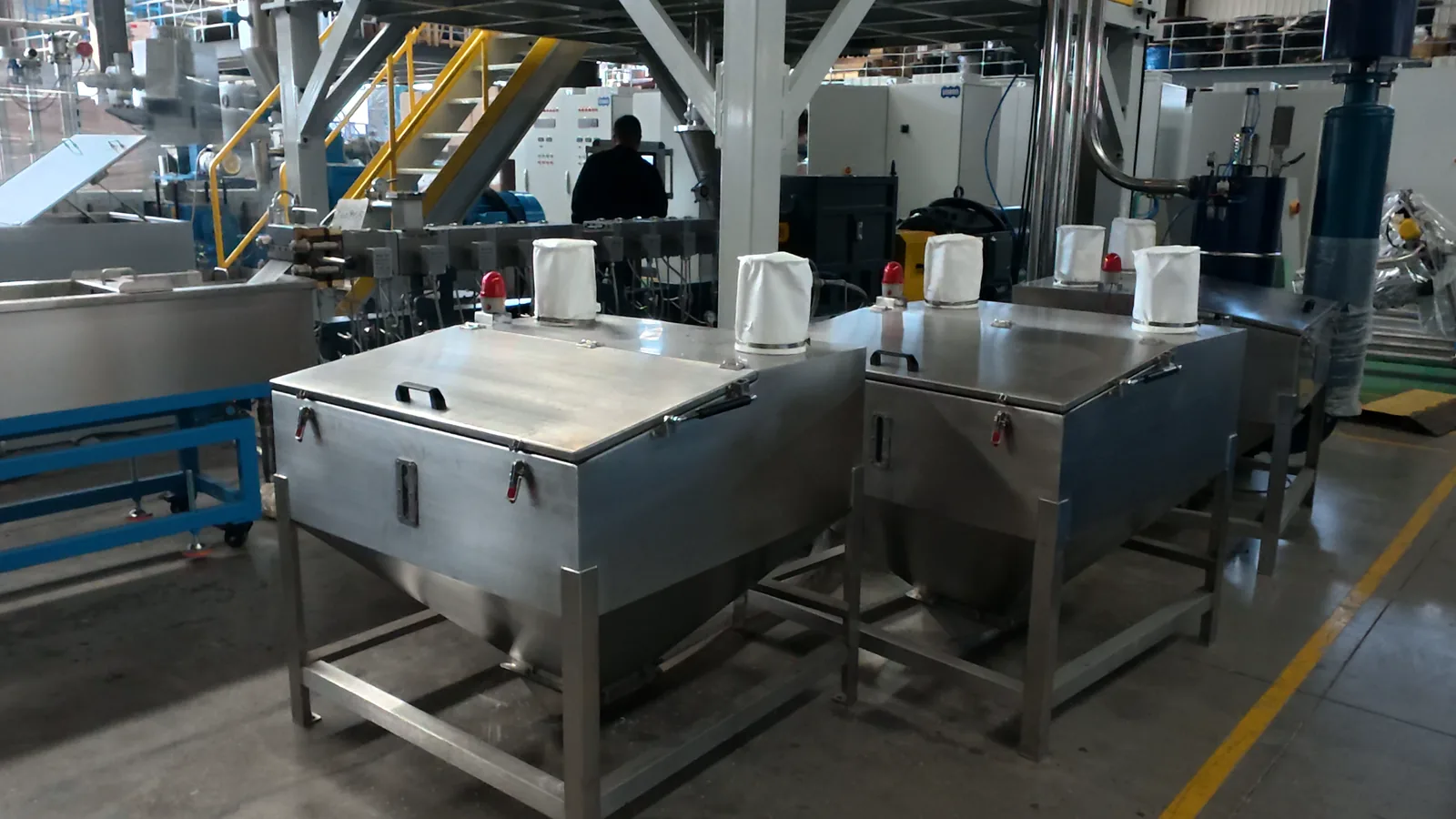
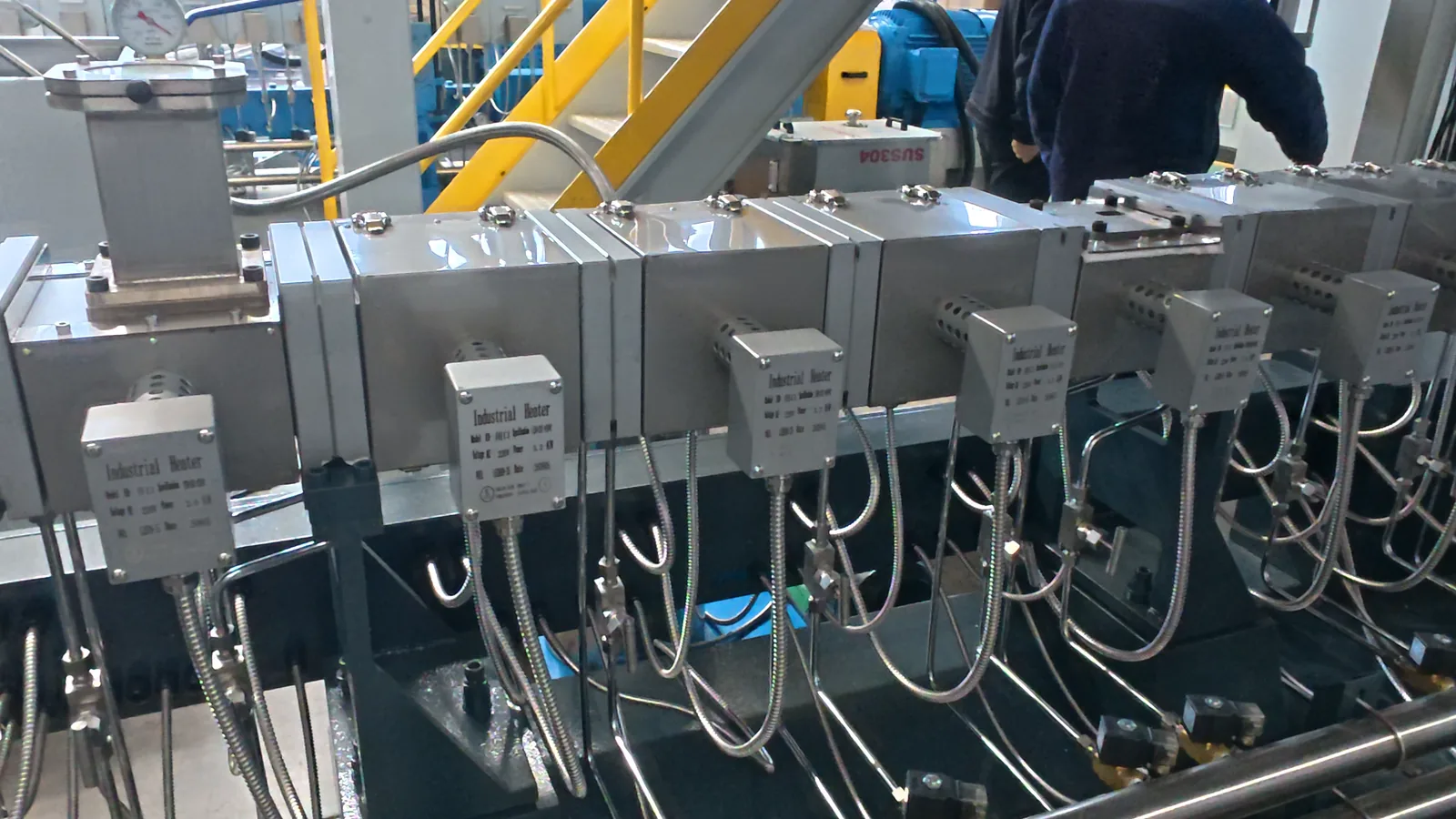
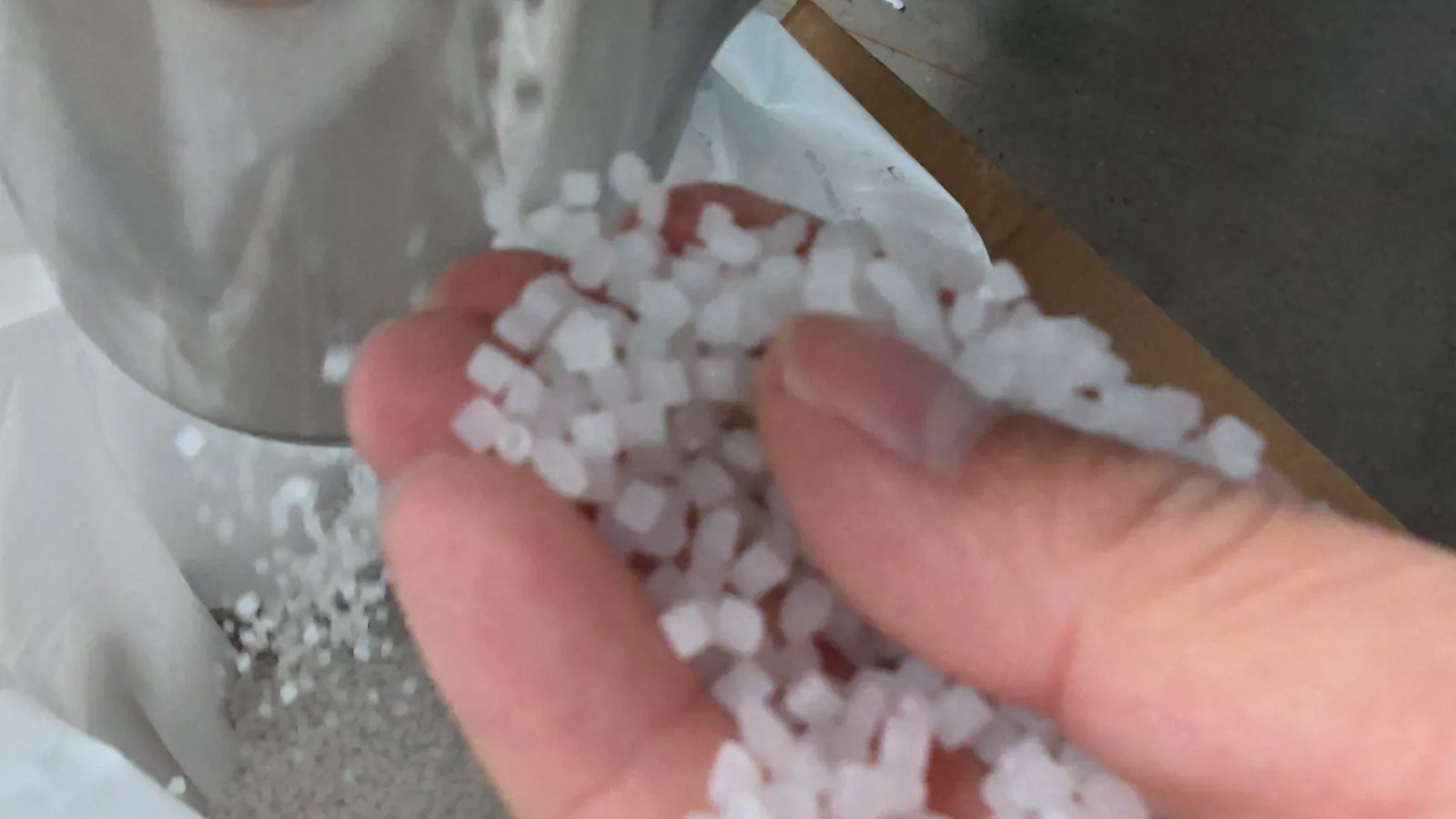
In November 2026 the line was trial-run at the USEON factory, at a rate below the 600 kg/h design output. The trial confirmed that the line runs from loading to screening; the 600 kg/h output and the ±0.5% feeder accuracy are design and rated values, not trial measurements. The video shows the raw material being conveyed automatically from the floor bins to the feeder platform, the feeders running, strands leaving the die, and the strands being cooled in the water bath, dried and cut. It ends with the screened pellets coming off the vibrating screen.
Other Applications
The same combination of vacuum loading, several loss-in-weight feeders, twin screw compounding and strand pelletizing also suits:
- Other color masterbatches and additive masterbatches, such as antioxidant, slip, antiblock and antistatic masterbatches
- PE and PP compounds with many components, where several additives go in at once
- Plants moving away from premixing and manual weighing that need the dosing ratios logged
For a new recipe, choose the feeders first: the number of components and the rate of the smallest one decide how many feeders are needed and their ranges. The extruder size, venting and pelletizing method are then matched to the output. Complete line options are described under color masterbatch production lines, and PE pelletizing methods under PE Compounding, Extrusion & Pelletizing.
Related projects using loss-in-weight feeding or a SAT65 extruder: the 700 kg/h PP filler line with loss-in-weight feeding in India and the 300 kg/h PP-based tailor-made masterbatch line in Turkey (SAT65).
FAQ
Why use loss-in-weight feeders instead of premixing for PE color masterbatch?
A: Loss-in-weight feeders keep each component's ratio more stable than a premix. When the components of a premix differ widely in particle size and density, for example a pelletized carrier resin and a fine pigment powder, they tend to segregate during storage and conveying, and the pellets can vary in color. Loss-in-weight feeders meter each component continuously by weight. The ratio is set and recorded in the control system, and changing it only takes a new setpoint. Less premixing is needed as well.
How many loss-in-weight feeders does a PE color masterbatch line need?
A: A PE color masterbatch line usually needs one loss-in-weight feeder for each component whose ratio is controlled separately. This line has five: three large feeders for the main components and two small ones for minor components. If there are more components than feeders, or several minor components always go in at a fixed ratio, they can be premixed and added through one feeder.
How accurate is a loss-in-weight feeder at only a few kg/h?
A: A loss-in-weight feeder can dose a few kg/h accurately if the rate sits well inside its range and the material flows steadily into the screws. The two small feeders on this line cover 2–15 kg/h and 10–30 kg/h; like the three large ones, they are rated at ±0.5% within their own range.
Can the feeders dose pigment powder as well as pellets?
A: Yes. All five twin screw loss-in-weight feeders on this line are specified for pellets or powder. Fine powders that flow poorly are the harder case: stirred feed hoppers keep them moving, and pneumatic vibrators on the hopper above the common feed inlet help them drop into the extruder.
Why use both an atmospheric and a vacuum vent on a color masterbatch extruder?
A: Using both vents reduces bubbles in the strands, strand breaks and voids in the pellets. The atmospheric vent in the middle of the barrel releases most of the air and moisture carried in with the material; the vacuum vent further downstream uses a vacuum pump to draw off the remaining gas and the volatiles released during melting. On this line they are at barrels 5 and 9.
Strand or underwater pelletizing: which suits PE color masterbatch?
A: Strand pelletizing suits most PE color masterbatch: the equipment is simple and easy to clean. Micro pellets are usually made by underwater pelletizing (see the 400 kg/h micro pellet color masterbatch project in the UK). For strands that break easily, for example at high pigment loadings, water ring or underwater pelletizing is worth considering; at very high outputs, underwater pelletizing is the usual choice. The methods are compared in How to Choose a Pelletizing System.
What equipment does this SAT65 PE color masterbatch line include?
A: This SAT65 line includes floor bins and a vacuum loader with one blower and three receivers; three stirred hoppers and two hand-fed hoppers; five twin screw loss-in-weight feeders on a two-deck feeder platform; a SAT65 co-rotating twin screw extruder (L/D 40, 160 kW main motor, 60–600 rpm) with an atmospheric vent at barrel 5 and a vacuum vent at barrel 9; a quick-open strand die, water bath, strand dryer, strand pelletizer and vibrating screen; and industrial PC control. Spare parts supplied with the line include screw elements, heaters, pelletizer knives, PU rollers and a spare die plate.
Planning a PE color masterbatch line, or moving from manual weighing and premixing to automatic dosing? Get a quote from the USEON team: send your recipe (each component and its share), whether the raw materials are pellets or powder, and your target output. We size the feeders and configure the whole line from these figures.
Tell us your material, formulation and target throughput.
- 01Process review
- 02Engineer call
- 03Line proposal

Souder Chen
Head of Compounding Division
With USEON since 2008. Twin screw compounding, devolatilization and recycling lines.