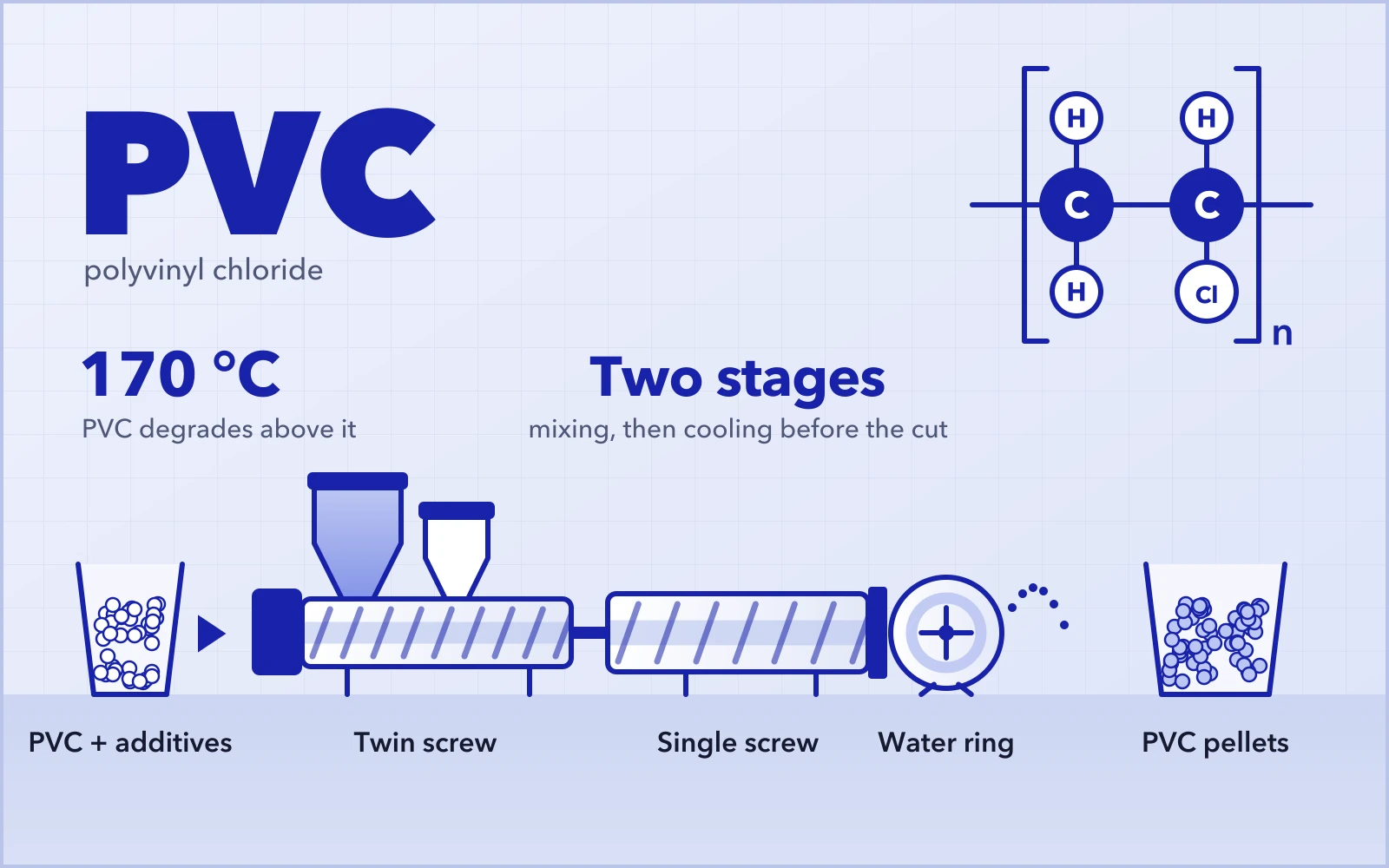
- Density
- 1.3–1.45 g/cm³
- Continuous use
- ≤ 60 °Cdegrades above 170 °C
- Oxygen index
- ≥ 45 %self-extinguishing
- Main types
- Rigid · flexible · CPVC · PVC-O
What is Polyvinyl Chloride (PVC)?
PVC is the abbreviation for Polyvinyl Chloride, one of the five major general-purpose plastics. It is a thermoplastic resin polymerized from vinyl chloride monomer (VCM) under specific conditions.
PVC is widely used in construction, cables, daily necessities, packaging, medical applications, and other fields. Due to its excellent mechanical strength, corrosion resistance, electrical insulation properties, and good processability, PVC holds a significant position in global plastic usage.
PVC Performance Parameters
| Property | Value Range | Description |
|---|---|---|
| Density | 1.3–1.45 g/cm³ | Relatively high density, beneficial for dimensional stability |
| Tensile Strength | 40–55 MPa | Better performance in rigid PVC |
| Flexural Modulus | 2500–4000 MPa | High rigidity in rigid materials |
| Heat Distortion Temperature | 65–90 °C | Moderate thermal stability, suitable for medium-temperature applications |
| Continuous Use Temperature | ≤ 60 °C | Risk of degradation at high temperatures should be considered |
| Oxygen Index (Flame Retardancy) | ≥ 45% (self-extinguishing) | High chlorine content provides inherent flame retardancy |
| Volume Resistivity | 10¹³–10¹⁴ Ω·cm | Excellent insulation, suitable for cable sheathing |
| Chemical Resistance | Excellent | Resistant to acids, alkalis, and salts; not resistant to ketones or aromatics |
| Processing Methods | Extrusion, injection molding, calendaring, etc. | Compatible with various processes; excellent processability |
Basic Knowledge of PVC
PVC has stable physical and chemical properties; it is insoluble in water, alcohol, and gasoline, with low permeability to gases and water vapor. At room temperature, it is resistant to hydrochloric acid of any concentration, sulfuric acid below 90%, nitric acid at 50–60%, and caustic soda solutions below 20%, showing certain chemical corrosion resistance. It is quite stable to salts but can be dissolved in organic solvents such as ethers, ketones, chlorinated aliphatic hydrocarbons, and aromatic hydrocarbons.
- Adjustable hardnessCan be made into soft PVC by adding plasticizers or rigid PVC without them.
- Excellent chemical resistanceHighly resistant to acids, alkalis, and salts.
- Good electrical insulationWidely used in wire and cable sheathing.
- Good flame retardancySelf-extinguishing and compliant with various flame retardant standards.
- Strong processabilitySuitable for extrusion, injection molding, calendaring, blow molding, thermoforming, and other processes.
- Environmental restrictionsReleases HCl gas when burned; use of heavy metal stabilizers is regulated in Europe.
Types of PVC
| Type | Abbreviation | Features and Application Examples |
|---|---|---|
| Rigid PVC | Rigid PVC / uPVC | High rigidity, plasticizer-free; commonly used in pipes, profiles, construction formwork |
| Flexible PVC | Flexible PVC | Contains plasticizers, soft; used in cable sheathing, artificial leather, flooring films |
| PVC Paste Resin | PVC Paste Resin | Fine particle size; suitable for coatings, artificial leather, glove coatings, toy surfaces |
| Modified PVC | PVC-M, PVC-A, etc. | Modified with ACR, ABS, etc., to enhance toughness or heat resistance; used in structural parts |
| Chlorinated PVC | CPVC | Heat resistance increased to 90–95 °C; used in hot water pipes and chemical equipment |
| Oriented PVC | PVC-O | Highly oriented, enhanced hoop strength; commonly used in high-pressure water supply systems |
Applications of PVC
- Construction and Building Materials
- Window and door profiles, drainage pipes, vinyl flooring, wall panels, foam boards, roofing waterproof membranes, etc.
- Wires and Cables
- Cable sheathing, insulation layers, communication wires, automotive wire harnesses
- Medical Products
- Infusion tubes, blood bags, disposable gloves, respiratory masks, catheters, etc. (must comply with DEHP-free standards)
- Packaging and Daily Products
- Blow-molded bottles, shrink films, cards, toys, artificial leather, shoe soles, etc.
PVC Production Processing
PVC is mainly produced through free radical polymerization of vinyl chloride monomer (VCM). The common methods include:
- Suspension PolymerizationProduces granular PVC; the most widely used method with the highest output.
- Emulsion PolymerizationProduces fine particles; mainly used for coatings and paste resins.
- Bulk PolymerizationLess common; produces larger particle sizes.
PVC Compounding and Pelletizing
Although PVC base resin has excellent fundamental properties, to meet the diverse requirements in flexibility, thermal stability, impact resistance, flame retardancy, and functionality across different fields, it must be compounded and modified with various additives and fillers. Common modification methods and their mechanisms include:
- PlasticizationAdding DOP, DINP, DEHT, etc., to produce flexible PVC.
- StabilizationAdding calcium-zinc, tin-based heat stabilizers.
- Flame retardancyOriginally self-extinguishing, can be further enhanced.
- Impact resistanceAdding ACR, MBS, etc.
- Antibacterial and antistatic modificationsUsed in medical and electronic packaging.
USEON has delivered hundreds of PVC pelletizing production lines.
PVC is durable, inexpensive, and easy to process. Before final products are made, PVC typically requires pelletizing with functional additives. Optional additives include heat stabilizers, UV stabilizers, plasticizers, processing aids, impact modifiers, heat modifiers, fillers, flame retardants, biocides, foaming agents, smoke suppressants, and pigments.
PVC degrades easily at high temperatures (above 170 °C). USEON’s two-stage extruder is specially designed for PVC pelletizing.
Stage One: Uses a co-rotating parallel twin-screw extruder with a modular screw and barrel structure, allowing easy rearrangement of screw elements to suit different formulations. Twin screws achieve better dispersion and mixing quality but result in higher melting temperatures; hence, a two-stage machine is needed.
Stage Two: Uses a Single Screw Extruder to cool the molten material from the twin-screw extruder and perform pelletizing.
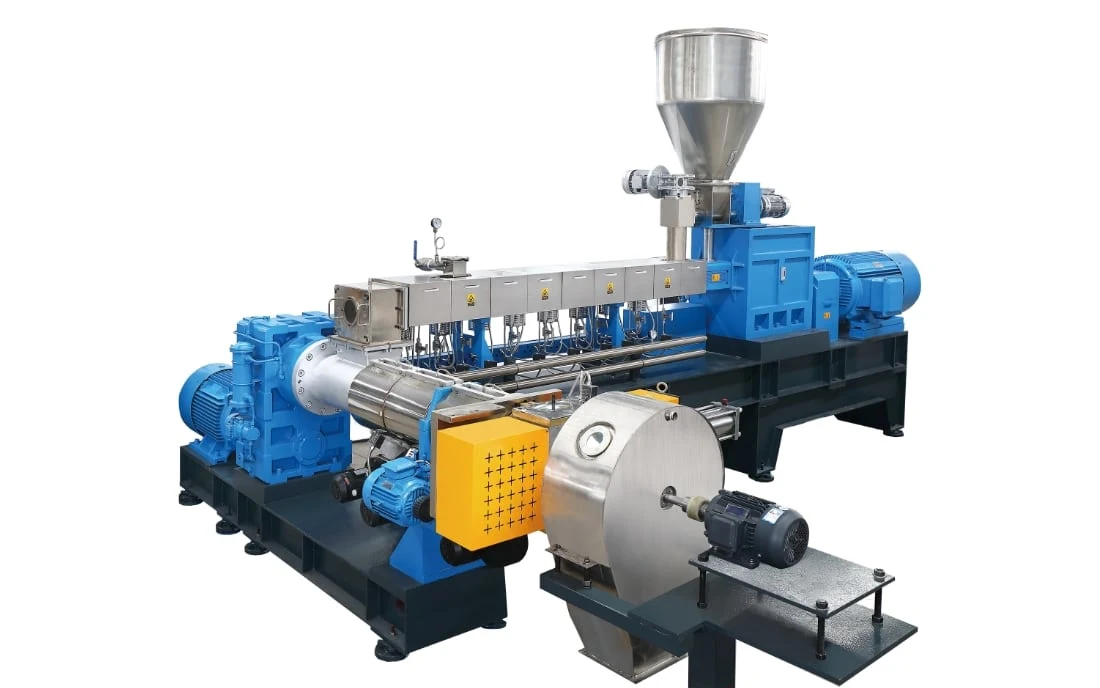
In terms of pelletizing, the choice of cutting method directly affects the pellet shape, production capacity, and subsequent processing performance. Common pelletizing methods include:
| Pelletizing Method | Principle Description | Suitable Product Types |
|---|---|---|
| Water Ring Pelletizing | Pellets are cut by blades in water immediately after exiting the die, then cooled and conveyed with the water flow | General modified PVC pellets, flexible formulations |
| Strand Pelletizing (Air-Cooled) | Molten strands are pulled, cooled, and then cut into cylindrical pellets by a pelletizer | Rigid PVC, high-transparency materials, foamed premixes |
| Hot Face Pelletizing | Suitable for low-viscosity, short melt formulations; high temperature in cutting zone | Special modified PVC, small-scale production |
| Dry Pulverizing | Used for recycling PVC foam, sheet scraps, and other edge materials | Irregular recycled materials |
Among these methods, the water ring pelletizing system is the most commonly used in PVC two-stage production lines due to its high efficiency, high level of automation, and uniform pellet appearance. In contrast, strand air-cooled pelletizing is better suited for products requiring superior appearance or foamed precursors, such as building sealing strips and sheet substrates.
Compared to the traditional kneader + single-screw process, the two-stage method offers the following advantages:
- High modification efficiencyBetter dispersion and more complete reactions
- Compatibility with various additive systemsACR, MBS, calcium-zinc, halogen-free flame retardants, etc.
- Applicable to multiple PVC typesFlexible, rigid, transparent, and foamed formulations
- Improved product consistencyHigher output and greater automation
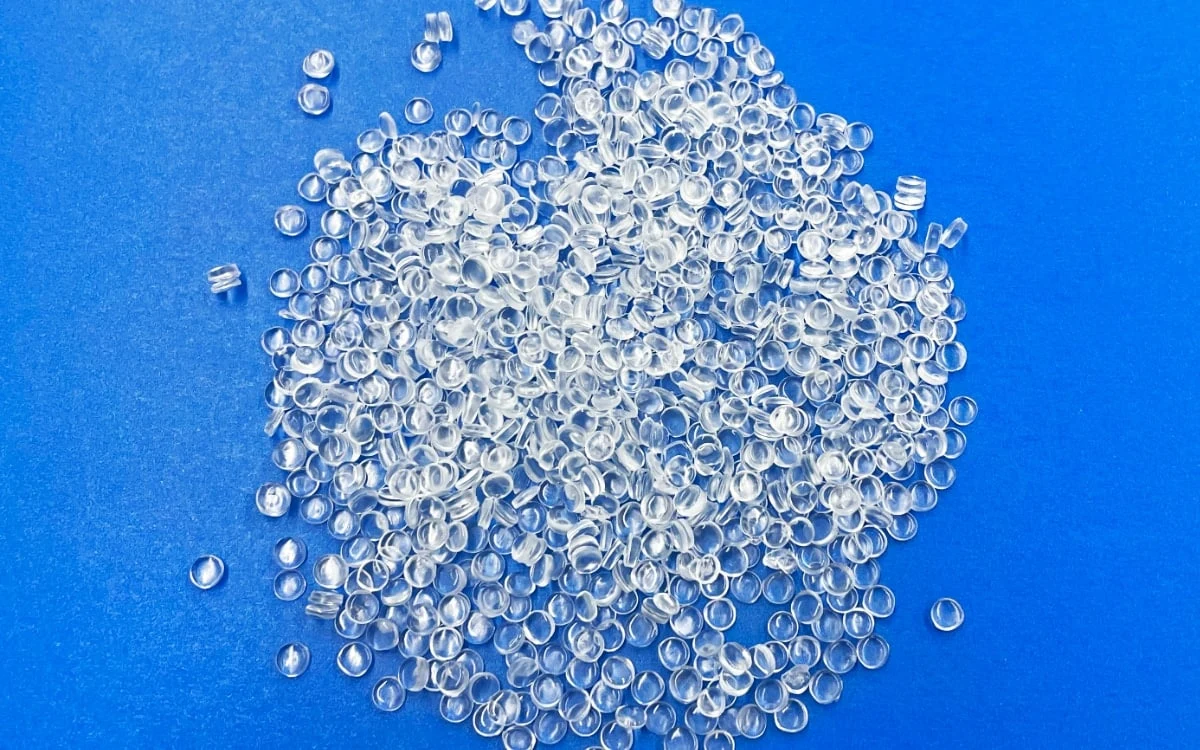
PVC Recycling
PVC can be recycled through both physical and chemical methods:
- Physical RecyclingInvolves shredding and re-pelletizing, then reused in non-food contact applications such as fittings and flooring.
- Chemical RecyclingThrough pyrolysis, VCM or chlorine elements can be recovered, though this method is currently less commonly used.
- LimitationsResidual additives like plasticizers and stabilizers can affect the environmental safety and performance of recycled PVC.
FAQs
Is PVC safe and reliable?
Yes, it is safe within standard usage conditions. Medical and food-grade PVC must be formulated without DEHP, lead, cadmium, etc.
Can PVC be used at high temperatures?
The recommended continuous use temperature is no more than 60–70 °C.
How to assess the quality of PVC products?
Check the appearance, smell, and toughness. Inferior PVC has a strong odor and breaks easily.
Can PVC replace other plastics?
It has advantages in flame retardancy and cost, but performs less well than PE or PP in high-temperature, food-contact, or high-transparency applications.
How many times can PVC be recycled?
It can be recycled 2–3 times, though performance gradually degrades.
Why do some PVC products turn yellow?
Overheating during processing or insufficient stabilizers may cause thermal degradation and yellowing, especially without antioxidants or under UV exposure.
What causes reduced transparency in modified PVC?
Possible reasons include mismatch in refractive index between modifiers/fillers and PVC, poor dispersion leading to light scattering, or excessive shear causing degradation and bubbles.
How to improve low-temperature toughness of PVC?
Add impact modifiers like MBS, CPE, or ACR, optimize the formulation and plasticization to reduce brittleness at low temperatures.
Why does blooming occur in modified PVC during use?
Incompatibility or excessive use of additives like plasticizers, lubricants, or impact modifiers can lead to migration to the surface, affecting appearance and performance.
What are the key differences in modifying foamed PVC vs. regular PVC?
Foamed PVC requires careful control of foaming agent type and decomposition temperature, and must be paired with suitable heat stabilizers, flow modifiers, and density control additives to achieve lightweight, closed-cell structure.