What is LCP?
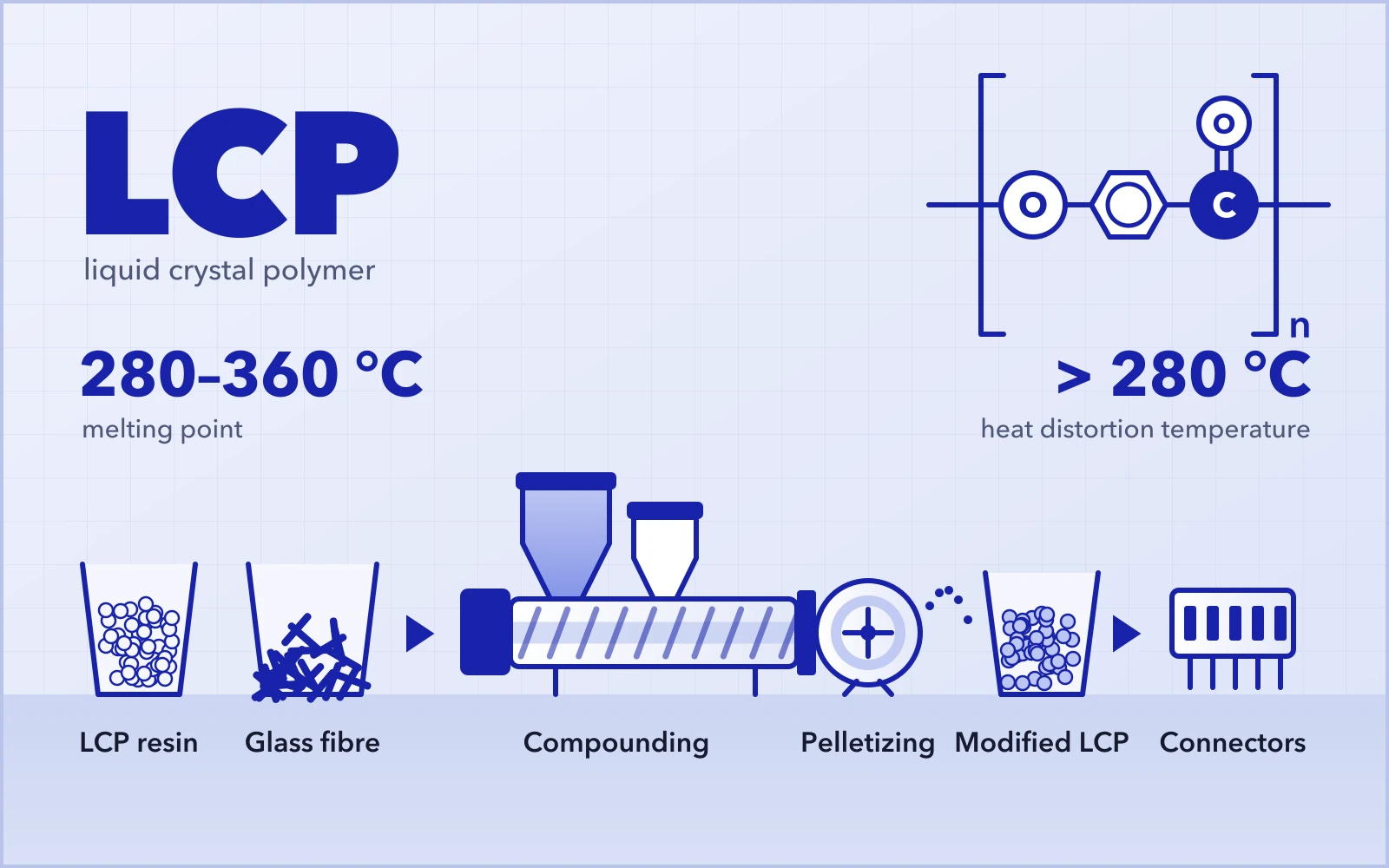
LCP stands for Liquid Crystal Polymer. It is a thermoplastic polymer material that exhibits a liquid crystalline structure when melted. In this state, the polymer chains align in an ordered, anisotropic way, combining the characteristics of crystallinity and molecular orientation. As a result, LCPs offer excellent mechanical, electrical, and heat-resistant properties, making them an important engineering plastic widely used in electronics, electrical components, automotive, and medical industries.
Main Features of LCP
LCP molecules have a highly rigid structure, with main chains typically consisting of aromatic rings connected by ester or ether bonds, giving them high orientation and crystallinity. Its main features are as follows:
- Excellent thermal performanceHeat distortion temperature can reach above 280°C, with melting points usually between 280–360°C.
- Mechanical propertiesHigh modulus and strength; after injection molding, materials achieve high orientation, especially reinforced grades with very high tensile strength and flexural modulus.
- Dimensional stabilityVery low thermal expansion coefficient, better than most thermoplastics, suitable for precision part molding.
- Strong chemical resistanceGood resistance to most chemical agents, acids, bases, and solvents.
- Good flame retardancyInherently flame-resistant, with an oxygen index typically over 40%, requiring no added flame retardants.
- Electrical propertiesLow dielectric constant and loss, making it an excellent material for high-frequency insulation.
- Short molding cycleFast cooling and short injection cycles, suitable for efficient production.
LCP is typically white or light yellow granules, with some grades appearing semi-transparent.
Types of LCP
Based on Chemical Structure
- Aromatic polyester type LCP
- Aromatic polyester-amide type LCP
- Aromatic polyester-ether type LCP
Based on Application
- Reinforced structural materials (glass fiber/mineral filled)
- Non-reinforced types for high-frequency electronic components
Applications of LCP
- Electronics and Electrical
- Widely used in mobile phone connectors, laptop micro-connectors, capacitors, LED reflectors, microwave communication, etc.
- Automotive
- Ignition coil frames, sensor housings, ABS system parts, connectors for electric vehicles, etc.
- Medical Devices
- Suitable for high-temperature sterilized equipment housings and miniature connectors.
- Industrial Machinery
- High-speed gears, printer head components, sliding parts in robotic arms, etc.
LCP Production
LCP is mainly produced through melt polycondensation and solution polycondensation. Common methods include:
- Aromatic dicarboxylic acid (e.g., p-hydroxybenzoic acid) + aromatic diol (e.g., hydroquinone)Polycondensation under high temperature (280–320°C) and inert atmosphere to form an LCP with a rigid main chain.
- Post-treatmentIncludes vacuum devolatilization and pelletizing; some grades also require solid-state polycondensation to increase molecular weight.
LCP Modification
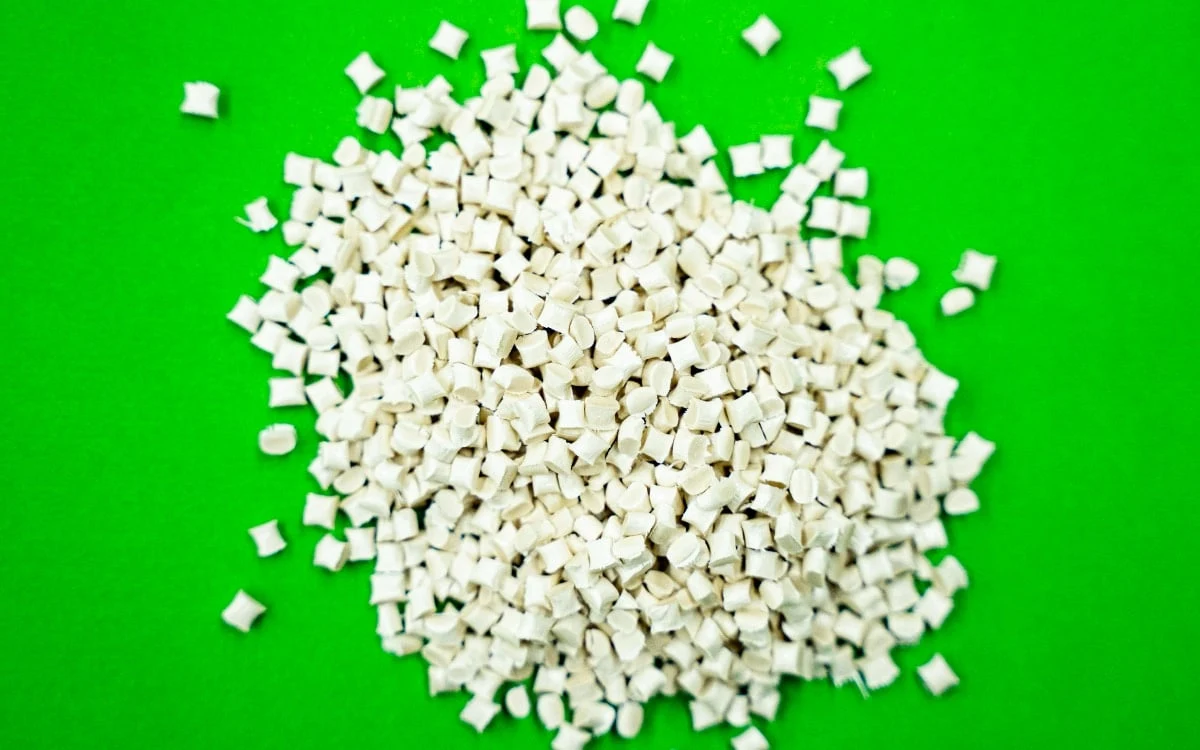
- Glass fiber reinforcementImproves strength, modulus, and dimensional stability.
- Mineral fillingReduces shrinkage and improves dimensional accuracy.
- Lubrication modificationAdd PTFE, graphite, etc., to enhance wear resistance and reduce friction.
- Copolymerization/CompoundingIntroduces flexible monomers to improve brittleness and processability.
- Conductive/antistaticAdd carbon black, carbon fiber, etc., to impart conductivity.
LCP Recycling
LCP is suitable for multiple recycling:
- Physical recyclingCrushing and re-pelletizing for non-critical structural parts.
- Chemical recyclingPyrolysis to recover monomers, currently not applied on a large scale.
LCP should not be mixed with other thermoplastics, as it affects quality.
Extruder for LCP Compounding
USEON recommends our U Series twin-screw extruder for LCP compounding. The U Series features high torque (18 Nm/cm³), high speed, and high efficiency, making it our premium twin-screw line.
The following video shows a U3 lab model case used for LCP compounding.
FAQs
What are the advantages of LCP over regular plastics?
LCP offers superior high-temperature resistance, dimensional stability, and electrical properties.
Can LCP be injection molded?
Yes, it has excellent flowability and is ideal for thin-wall, high-precision parts.
Is LCP environmentally friendly?
Yes, it’s halogen-free, recyclable, and has a long service life—making it highly eco-friendly.