
EPS Recycling
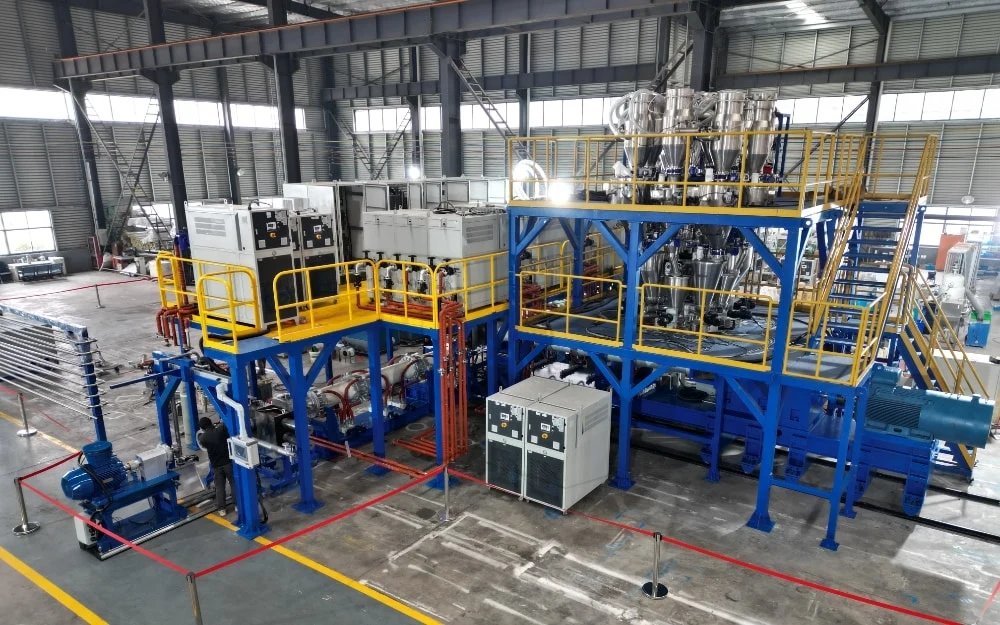
Same-grade recycling: compressed and crushed EPS waste goes through a twin-screw extruder, takes up blowing agent in the melt, and leaves the underwater pelletizer as expandable beads that are used like new EPS raw material.
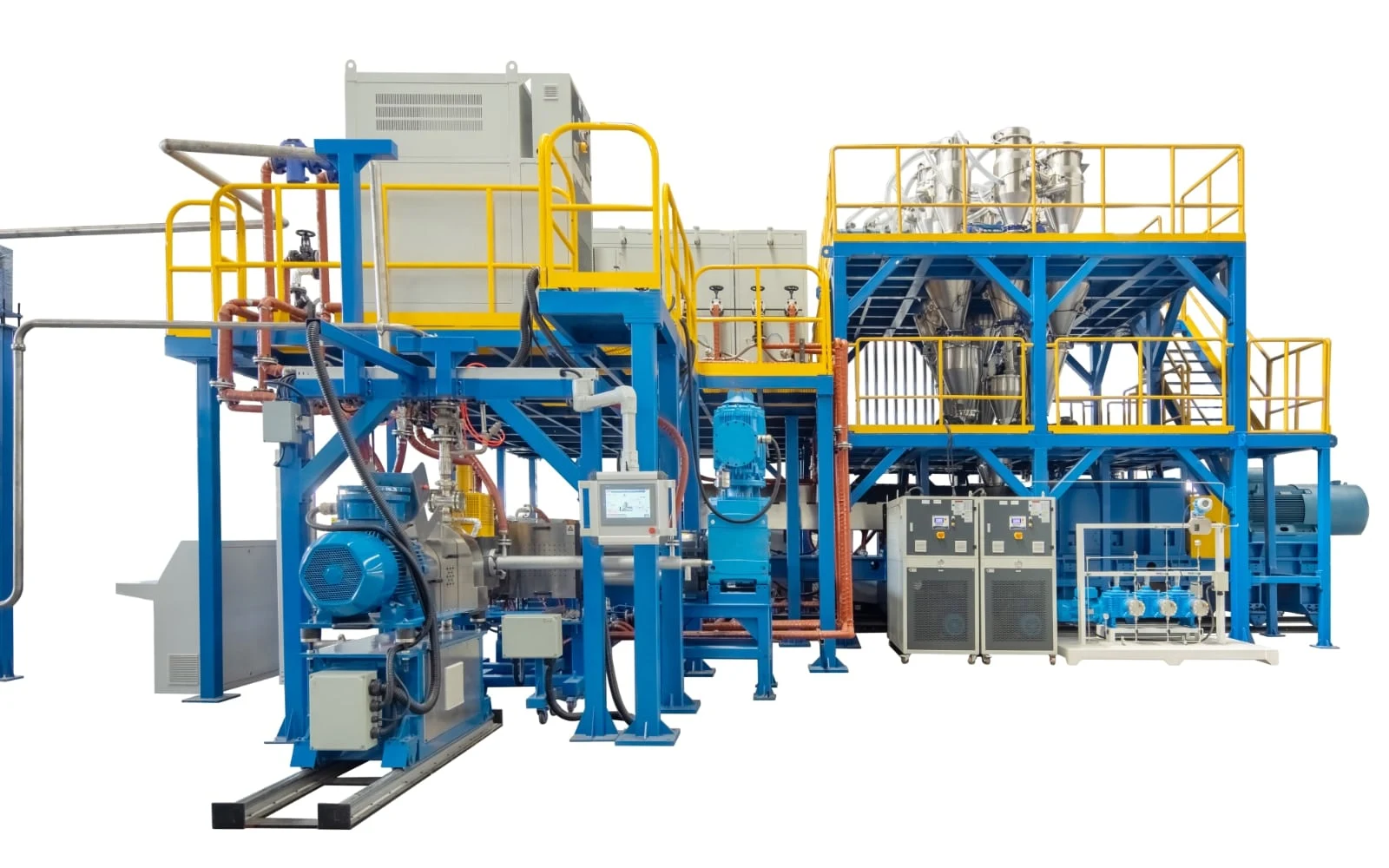
Same-grade recycling: EPS back to EPS
Return to the original use
The highest goal of plastic recycling technology is to enable recycled plastics to return to their original use. That is also the purpose of the circular economy.
Foaming extrusion
EPS-to-EPS is a foaming extrusion technology. The blowing agent is injected into the melt during extrusion, and the melt is cooled to a temperature suitable for underwater pelletizing.
Beads like new raw material
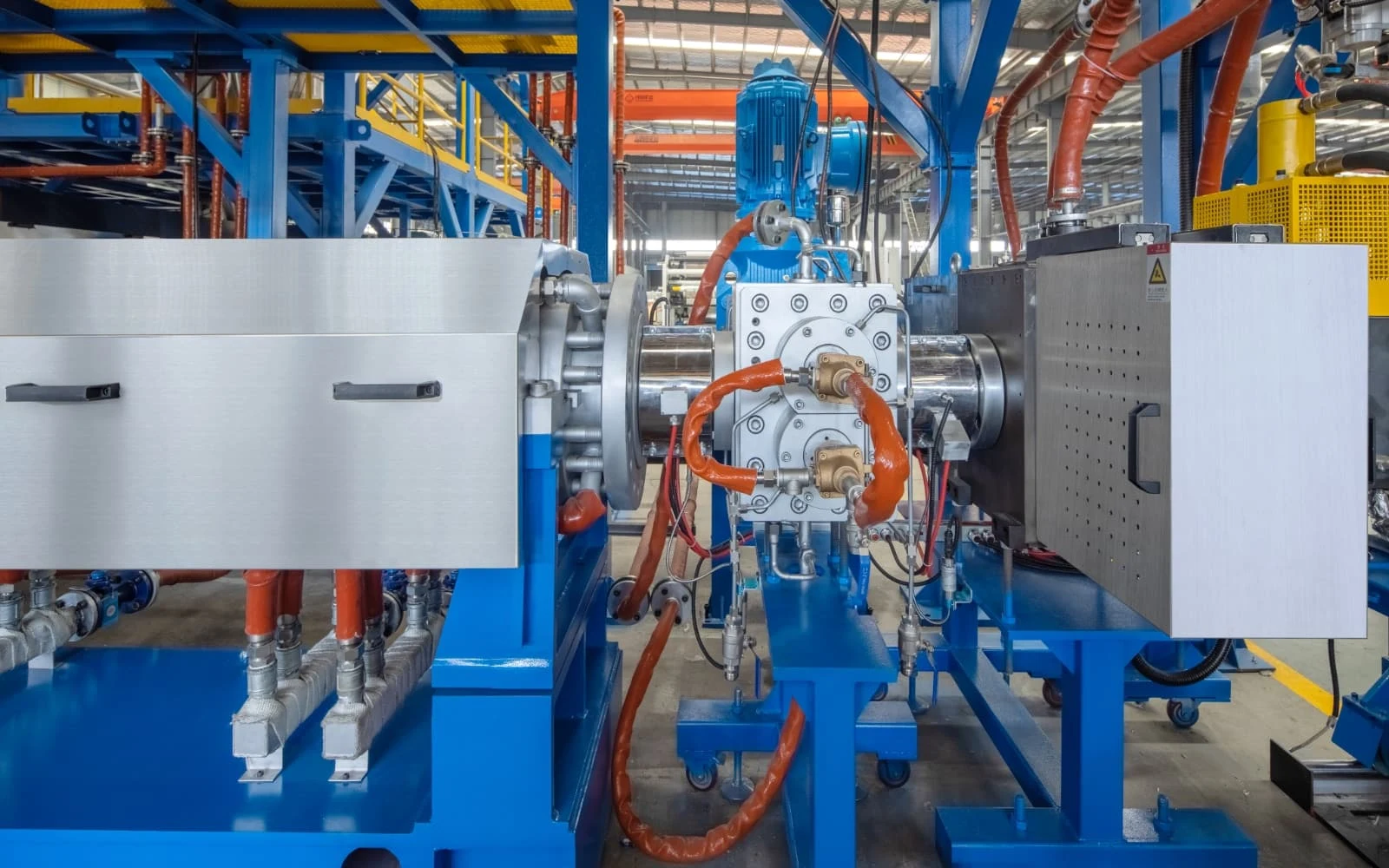
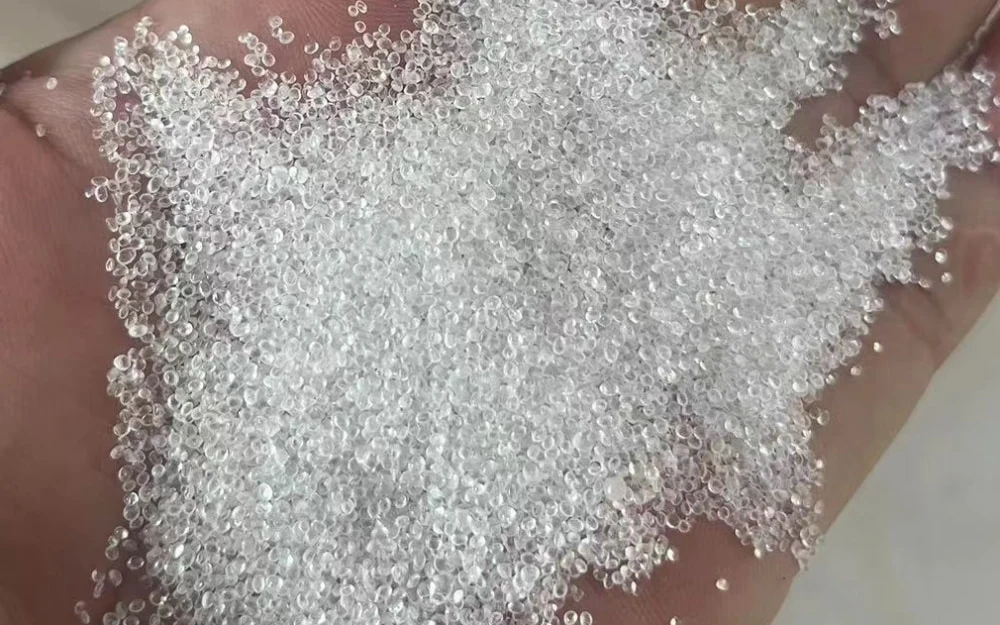
The recycled pellets contain blowing agent and can be used like suspension EPS. Many of their performance characteristics are even better than those of suspension-polymerised EPS.
How EPS waste becomes EPS beads
- EPS waste
- Compress and crush
- Twin-screw extruder
- Blowing agent injection
- Cooling
- Melt pump and screen changer
- Underwater pelletizing
- Expandable EPS beads
Which EPS waste it takes
- Product packaging: single-use protective packaging for home appliances and electronics
- Turnover boxes: EPS insulated boxes used in fishery and logistics
- Factory scraps: relatively clean off-cuts from EPS product factories
The pre-treatment stages (crushing, washing, drying) manage common impurities in the waste to improve the purity of the final recycled pellets.
What it does to the carbon footprint
USEON’s XEPS uses 40% recycled general purpose polystyrene (GPPS) as raw material.
Emissions of the raw material
kg CO₂e per kg of GPPS · industry data
Lower raw material carbon footprint
With 40% recycled GPPS in the product.
Less CO₂e per ton of product
Recycling lessens crude oil extraction, refining and styrene polymerization.
Lower energy in production
Recycling typically needs less energy than producing the same weight of new material.
Waste management
Avoids the emissions from landfilling or incineration.
According to industry Life Cycle Assessment (LCA) data, the recycling process itself holds a theoretical potential to reduce carbon emissions by 50% to 75% compared to producing virgin EPS. In practice, the reduction depends on the blending ratio of recycled material.
Modify the material while you recycle it
During the melt extrusion stage, it is possible to compound and modify the material at the same time.
Thermal resistance
Graphite can be added to enhance the thermal resistance of the recycled EPS.
Coloured pellets
Colour masterbatches can be introduced to produce recycled pellets in specific colours.
Impact strength
Additives like high impact polystyrene can be blended in to adjust physical properties of the final product.
FAQ
Compared to using virgin EPS materials, what role can USEON's XEPS recycling technology play in reducing carbon emissions?
Our XEPS recycling technology provides an effective pathway for the circular use of EPS materials. According to industry Life Cycle Assessment (LCA) data, the recycling process itself holds a theoretical potential to reduce carbon emissions by 50% to 75% compared to producing virgin EPS. In practical applications, the reduction effect depends on the blending ratio of recycled material. For instance, using 40% XEPS recycled pellets in a product can help reduce that product's carbon footprint by approximately 30% to 40%. This reduction effect stems primarily from:
- Reduced Upstream Consumption: Recycling lessens the demand for upstream manufacturing processes, including crude oil extraction, refining, and styrene polymerization.
- Lower Energy Consumption in Production: The energy required for the recycling process is typically lower than that needed to produce an equivalent weight of new material.
- Waste Management: Recycling EPS waste helps to avoid the associated carbon emissions that could result from landfilling or incineration.
What types of EPS waste is this recycling system suitable for?
The recycling system is designed to process several common types of EPS waste found in the market, including:
- Product Packaging: Such as single-use protective packaging for home appliances and electronics.
- Turnover Boxes: For example, EPS insulated boxes used in some fishery and logistics industries.
- Factory Scraps: Relatively clean off-cuts and scraps generated during the production process at EPS product factories.
The pre-treatment stages of the system (e.g., crushing, washing, drying) are intended to manage common impurities found in the waste material to improve the purity of the final recycled pellets.
What performance level can be expected from the EPS pellets recycled by the XEPS technology?
The physical properties of EPS pellets recycled through the XEPS technology can be restored to a level approaching that of virgin materials. Through process steps like melt extrusion, filtration, and underwater pelletizing, we address some impurities in the recycled material and adjust its properties. This means the recycled pellets have the potential to replace a portion of virgin materials in the manufacturing of EPS packaging products. This can help customers explore options for lowering raw material costs and reducing environmental impact while maintaining the product's essential performance characteristics.
Is it possible to modify the EPS material during the recycling process to adjust its properties?
Yes, the extrusion recycling process facilitates this. During the melt extrusion stage, it is possible to compound and modify the material simultaneously. For instance, graphite can be added to enhance the thermal resistance of the recycled EPS. Color masterbatches can also be introduced to produce recycled pellets in specific colors. Furthermore, additives like HIPS (High Impact Polystyrene) can be blended in to adjust physical properties such as the impact strength of the final product.

Get a quote
To learn more about EPS-to-EPS recycling technology, tell us what EPS waste you collect and what the recycled beads have to do.
- 01Your waste: packaging, boxes or factory scraps
- 02Beads: white, graphite or coloured; recycled share
- 03Pre-treatment, line size and quotation

Cliff Zhang
Vice President
Polymer foam extrusion, extrusion machinery R&D and international business development.