
SAT95 Twin Screw Extrusion Line for Low-Bulk-Density PA Waste Fiber Recycling
A SAT95 twin screw line with force feeding, melt filtration and underwater strand pelletizing for low-bulk-density PA waste fibers, yarns and fishing nets.
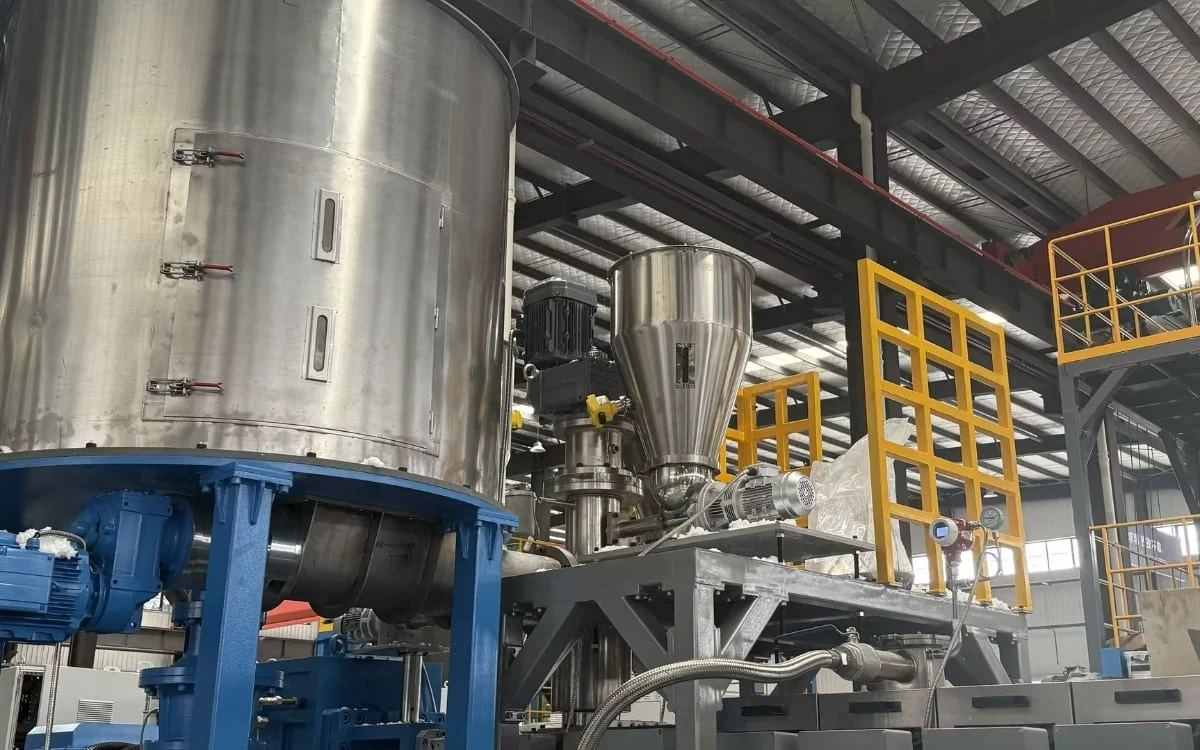
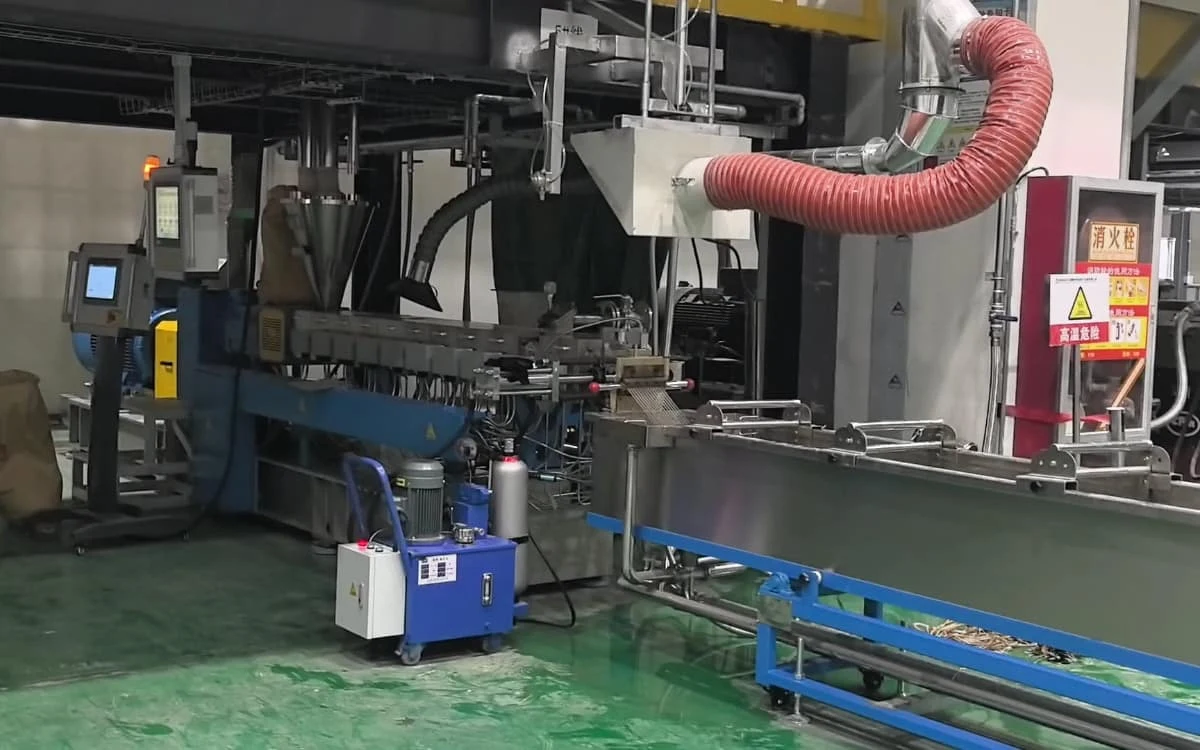
This project uses a USEON SAT95 co-rotating twin screw extruder for engineering plastics compounding and the recycling of low-bulk-density PA waste, including waste fibers, yarns and fishing-net materials. The line was configured around stable forced feeding, controlled remelting and compounding, melt filtration, and underwater strand pelletizing, and has completed its factory trial run.
Background & Challenges
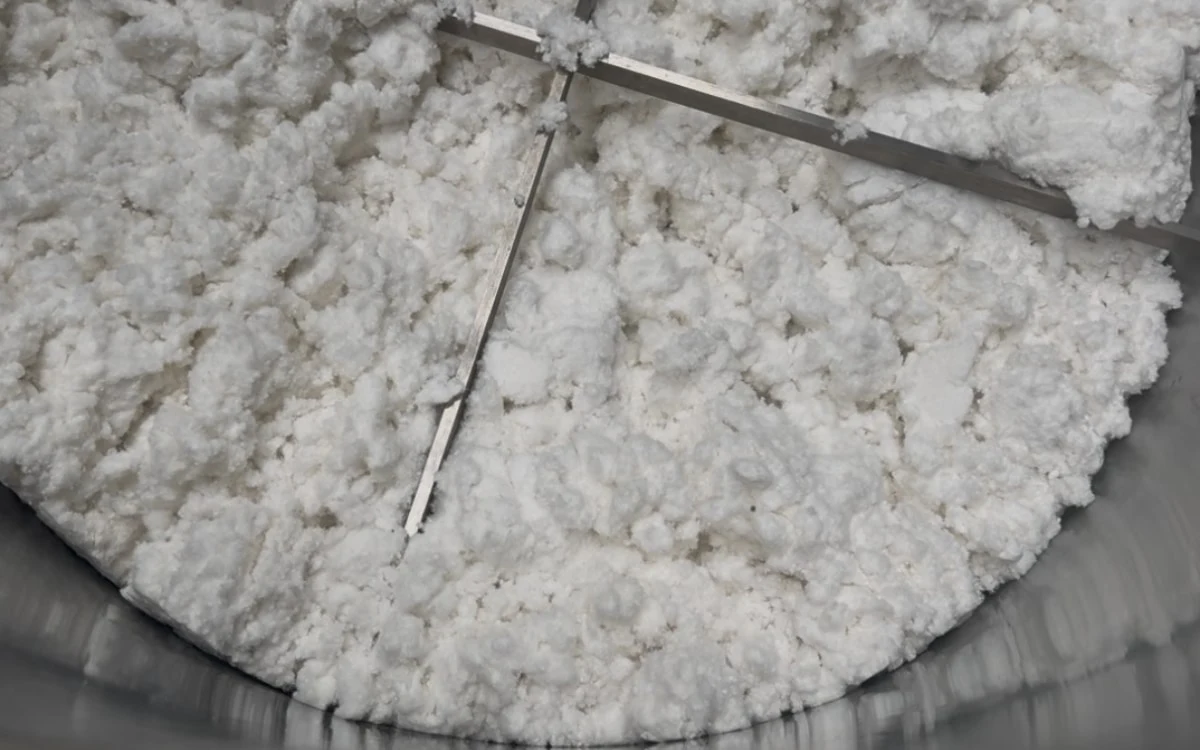
Shredded PA waste fibers still retain a fibrous structure. The material is fluffy and tends to entangle, bridge and form unstable flow in conventional gravity feeding. Feed-rate fluctuation at the front end can quickly affect extruder load and line stability.
The PA waste has also been processed before. During remelting, the process has to account for melting, mixing, devolatilization and the material’s previous thermal history. Contaminants in recycled feedstock add another load to melt filtration, so feeding, extrusion, filtration and pelletizing need to be matched to the actual material.
Line Configuration
- Material silo & agitation
- Force feeding
- SAT95 twin screw extrusion
- Hydraulic screen changing
- Underwater strand pelletizing
- Dewatering / classification
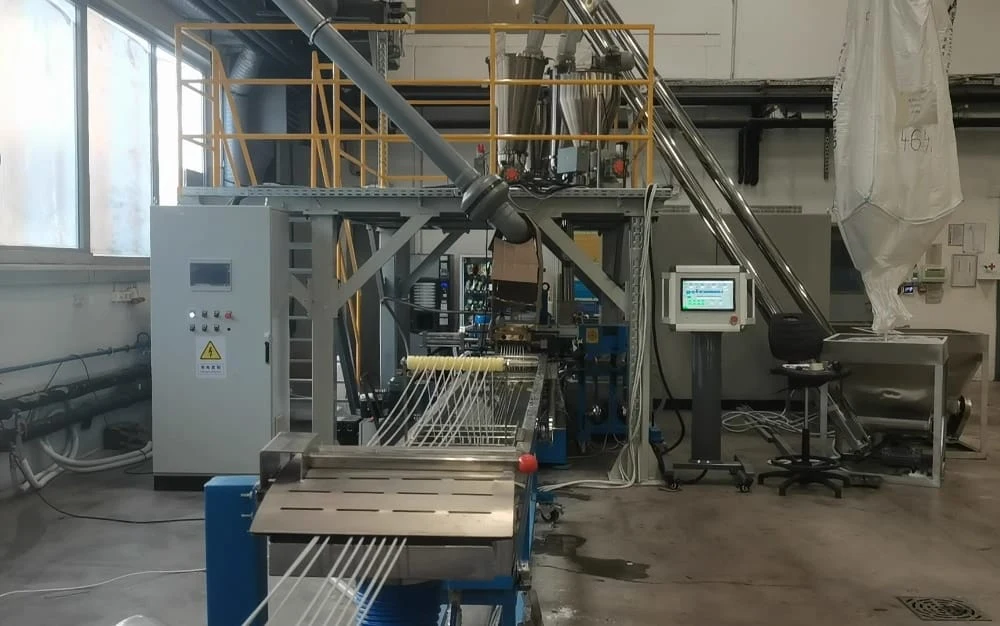
The line is arranged for continuous processing of low-bulk-density PA waste. The front end stabilizes material conveying and feeding; the SAT95 handles melting, mixing and devolatilization; the downstream section provides melt filtration followed by underwater strand pelletizing.
Key Configuration & Process
Force Feeding for Low-Bulk-Density PA Waste
The feeding section combines a 3 m³ material silo, an agitator, and horizontal and vertical force feeders. Mechanical feeding support helps reduce entanglement and bridging, keeping fluffy PA waste moving steadily into the twin screw extruder.
Separate gravimetric feeders are provided for masterbatch and powder additives, allowing continuous dosing when the recycling formulation requires modification.
SAT95 Twin Screw Extruder for Controlled Remelting
- Extruder
- SAT95
- L/D ratio
- 40:1
- Water-cooled motor
- 355kW
- Screw speed
- 600rpm
The main machine is a SAT95 co-rotating twin screw extruder with an L/D of 40:1, a 355 kW water-cooled motor and a screw speed of 600 rpm. The screw configuration is matched to conveying, melting, mixing and devolatilization duties according to the actual feedstock.
PA is sensitive to moisture and processing history. In recycling, temperature, shear and residence conditions need to be controlled while maintaining stable plasticization and mixing.
Melt Filtration for Recycled PA
- Filtration area
- 962 × 2cm²
Feedstock cleanliness directly affects filtration load. This project uses a dual-plate, dual-position hydraulic screen changer with a total filtration area of 962 cm² × 2. The filtration setup is selected to balance contaminant removal, melt pressure and screen-change frequency.
Underwater Strand Pelletizing for Continuous Recycling
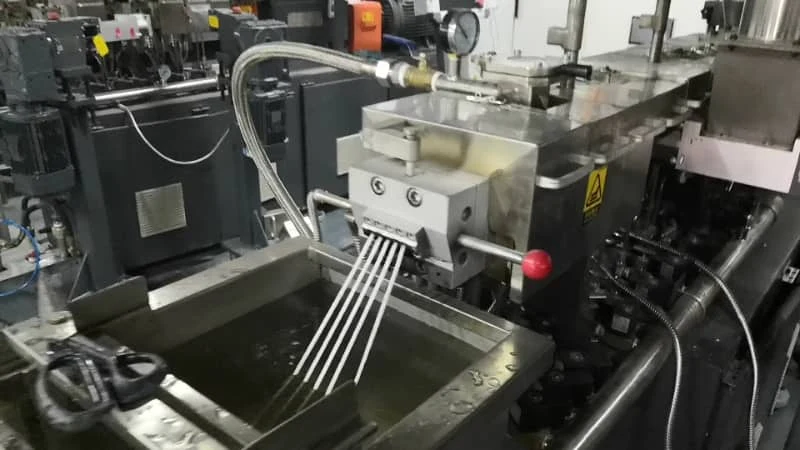
The downstream section uses USEON’s Under Water Strand Pelletizing System. Water flow guides the strands automatically into the pelletizer, which helps the line recover quickly if strands break during a screen change. This makes the system well suited to recycling applications where filter changes may be more frequent.
The project is equipped with a quick-change die head and a 25-hole strand die for strand formation, followed by cooling, pelletizing, dewatering and classification.
Production Video
The video below records the factory trial run and shows the actual process from continuous feeding of low-bulk-density PA waste through extrusion, melt filtration and underwater strand pelletizing.
Trial Run Results
During the factory trial, the line completed the continuous process from low-bulk-density PA waste feeding to recycled pellets. The system ran through feeding, melting and mixing, melt filtration and underwater strand pelletizing, producing regular PA recycled pellets.
For PA fibers, textile scrap, fishing-net waste and other feedstock forms, the final process setup should still be adjusted according to bulk density, moisture, contamination level and the intended use of the recycled material.
FAQ
Why is force feeding used for low-bulk-density PA waste?
A: Shredded waste fibers remain fluffy and tend to entangle or bridge. Mechanical force feeding helps maintain a more continuous flow into the twin screw extruder and reduces feed-rate fluctuation.
Why does this project use an Under Water Strand Pelletizing System?
A: The system is suitable for recycling lines where screen changes may be frequent. Water flow guides the strands into the pelletizer, helping the process recover quickly if strands break during a screen change.
Should recycled PA always use the finest possible filtration?
A: Filtration should match feedstock cleanliness. A coarse filter may leave more contaminants, while an excessively fine filter can increase melt pressure and screen-change frequency. The correct balance depends on the actual material.
Can the same line process other forms of PA recycling feedstock?
A: The line can be adapted for different PA feedstock forms. Waste fibers, textile scrap, fishing nets and pellets differ in bulk density, moisture and contamination, so feeding, screw configuration, filtration and pelletizing should be confirmed with the actual material.
Get a quote
Tell us your material, formulation and target throughput.
- 01Process review
- 02Engineer call
- 03Line proposal

Souder Chen
Head of Compounding Division
With USEON since 2008. Twin screw compounding, devolatilization and recycling lines.