
SAT-T75 Triple Screw Extruder Line for 82% Filled PE/PP Masterbatch in the Middle East
A SAT-T75 triple screw water ring pelletizing line (L/D 52, 250 kW, 600 rpm) for PE/PP masterbatch with 82% filler.
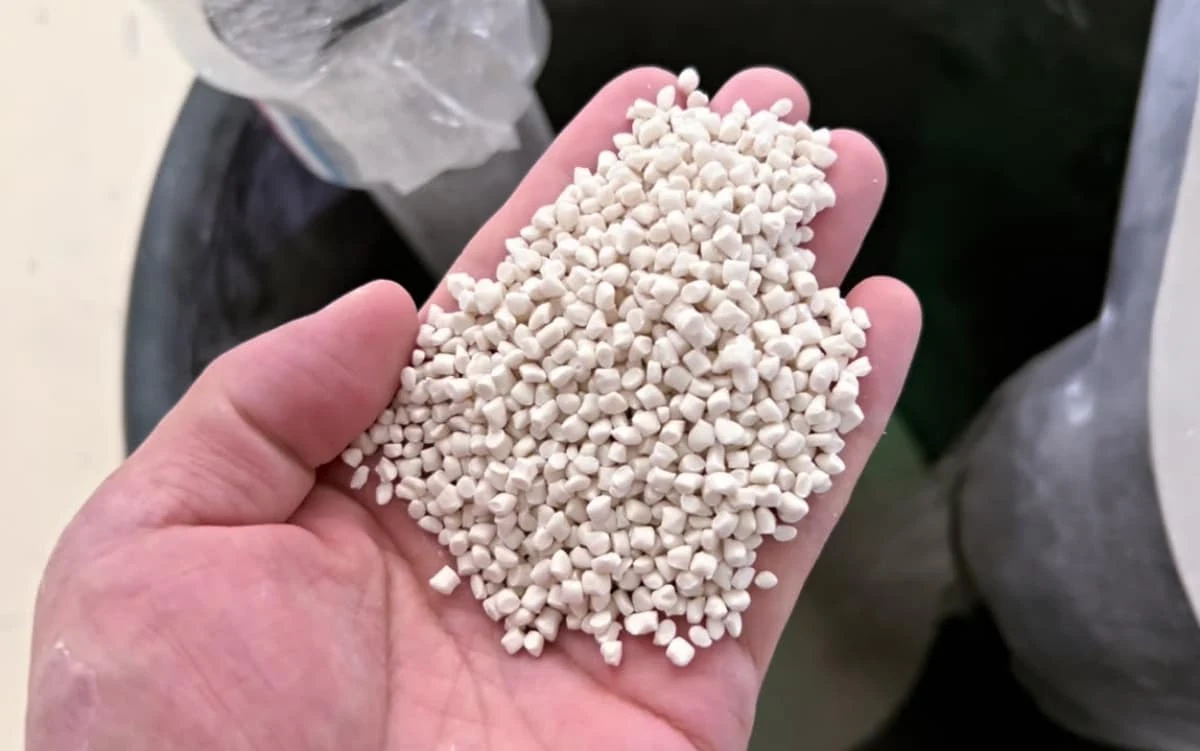
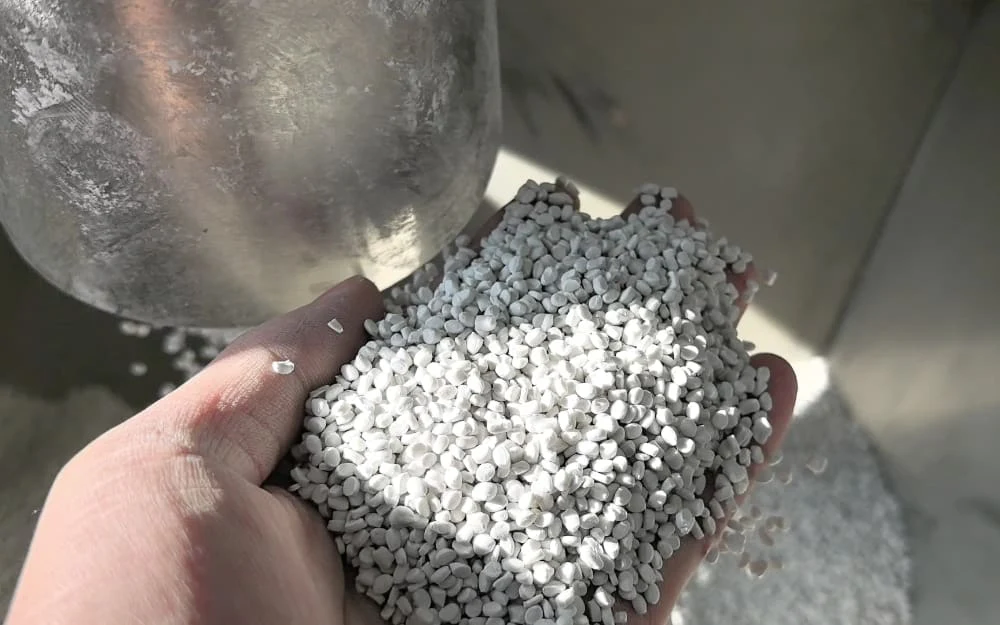
USEON supplied a SAT-T75 triple screw extruder water ring pelletizing line with an L/D ratio of 52, AC 250 kW main motor and 600 rpm screw speed for PE/PP masterbatch containing 82% filler.
Processing Challenges
In polyolefin compounding, high-filler PE/PP masterbatch compounding presents specific physical and mechanical challenges. When the filler loading reaches 82% in a formulation, only a limited PE/PP matrix is available for wetting and coating the filler particles. This formulation creates several processing challenges for the extrusion system:
Powder Feeding and Dispersion
A high proportion of powder can cause feeding instability and agglomeration inside the extruder, placing higher requirements on distributive and dispersive mixing.
Resin Wetting, Coating and Plasticization
The lower ratio of PE/PP resin must wet and coat a high proportion of filler particles, which requires suitable screw configuration, residence time and mixing efficiency.
Melt Pressure and Mechanical Wear
Highly filled materials typically exhibit higher viscosity, which can lead to melt pressure fluctuations. Furthermore, a high proportion of mineral or abrasive filler may accelerate wear on screw elements and barrel liners.
Continuous Pelletizing Stability
The melt flow behavior and cooling characteristics of high-filler masterbatch differ from neat PE/PP resin, requiring appropriate pelletizing methods and cooling efficiency to support continuous operation.
Processing Focus
For this 82% filled PE/PP masterbatch formulation, the process design focuses on stable powder feeding, filler wetting, polymer coating, melt pressure control, wear resistance and continuous pelletizing stability.
USEON Solution
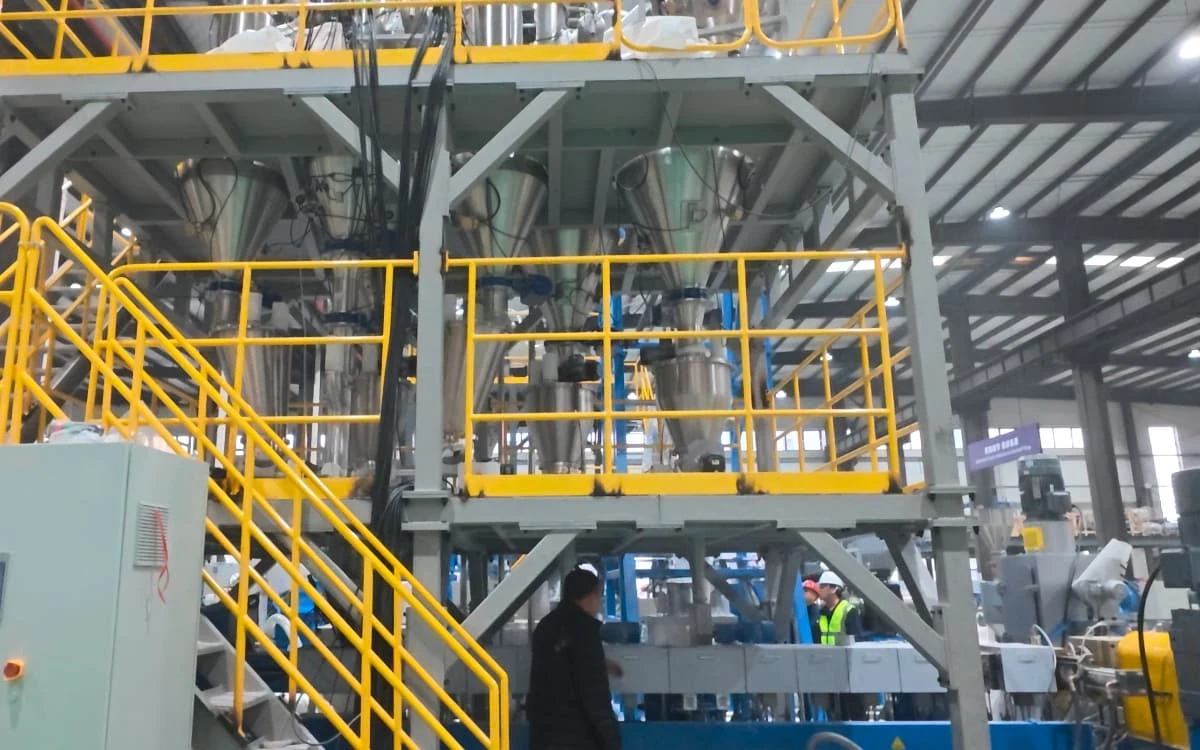
To address the processing challenges associated with an 82% filler loading, USEON designed and supplied a continuous compounding system utilizing the SAT-T75 triple screw extruder as the core machine, complemented by a water ring pelletizing line. By providing an extended processing section and triple screw mixing action, this solution is structured to support the stable extrusion and pelletizing of high-filler formulations.
Key Equipment Configuration
SAT-T75 Triple Screw Extruder
Acting as the primary compounding unit, the triple screw configuration is utilized to support distributive and dispersive mixing efficiency.
L/D Ratio of 52
The barrel and screws are configured with an L/D ratio of 52, providing an extended processing zone.
AC 250 kW Motor and 600 rpm
Equipped with an AC 250 kW main drive supporting a maximum screw speed of 600 rpm, delivering the necessary power input and torque required for processing high-viscosity, highly filled melts.
Water Ring Pelletizing Line
The downstream section is equipped with a water ring system for die-face cutting and rapid water cooling.
Compared with conventional twin-screw systems, a triple screw configuration can provide more material exchange and mixing opportunities, helping improve distributive and dispersive mixing in highly filled formulations. Combined with the extended L/D ratio of 52, the triple screw system provides necessary residence time. Its pressure-building capability also helps convey the highly filled melt more steadily through the die, helping to reduce extrusion pressure fluctuations.
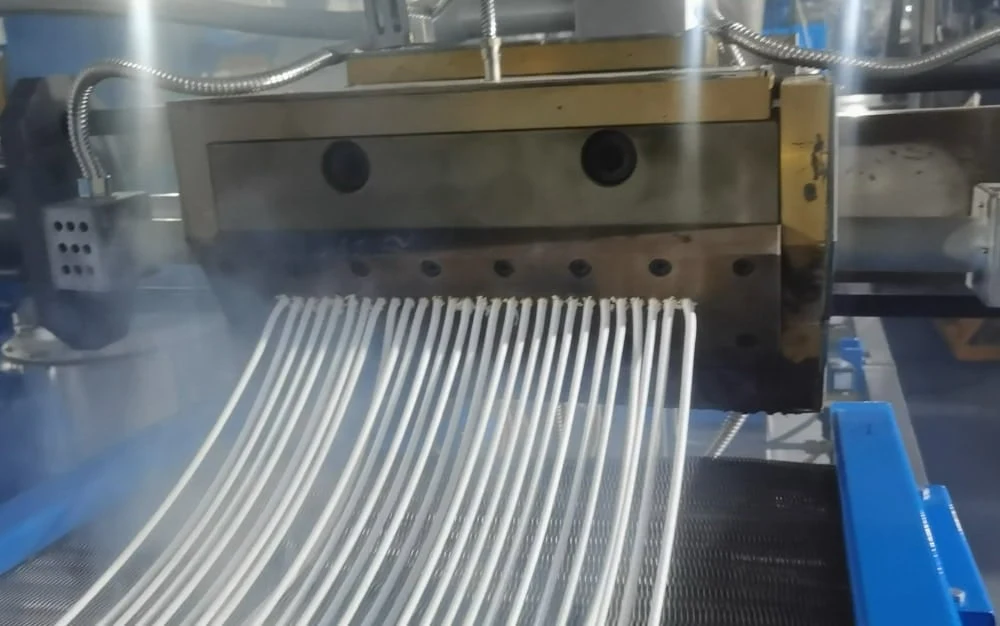
For mineral-filled PE/PP applications, a water ring pelletizing line is a suitable downstream choice. As the PE/PP melt containing 82% filler exits the die plate, the rotating knives cut the melt at the die face into pellets. The pellets are then carried and cooled by the circulating water ring, helping reduce sticking and supporting continuous pelletizing operation.
Project Video
FAQ
Why does an 82% filler loading challenge PE/PP masterbatch compounding?
An 82% filler loading means only a limited PE/PP matrix is available for wetting and coating the filler particles. This increases the risk of powder agglomeration and equipment wear. It requires the extruder to perform complex wetting and mixing within a limited timeframe, while high melt viscosity can cause extrusion pressure fluctuations.
Why choose a triple screw extruder?
Compared with conventional twin-screw systems, a triple screw configuration can provide more material exchange and mixing opportunities. This helps improve distributive and dispersive mixing when processing a large amount of filler, supporting uniform distribution of the filler within the resin matrix.
What is the significance of an L/D ratio of 52 for mixing and residence time?
For high-filler formulations, an L/D ratio of 52 offers an extended processing section. This increases the residence time of the material inside the barrel, giving the limited polymer melt more opportunity to wet and coat the filler particles, which helps improve overall compounding quality.
How does water ring pelletizing help with high-filler PE/PP masterbatch?
A water ring pelletizing line is suitable for heavily filled polyolefin melts. As the melt exits the die plate, rotating knives cut it at the die face into pellets. The pellets are then carried and rapidly cooled by the circulating water ring, which helps reduce sticking and supports continuous pelletizing operation.
What process information should be confirmed before selecting a high-filler masterbatch pelletizing line?
To evaluate the processing requirements accurately, it is helpful to confirm the base resin, filler type, filler ratio, target output, additives, preferred pelletizing method, and final pellet requirements before selecting a suitable line.
Get a quote
Tell us your material, formulation and target throughput.
- 01Process review
- 02Engineer call
- 03Line proposal

Souder Chen
Head of Compounding Division
With USEON since 2008. Twin screw compounding, devolatilization and recycling lines.