PP+CaCO3 High-Fill Compounding: SAT110 Twin-Screw Underwater Pelletizing Line
A turnkey SAT110 twin-screw underwater pelletizing line for PP+CaCO3 high-fill compounding at 2500–4000 kg/h.
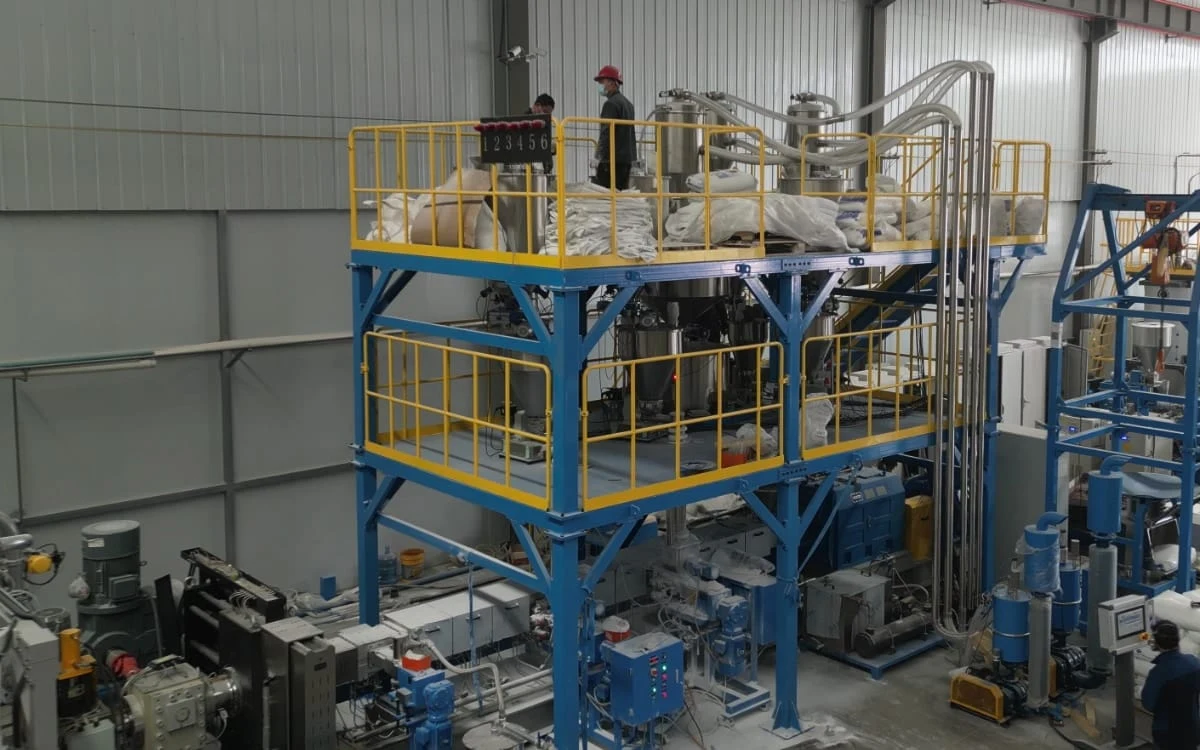
This case study presents a turnkey SAT110 twin-screw underwater pelletizing line delivered by USEON to a large-scale plastics manufacturing enterprise. Engineered for PP+CaCO3 high-fill compounding, the system operates within a capacity range of 2500~4000 kg/h. This project highlights USEON's engineering capabilities in high-fill powder handling, pressure-stabilized underwater pelletizing, and high-capacity line integration.
Project Background
The customer in this project is a large-scale plastics and pipe manufacturing enterprise, specializing in polymer compounding with high inorganic filler contents.
To meet increasing production demands, the customer planned to invest in a high-capacity PP+CaCO3 compounding line.
The core requirement was a complete turnkey line capable of maintaining continuous and stable feeding and pelletizing when handling bulk calcium carbonate powder, alongside a high degree of automation to reduce manual intervention.
Processing Challenges
When designing a high-capacity, high-fill compounding line, several technical engineering challenges typically arise:
Powder Feeding and Environmental Control
High proportions of CaCO3 powder have a low bulk density and are prone to dust generation. Feeding directly into the main throat often causes material bridging and increases the difficulty of workshop dust management.
System Pressure Build-up at High Output
At a target capacity approaching 4000 kg/h, the melt flowability of highly filled materials is restricted. This can cause fluctuations in the die head pressure, interfering with continuous pelletizing operations.
High-Capacity Heat Exchange and Forming
High throughput translates to massive heat exchange requirements per unit of time. Traditional cooling methods struggle to achieve efficient heat exchange and maintain uniform pellet formation within a limited footprint.
USEON's Turnkey Solution
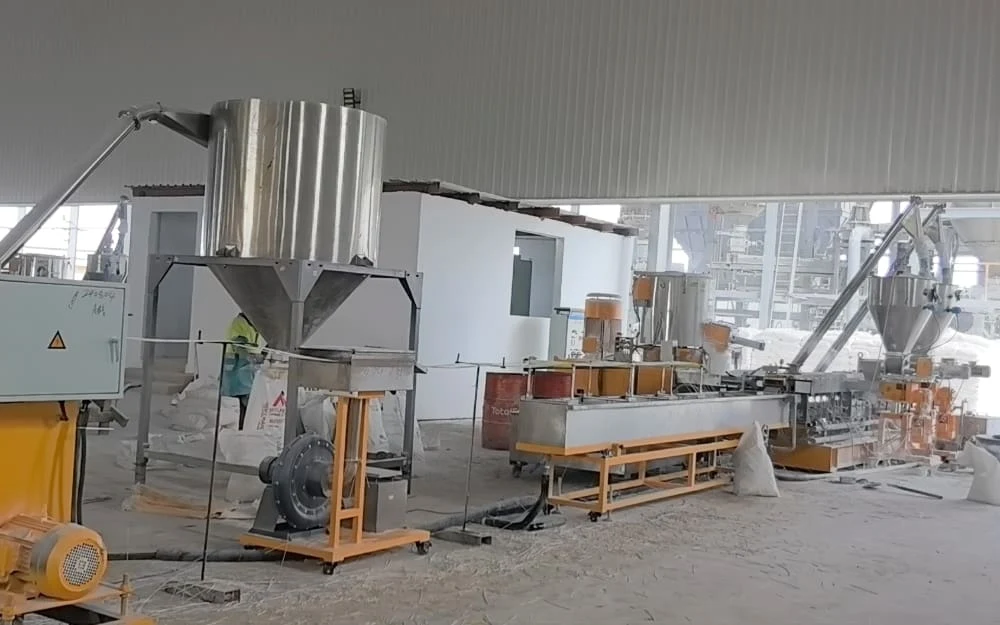
Based on the specific material characteristics and capacity targets of the project, USEON provided a complete line configuration from raw material handling to final packaging:
Material Conveying & Dosing
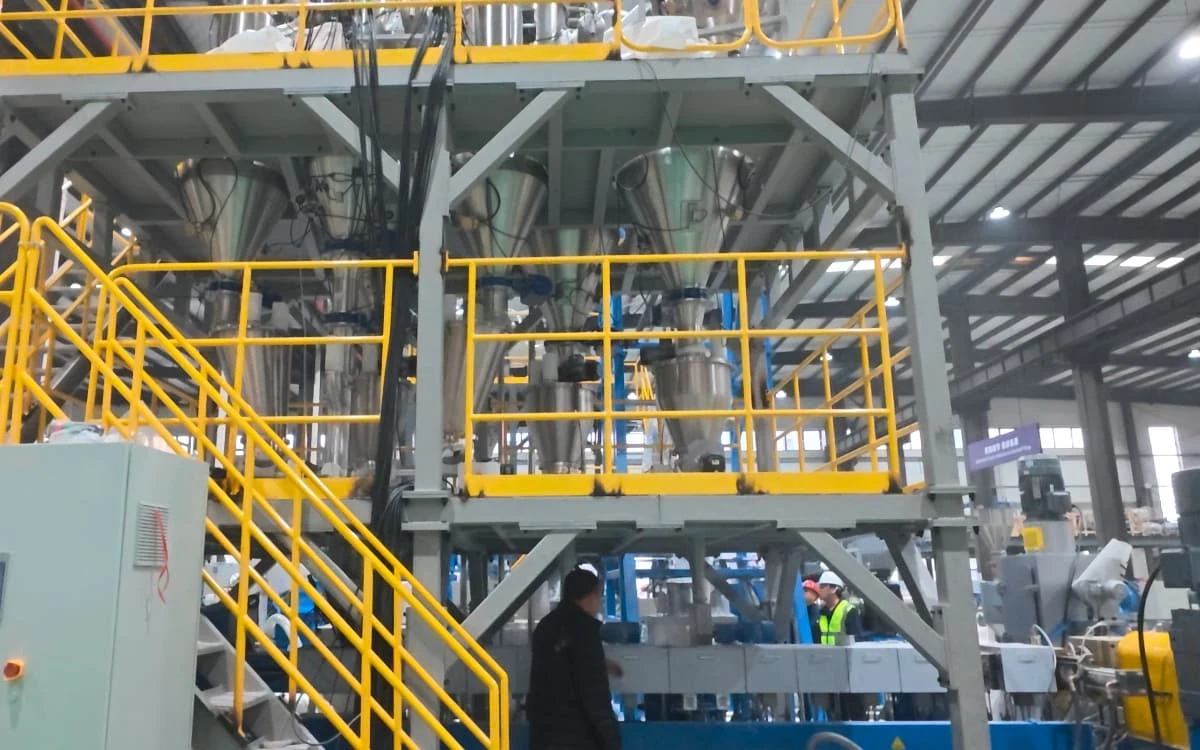
Includes a bulk bag unloading station, vacuum loaders, and multiple loss-in-weight (LIW) feeders for different formulation components.
Main Extruder System
SAT110 twin screw extruder featuring an L/D ratio of 56.
Side Feeding & Degassing
A side feeder (equipped with a vacuum system) dedicated to powder addition; the main extruder is fitted with a double-stage water ring vacuum pump.
Melt Filtration & Pressurization
A large-area plate screen changer and a melt pump are installed in series between the extruder barrel and the die head.
Underwater Pelletizer
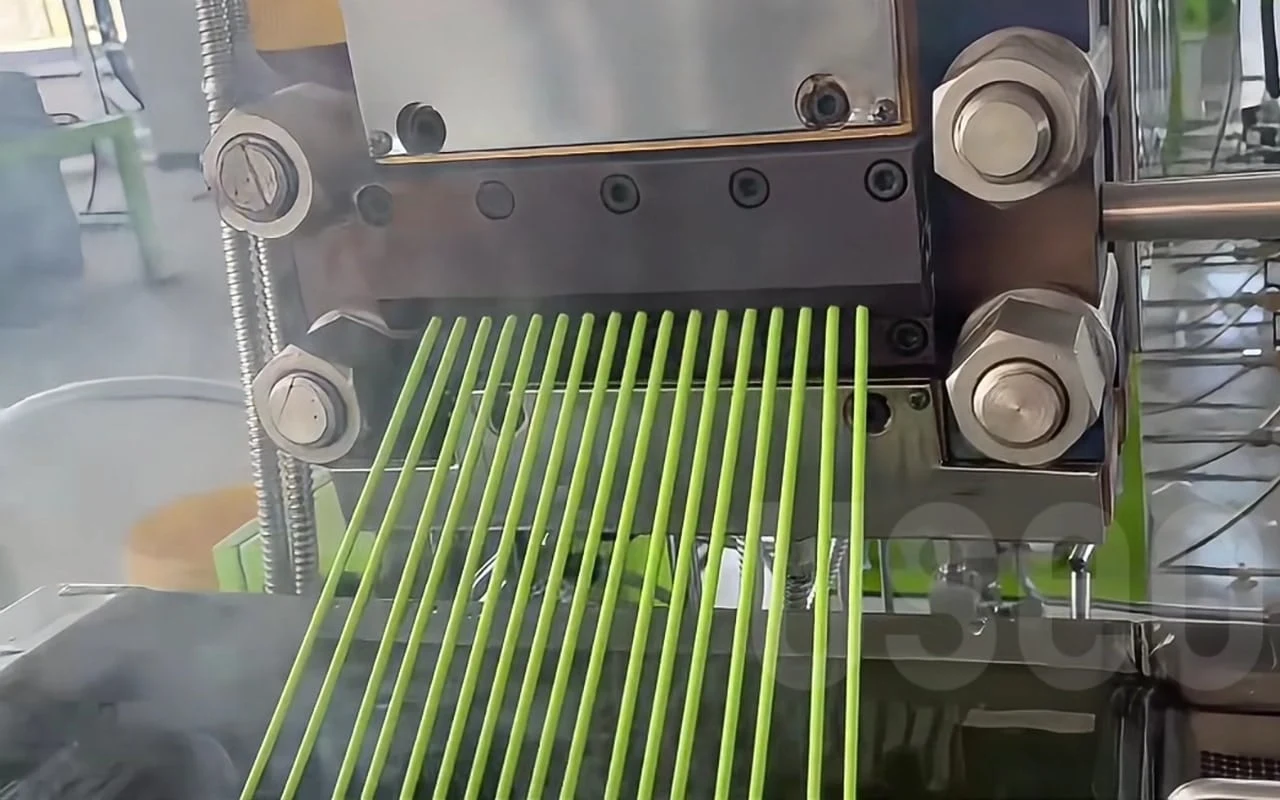
Features a hydraulically actuated diverter valve, UWP cutting head, centrifugal dewaterer, and a large-scale water circulation system.
Why This Configuration
Side Feeder
By introducing the powder from the side into the middle-rear section of the extruder, the resin melting zone is bypassed. This helps mitigate the risk of bridging at the main feed throat. Combined with localized vacuum degassing, it assists in improving powder feeding efficiency and the workshop’s dust environment.
L/D=56 Ratio
The extended screw configuration provides the corresponding shearing, dispersion, and mixing zones to support the uniformity of the PP resin and high-volume inorganic fillers.
Implementation of the Melt Pump
Installed between the twin-screw extruder and the UWP die plate, the melt pump aims to isolate extruder pulsations and provide relatively stable, linear pressure build-up. This mechanical design is crucial for sustaining the continuous operation of the high-capacity underwater pelletizing process.
Project Video
FAT and Performance
During the Factory Acceptance Test (FAT) and on-site commissioning, the extrusion line underwent continuous operation testing within the 2500~4000 kg/h capacity range. On-site runs demonstrated smooth coordination between the automated dosing and underwater pelletizing systems.
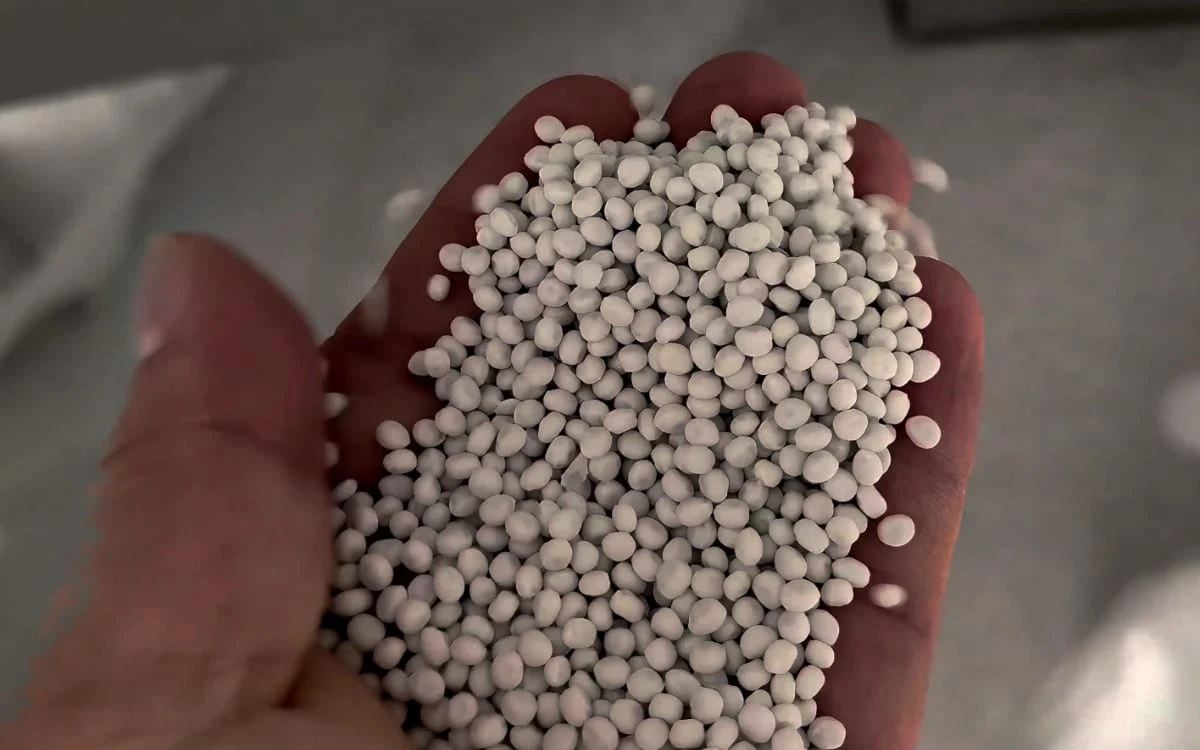
The final PP+CaCO3 pellets met the customer’s acceptance criteria for dimensional consistency and appearance, while the line’s dust and noise control units operated effectively as designed.
This system configuration is primarily focused on high-capacity high-fill compounding and masterbatch production of PP with high proportions of calcium carbonate. Based on a similar equipment architecture, it can also be moderately extended to filled compounding projects involving polyolefins (e.g., PP, PE) and other inorganic powders such as talc or barium sulfate.
If you are planning a high-capacity, high-fill compounding project or seeking a reliable turnkey pelletizing line supplier, please reach out to the USEON engineering team. We will evaluate your specific material and capacity requirements to provide a tailored system configuration.
FAQ
Q1: What calcium carbonate filling ratio does this production line design support?
A: The practical filling ratio depends on the specific formulation design, the powder's bulk density, and its surface treatment. By utilizing side feeding and an optimized L/D configuration, this line is designed to support the high inorganic filling ratios commonly required in the pipe and profile industries.
Q2: How is knife wear managed when processing highly filled materials?
A: High proportions of inorganic fillers will accelerate wear on both the knives and the die plate. To address this, the system uses specialized tool steel knives and wear-resistant die plates, paired with an automated knife advancement program to extend the operating cycle. Actual knife lifespan requires periodic evaluation and replacement based on the on-site production load and material hardness.
Q3: Is a melt pump necessary for high-capacity, high-fill systems?
A: For capacity requirements at the 4000 kg/h level, installing a melt pump usually helps maintain constant die pressure, thereby supporting the continuity of the underwater pelletizing process and pellet uniformity. Whether to include it requires a comprehensive evaluation based on the actual formulation flowability and on-site operating conditions.
Q4: What is the level of automation for this turnkey line? Does it require manual intervention?
A: The system is equipped with a Sciyon Industrial PC (IPC) for centralized control, covering interlocked operations from the LIW feeders to the UWP system. During steady-state production, this helps reduce the reliance on manual monitoring, though skilled operators are still required for recipe changeovers and routine maintenance.
Q5: How does the system control workshop dust when handling high proportions of calcium carbonate powder?
A: The system utilizes enclosed bulk bag unloading stations and vacuum loaders for source conveying, combined with the side feeder and localized vacuum degassing to feed the powder directly into the enclosed extruder barrel. This design helps mitigate dust emissions, although actual workshop environmental performance should still be evaluated in conjunction with the facility's overall ventilation and dust collection systems.
Get a quote
Tell us your material, formulation and target throughput.
- 01Process review
- 02Engineer call
- 03Line proposal

Souder Chen
Head of Compounding Division
With USEON since 2008. Twin screw compounding, devolatilization and recycling lines.