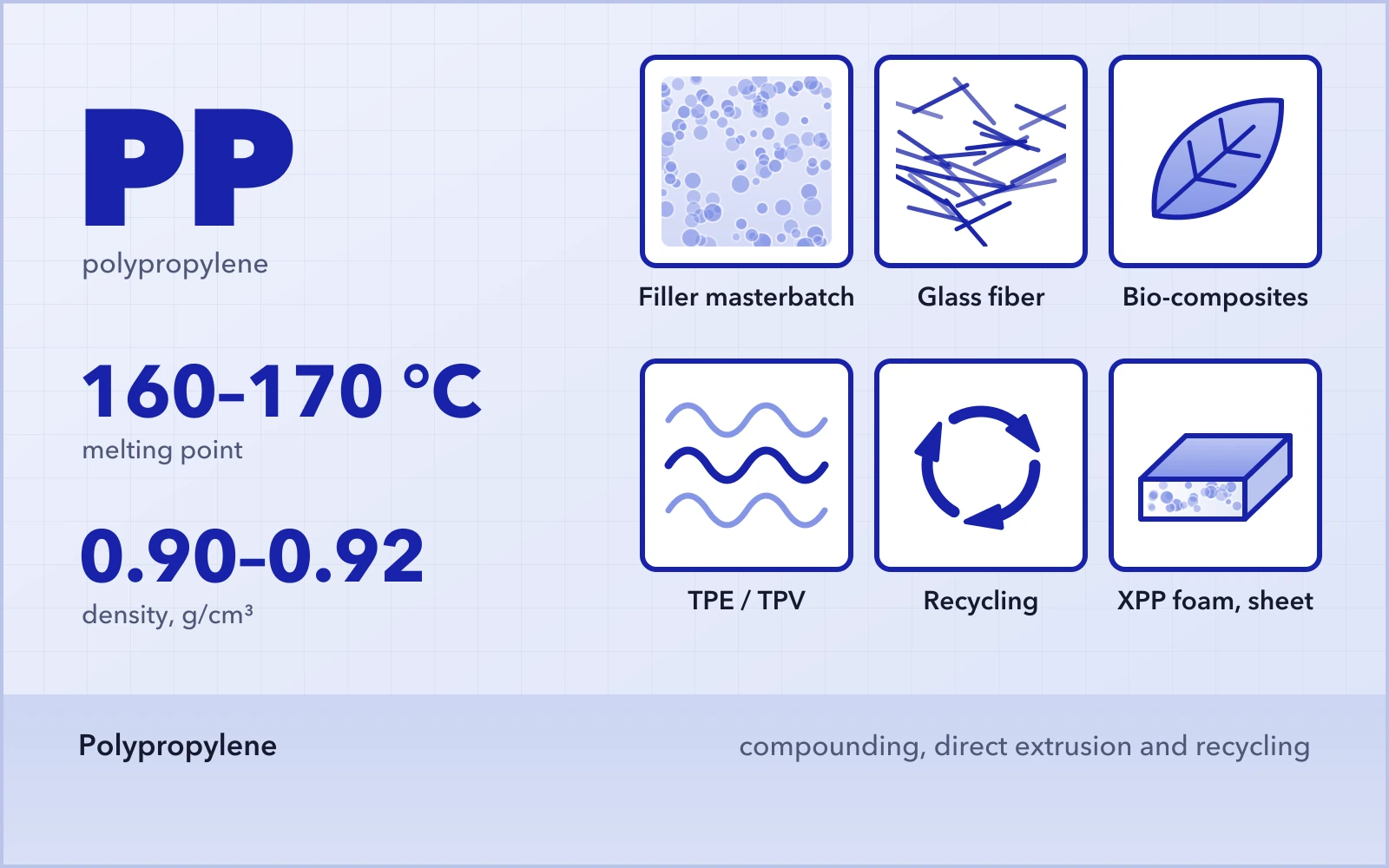
Polypropylene (PP) is one of the world’s most versatile thermoplastics. But for manufacturers, the value isn’t just in the material itself—it’s in the processing capabilities.
Whether you are producing high-concentration filler masterbatches, reinforcing PP with glass fiber, or upcycling post-consumer waste, the quality of your end product depends entirely on your extrusion technology.
At USEON, we move beyond the basics. Drawing from nearly two decades of experience in manufacturing twin-screw extruders for the global market—from Turkey to India—we provide the technology to turn raw PP resin into high-performance products.
01PP Applications & Recommended Machinery
Processing Polypropylene requires precise matching of machine torque, screw geometry, and processing technology. Based on our extensive project portfolio, we have matched specific PP applications to their ideal machine configurations below:
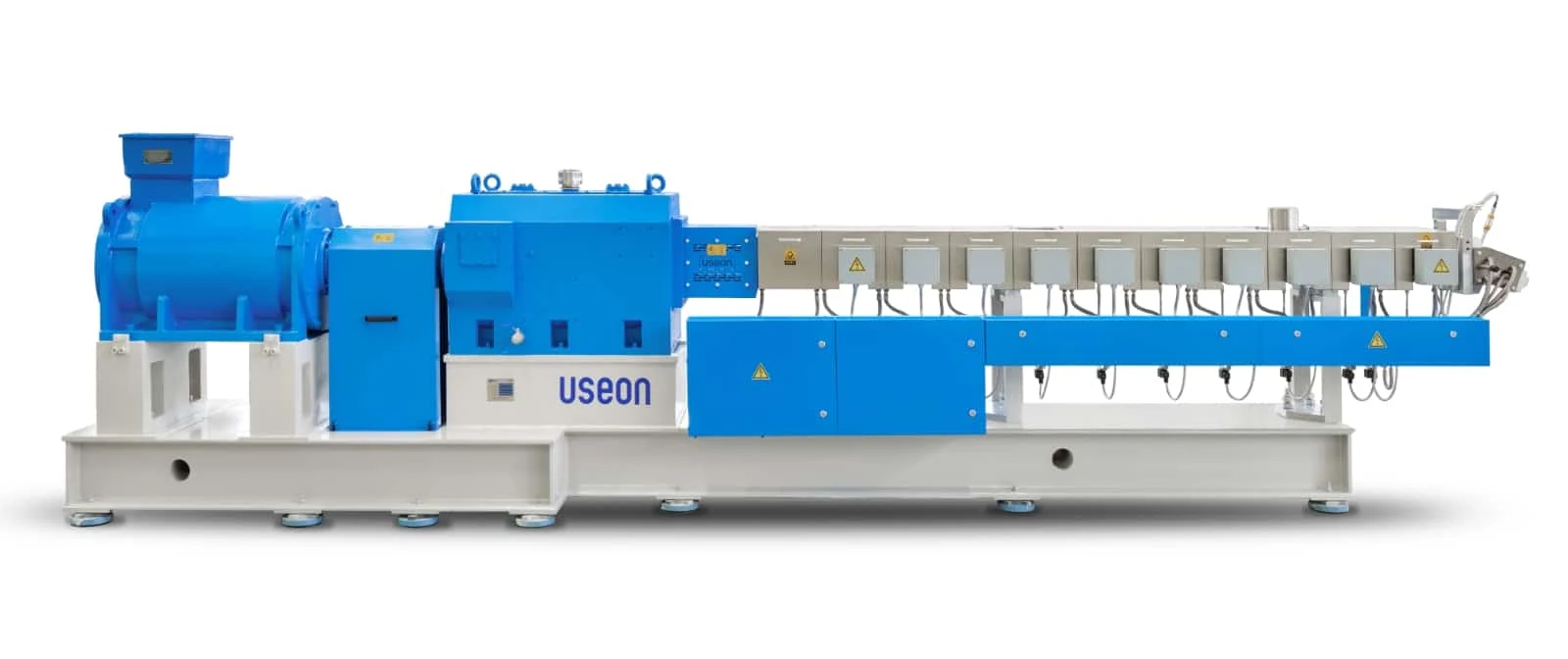
High-Performance Compounding (Fillers, Colors & Reinforcements)
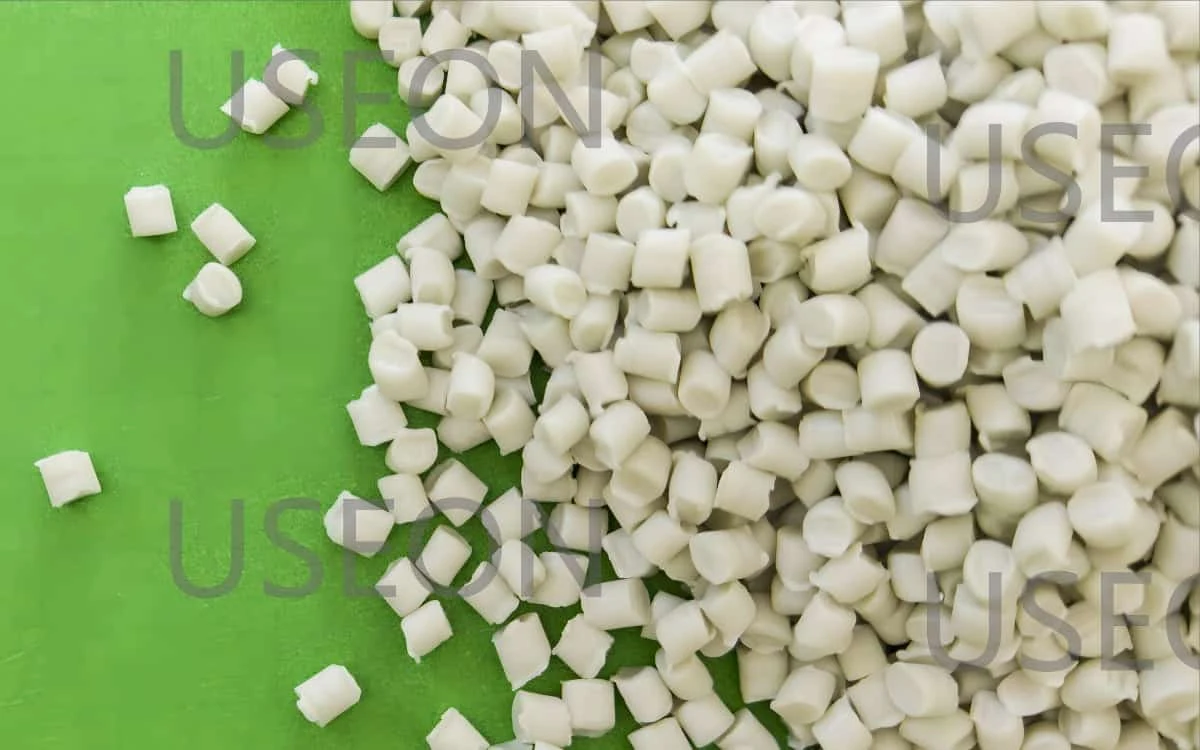
PP+80% CaCO3, Glass Fiber Reinforced PP, Color Masterbatch
- High Fillers: Wetting and dispersing up to 80% powder (CaCO3/Talc) without agglomeration.
- Reinforcement: Preventing fiber breakage to maintain impact strength in glass-fiber reinforced grades.
High-Torque & Modular Screw Design.
We use a split-feeding strategy (Side Feeders) to introduce abrasive fillers/fibers downstream. This protects the melting zone from abrasion and allows for higher output rates.
SAT Series Twin Screw Extruder
- Best ModelsSAT52, SAT65, SAT75, SAT95 (depending on output needs).
- Specific Torqueup to 10.3 Nm/cm³, optimized for high-loading PP compounds.
- L/D Ratio44-48 provides the optimal residence time for dispersive mixing.
- Wear ProtectionBimetallic barrels specifically chosen to resist abrasion from fillers.
Reinforced PP (Glass Fiber / Carbon Fiber)
Short Glass Fiber (SGF), Long Fiber (LFT), Carbon Fiber Reinforced PP
Fiber Breakage: The goal is to improve stiffness, but aggressive shear breaks the fibers, drastically reducing the impact strength of the final product.
Gentle Shear Configuration.
- Screw Profile: We utilize specialized “distributive mixing elements” (toothed blocks) instead of aggressive kneading blocks.
- Downstream Feeding: Fibers are introduced via a Side Feeder near the end of the barrel to minimize their residence time under shear, preserving the Average Fiber Length (AFL).
SAT Series Twin Screw Extruder
- Best Models: SAT52, SAT65, SAT75.
- Key Config: Modular Screw Design allows you to switch to a “Gentle Mixing” profile specifically for fiber reinforcement.
Eco-Friendly Bio-Composites (PP + Starch/Wood)
Biodegradable Compounds, Wood Plastic Composites (WPC)
- Thermal Degradation: Natural fibers (Corn Starch, Wood Flour, Straw) burn and carbonize easily at standard PP processing temperatures.
- Moisture: Bio-fillers often contain high moisture, leading to bubbles.
Low-Temperature Compounding.
- Temperature Control: We optimize the screw profile to generate minimal shear heat, maintaining a melt temperature below the degradation point of starch/wood.
- Degassing: Intense Multi-stage Vacuum Degassing removes the inherent moisture from natural fibers.
SAT Series Twin Screw Extruder
- Best Models: SAT65, SAT75.
- Key Config: High Torque is required to process the material at lower temperatures (colder melt = higher viscosity).
Reactive Extrusion (TPE / TPV Elastomers)
PP-based Elastomers, Dynamic Vulcanization
Intense Mixing & Reaction.
Producing TPV requires continuous, intense shear to thoroughly vulcanize the rubber phase within the PP matrix while strictly controlling the melt temperature.
High-Speed Reaction System.
SAT Series High-Speed Extruder
- Best ModelsSAT65, SAT75, SAT95.
- SpeedUltra-High RPM (600-900+) provides the necessary shear energy for dynamic vulcanization.
- ConfigurationEquipped with precise Liquid Injection Ports for dosing oil extenders and curing agents directly into the process section.
PP Recycling & Upcycling
BOPP Film, Battery Separators, Post-consumer Flakes
Moisture & Bulk Density.
Light, fluffy film scraps bridge in standard hoppers, and moisture or inks in recycled waste lead to bubbles in the final pellets.
Integrated Degassing & Compaction.
SAT Series Recycling Configuration
- Best ModelsSAT110, SAT135
- DegassingFeatures an Extended L/D (48-52) with Multi-stage Vacuum Degassing (2-3 ports) to completely strip volatiles and solvents.
- FeedingIntegrated with large-volume Side Feeders or Compactor units to force low-bulk-density fluff into the extruder efficiently.
Direct ExtrusionXPP Foam & Sheet
Expanded PP Foam, Thermoforming Sheets, Bio-Composites (PP+Starch)
Melt Stability.
Foaming and sheet extrusion require an extremely stable pressure output and precise temperature control, which standard compounding extruders often struggle to maintain.
Tandem & Single Screw Technology.
- Best ModelsTDD120, TDD150, TDS52/TDD120 Tandem
- For XPP FoamTandem Line. The Primary Twin Screw melts and mixes the gas (CO2/N2); the Secondary Single Screw gently cools the melt to preserve cell structure.
- For SheetSingle Screw (TDD). Uses a grooved feed bush to ensure constant pressure for uniform sheet thickness.
02The USEON Advantage: Engineered for PP Compounding
Standard extruders often struggle with the specific challenges of PP—such as its tendency to degrade under thermal stress or the difficulty of dispersing high filler loadings. Here is how USEON’s technology makes the difference:
High-Torque Gearbox for Maximum Throughput
Processing high-viscosity PP or high-loading masterbatches demands immense power.
- Standard Performance: Our SAT Series features a robust specific torque of 10.3 Nm/cm³, ensuring stable operation for most compounding tasks.
- Ultimate Performance: For the most demanding applications, our U Series (Super High Torque) pushes the limit to 18 Nm/cm³.
This industry-leading torque capability allows for higher screw speeds and throughput rates at lower melt temperatures, preventing the “thermal degradation” common in standard machines and preserving the PP’s mechanical properties.
Superior Mixing with Modular Screws
Polypropylene applications vary widely. Our modular screw design allows you to customize the geometry for every job. Use kneading blocks for aggressive dispersive mixing of pigments, or switch to toothed mixing elements for gentle distributive mixing of glass fibers. You get the flexibility of multiple machines in one.
Advanced Wear Protection
PP compounding often involves abrasive additives like glass fiber, talc, and calcium carbonate. To extend machine life, USEON barrels are lined with premium bimetallic alloys (Ni-based or Co-based), significantly reducing wear and maintenance downtime compared to standard nitrided steel barrels.
03Deep Dive – What is Polypropylene?
Polypropylene (PP) is a semi-crystalline thermoplastic polymer belonging to the polyolefin group. It is produced via chain-growth polymerization from the monomer propylene.
It is widely known for its combination of properties: tough, heat-resistant, chemical-resistant, and translucent. It does not present stress-cracking problems and offers excellent electrical insulation.
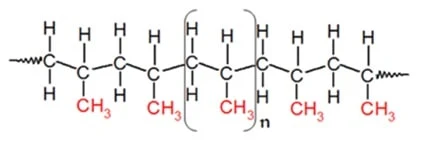
The Three Main Types of PP
Understanding the molecular structure is crucial for selecting the right resin for your product:
| PP Type | Key Features | Typical Applications |
|---|---|---|
| Homopolymer (H-PP) | High stiffness, high clarity | Raffia, sheets, thermoforming |
| Random Copolymer (PP-R) | Improved clarity, flexibility | Packaging, medical items |
| Impact Copolymer (ICP) | High impact strength | Automotive, appliances |
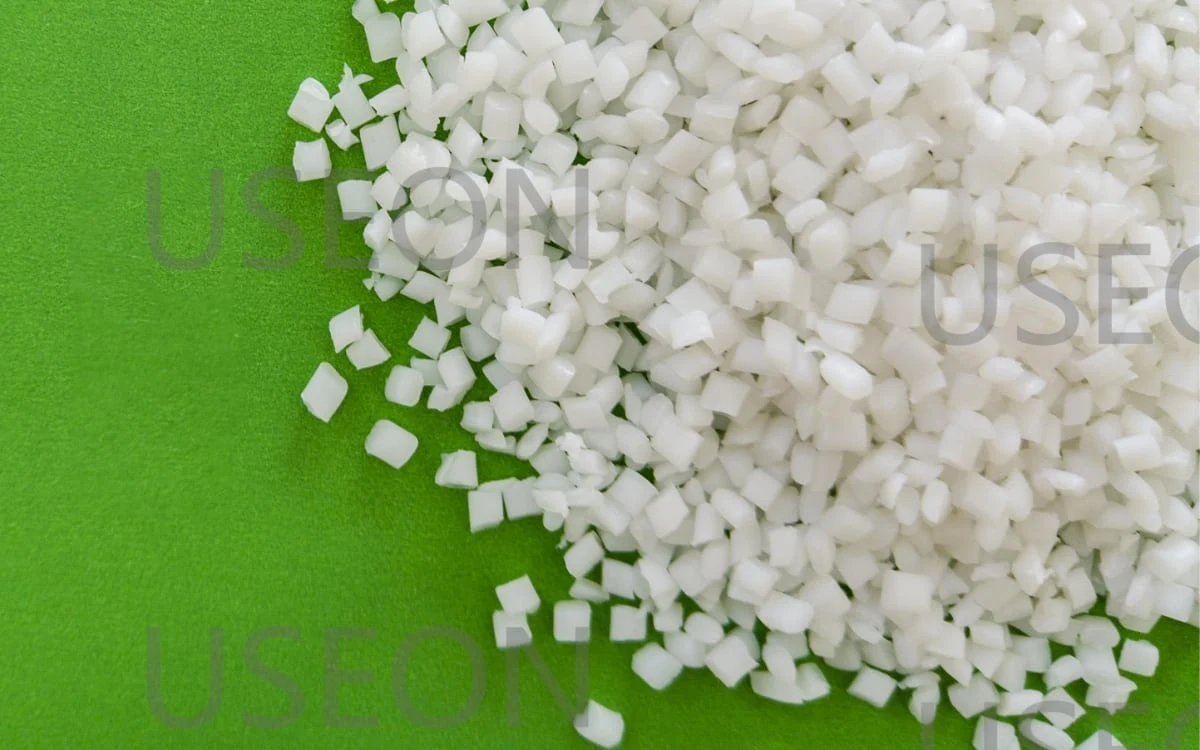
1. Homopolymer PP (PPH or H-PP)
- StructureContains only propylene monomer in a semi-crystalline solid form.
- PropertiesHigh stiffness, high strength, excellent heat resistance.
- ApplicationsTextiles, packaging films, pipes, and automotive components.
2. Random Copolymer PP (PPR or PP-R)
- StructureProduced by polymerizing propylene with small amounts of ethene (typically up to 6%).
- PropertiesBetter transparency, lower melting point, and improved flexibility compared to PPH.
- ApplicationsHigh-clarity packaging, medical devices, and hot water pipes.
3. Impact Copolymer PP (ICP or PP-B)
- StructureA heterophasic structure where an ethylene-propylene rubber phase is dispersed within a PP homopolymer matrix.
- PropertiesSuperior impact strength, even at low temperatures.
- ApplicationsHeavy-duty industrial parts, automotive bumpers, and luggage.
Key Properties of Polypropylene
- Chemical ResistanceHighly resistant to diluted bases and acids.
- ElasticityTough and flexible, making it ideal for “living hinges” (like on flip-top bottles).
- Fatigue ResistanceRetains shape after a lot of torsion or bending.
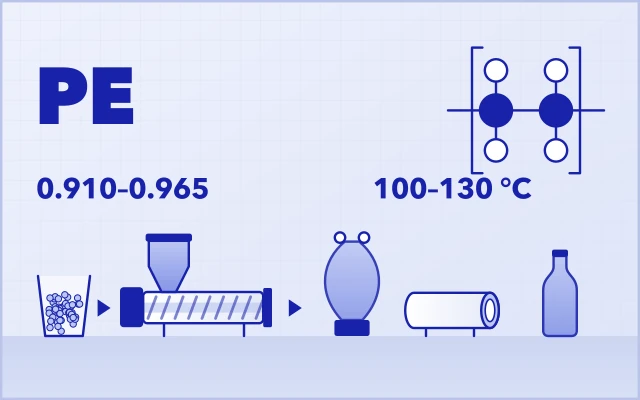
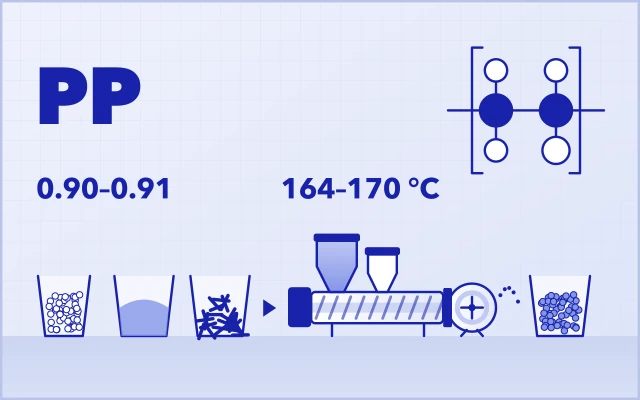
- Melting PointTypically ranges from 160°C to 170°C (320°F to 338°F), making it suitable for hot-fill containers.
PP vs. PE (Polyethylene): What’s the Difference?
While both are polyolefins, they have distinct differences:
- PP is stiffer, stronger, and lighter than PE.
- PP has a higher melting point and better heat resistance.
- PE generally has better wear resistance and impact strength at very low temperatures.
FAQs
What affects PP extrusion quality the most?
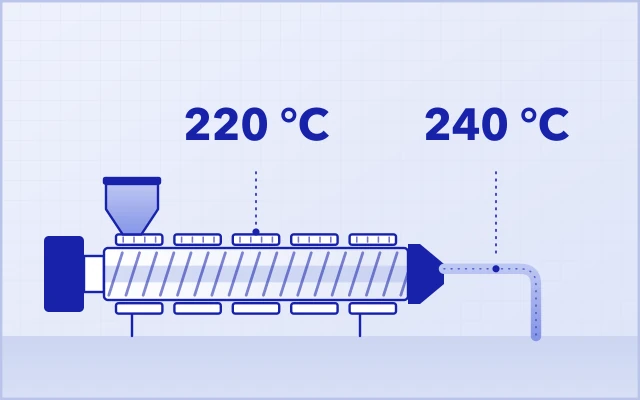
Critical factors include melt temperature stability, dispersion efficiency, screw configuration, and moisture content.
USEON extruders address these with precise temperature control zones and modular screw elements designed to minimize shear heat while maximizing mixing.
What is the ideal Melt Flow Index (MFI) for PP processing?
It depends on the final process. Generally, MFI 0.5–5 is ideal for extrusion (pipes, sheets) where high melt strength is needed. MFI 10–50+ is typical for injection molding compounds. For high-filler masterbatches, a higher MFI carrier resin is often chosen to improve wetting of the powder.
Is Polypropylene easy to recycle?
Yes, PP is 100% recyclable. However, the quality of recycled pellets depends heavily on the extrusion filtration and degassing technology used to remove contaminants like inks and moisture.
What is the optimal screw speed (RPM) for PP compounding?
For standard compounding, 300-600 RPM is typical. However, for shear-intensive applications like TPV/TPE reactive extrusion, USEON SAT series extruders can run at up to 900 RPM to ensure complete dynamic vulcanization. Conversely, for glass-fiber reinforcement, lower speeds are recommended to preserve fiber length.
Why does my PP masterbatch have bubbles or moisture defects?
Bubbles usually indicate trapped moisture or volatiles. This is common when processing recycled PP or hygroscopic fillers (like Talc). The solution is to use a twin-screw extruder with a high L/D ratio (48-52) and multi-stage vacuum degassing ports to fully strip these volatiles before pelletizing.
What is the density of Polypropylene?
PP has a density of approximately 0.90 – 0.92 g/cm³, making it one of the lightest commercial plastics available. This is a key advantage for the automotive industry (weight reduction).
Can I process Expanded Polypropylene (XPP) on a standard extruder?
No, standard extruders cannot control the cooling phase precisely enough. High-quality XPP requires a Tandem Extrusion System (like USEON TDD series). The first extruder melts the polymer and gas, while the second extruder cools the melt to the exact viscosity needed for stable cell growth.
Can PP be biodegradable?
Standard PP is not biodegradable. However, USEON offers extrusion lines for processing PP mixed with starch or other bio-fillers to create semi-degradable sheets for packaging applications.
Can I process PP on a Single Screw Extruder?
Yes, for finished products like sheets or pipes. However, for compounding (adding fillers, colors, or modifiers), a Twin Screw Extruder is mandatory to achieve proper mixing.