In my previous “how to”, we talked about how to configure your XPS production line. Today, I am going to tell you something about how to figure out the portfolio of the blowing agents for XPS production. I am going to discuss from 4 aspects, local regulation, source availability, local insulation standard, and technical issues.
01Local regulation
First of all, local regulation, the most well-known blowing agent of XPS is Freon, a series of halocarbon including CFCs, HCFCs and HFCs. Every country has its own regulations about the use of Freon.
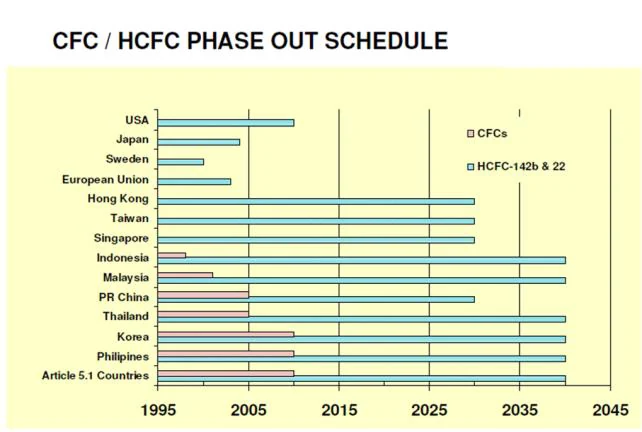
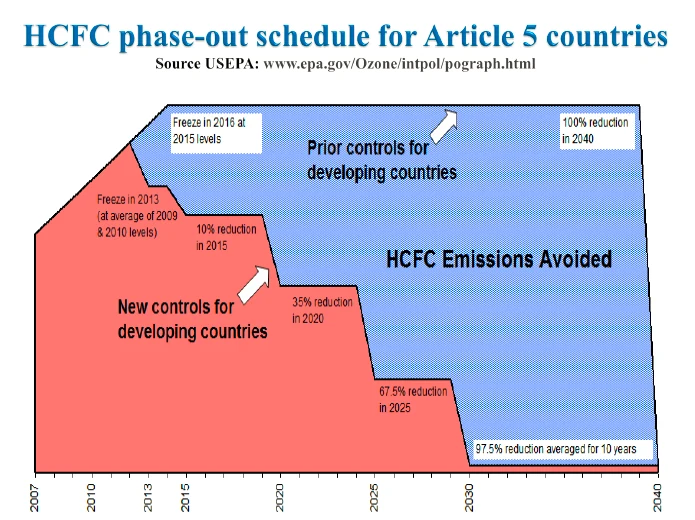
In most developed countries, HCFC is banned now, while in some developing countries like China, still can use it until 2030, Indonesia can use it until 2040. But many countries are carrying out the new plan to speed up the phasing out schedule of HCFCs.
One thing I have to address is that due to the poor solubility in polystyrene, CO2 cannot be used as blowing agent alone; it has to be used with other co-blowing agent together like ethanol, butane or DME etc. as solvent to help CO2 solve into the polystyrene.
02Source availability
Secondly, source availability. In some countries, some kinds of blowing agents are not available. For example, in some Middle East countries, ethanol is not available and not allowed to import, so you have to use something else to be alternatives. And in some countries, even HFCs are not available and not allowed to use, let alone HCFCs.
You have to consult with your authority to see the source availability.
03Local insulation standard
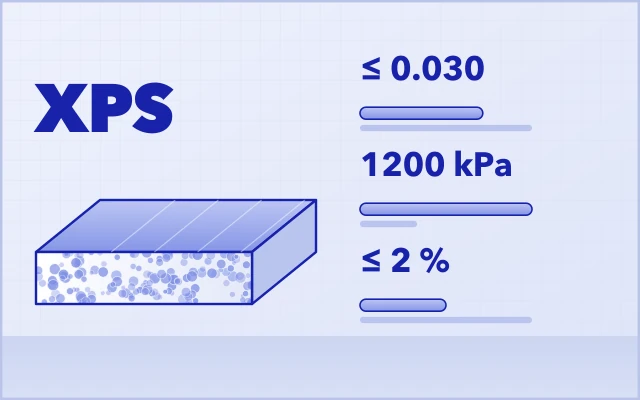
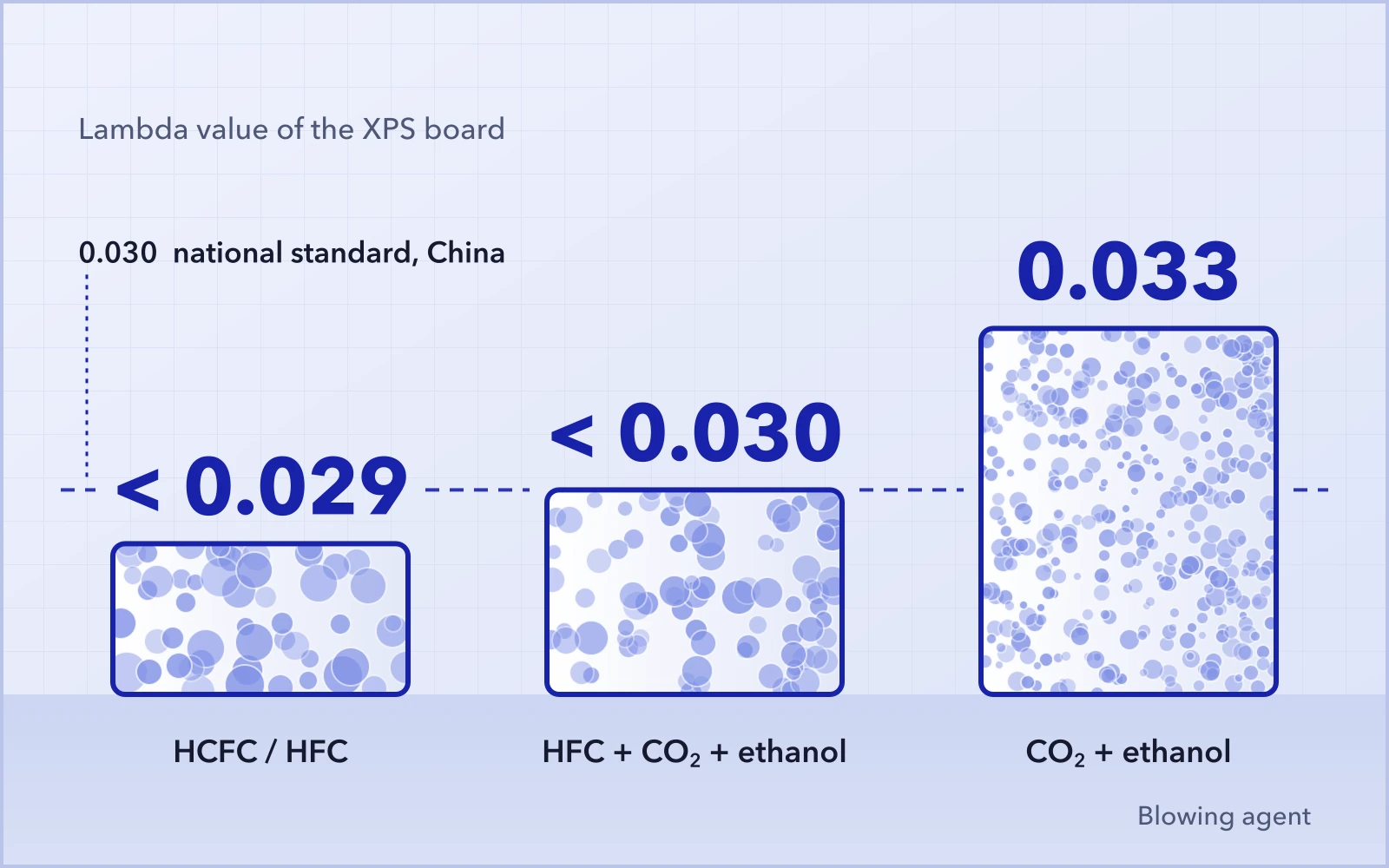
Thirdly, local insulation standard. Almost every country has its own standard of thermal conductivity of XPS board. Let’s take China; the China national standard of thermal conductivity of XPS is 0.030. On the other hand, some countries don’t use thermal conductivity as the standard; they use thermal resistance value or R value instead.
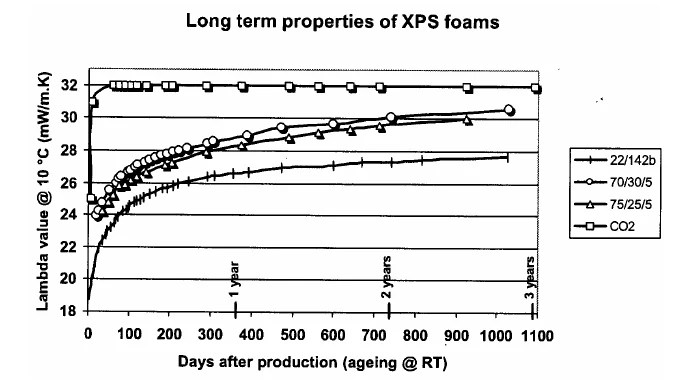
But how does the standard has something to do with your recipe of blowing agent? The reason is that using different blowing agent can result in different thermal conductivity. For example, when you use HCFCs or HFCs, you can control the lambda value below 0.029. However if you use CO2 plus ethanol, it is hard to make the lambda value under than 0.033. To get the lambda value below 0.030, some companies are using the mixture of HFC, CO2 and ethanol.
04Thickness, hardness and the recipe
The last issue, I’d like to talk about is the relationship between thickness, hardness and the recipe of blowing agent. Using HCFCs or HFCs is easier to get thickness like 15cm. If you use CO2 alone as the main blowing agent, it would be very hard to get such thickness unless your line can yield 1.5 ton per hour.
But CO2 is advisable when you produce very high compressive strength board like 1000kpa for special use, because CO2 has smaller cell volume which is helpful to get finer cell structure of the board.
I hope my talk can help you make a right choice at choosing XPS production line. If I can help you in any way, please don’t hesitate to contact us now.